5 Effective Jewelry Email Marketing Examples
Looking at successful jewelry email campaigns can spark ideas for your own strategy. Here are five examples that consistently deliver results.
1. Free Item Offer Email
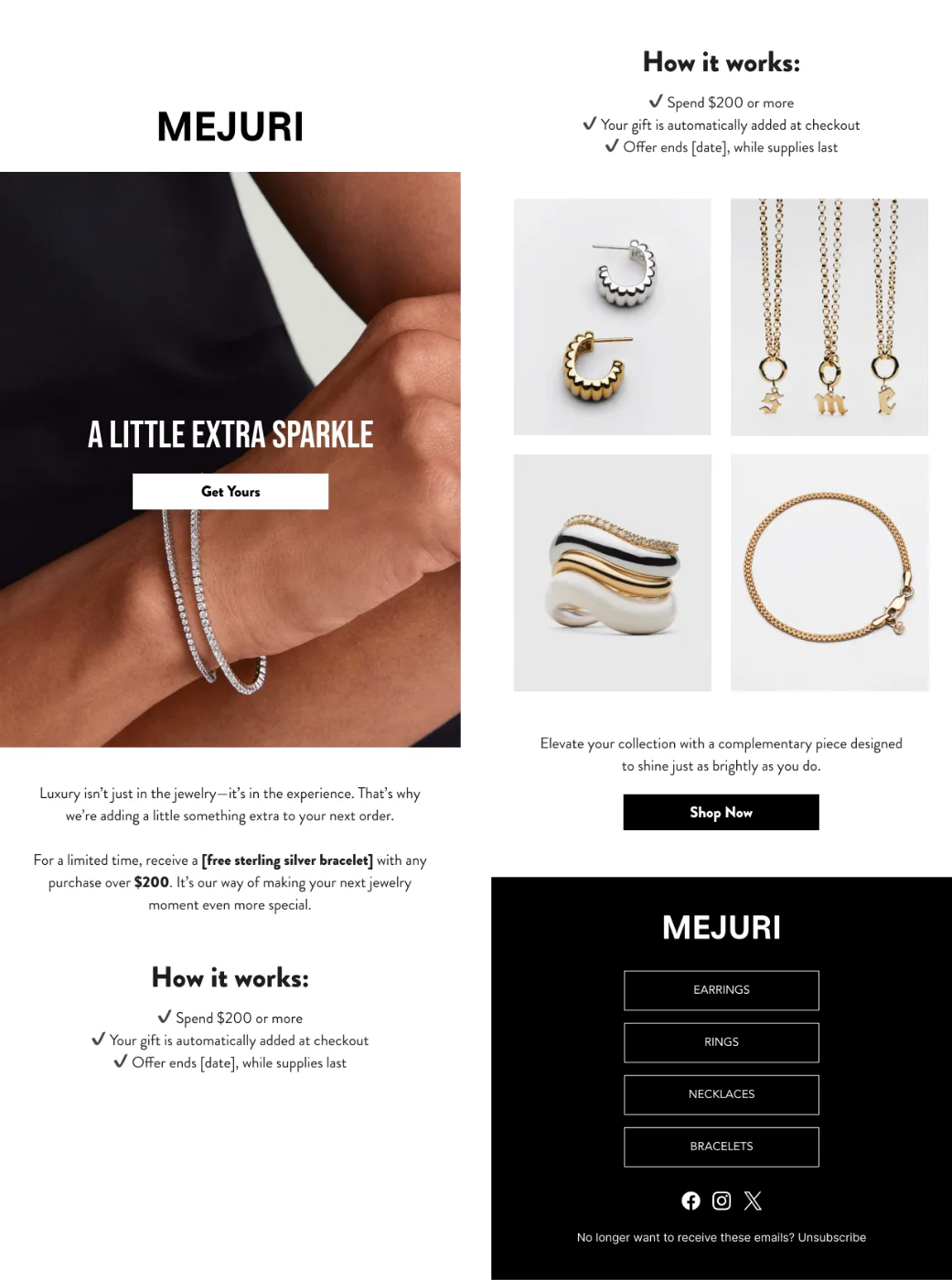
The psychology behind free gift offers is fascinating, especially in jewelry marketing. When you present customers with a beautifully photographed complementary piece, like a sterling silver bracelet with purchases over $200, you’re not just giving away a product.
Instead, you’re creating an irresistible value proposition that often leads customers to spend more than they initially planned. The most successful free item emails we’ve seen combine stunning photography with clear terms.
They spell out exactly what customers need to do to claim their gift, when the offer expires, and any applicable restrictions. The best part is that these campaigns often pay for themselves through increased average order values.
Your customers aren’t just looking for any free item, they’re looking for value that matches your brand’s quality. We’ve seen amazing success with emails that pair a main purchase with a complementary piece, like offering a matching pair of studs with a necklace purchase.
The key is making sure your photography captures the luxurious nature of both items. You’ll want to be crystal clear about the offer terms, but present them in an elegant way that doesn’t detract from the overall sophistication of your message.
2. Seasonal Marketing Email
Your jewelry collections naturally align with changing seasons, and your email marketing should reflect these shifts. Think about how your customers’ jewelry needs evolve throughout the year.
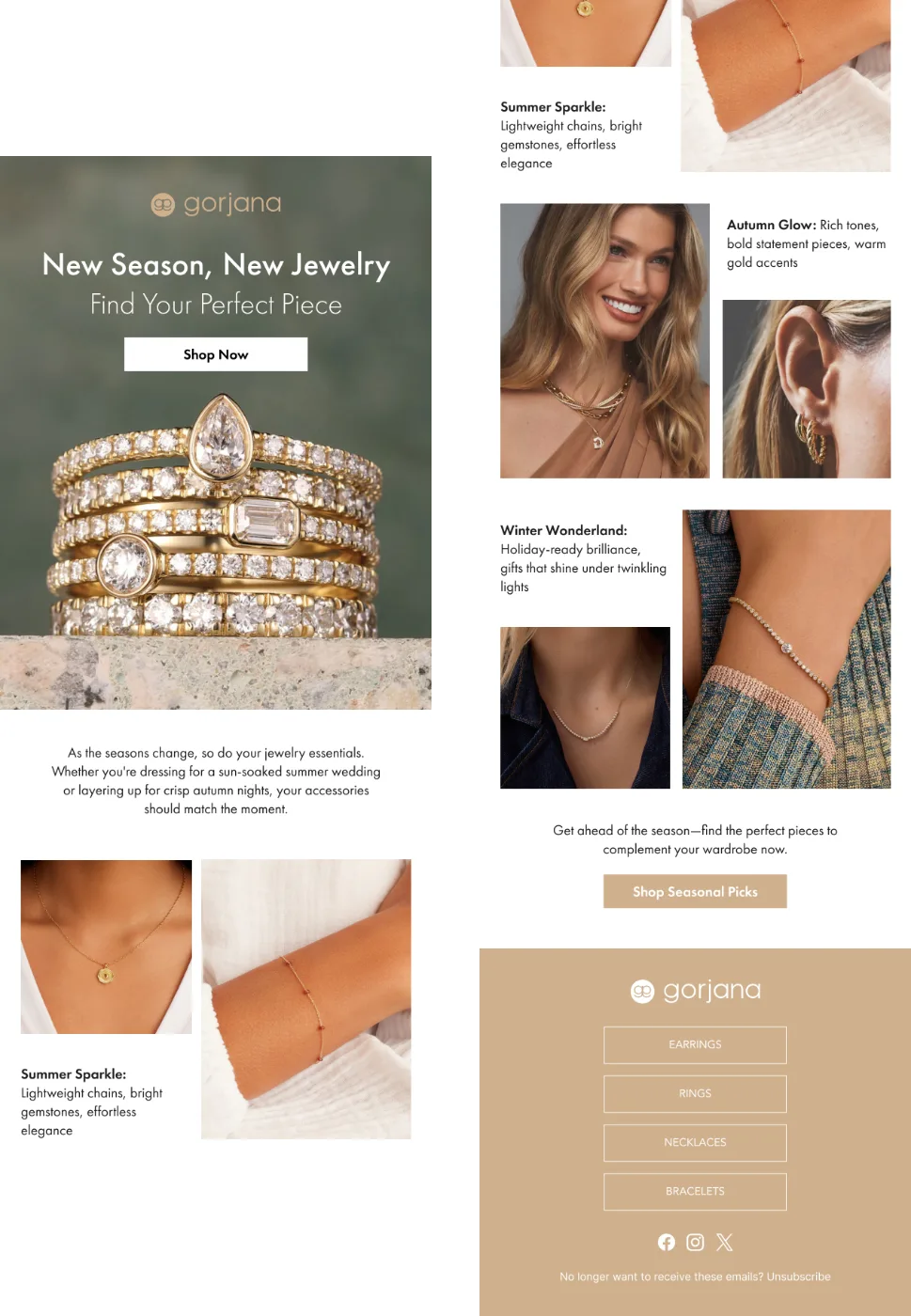
Summer calls for lightweight pieces that won’t weigh you down in the heat, like delicate chains, bright gemstones, and playful designs. As autumn approaches, you might feature richer tones and more substantial pieces that work with cooler weather wardrobes.
The magic happens when you connect these seasonal transitions to your customers’ lives. A “Summer Sparkle” campaign isn’t just about selling summer jewelry, but your customers also imagine themselves wearing your pieces at beach weddings, garden parties, and sunset dinners.
Tie these seasonal changes to specific moments in your customers’ lives. A summer email campaign might focus on destination wedding jewelry or pieces perfect for outdoor celebrations.
When winter approaches, you might highlight how certain pieces catch the light at holiday parties or complement cold-weather fashion. Don’t forget to consider the timing of these seasonal shifts.
You’ll want to start your seasonal campaigns slightly ahead of the actual change in weather. This gives your customers time to plan and purchase. For example, start promoting your summer collections in late spring, when people are beginning to think about their warm-weather wardrobes.
3. Financing Options Email
Let’s talk about something that many jewelry retailers would rather not discuss, making luxury pieces more accessible through financing. Your financing emails need to strike a fragile balance, maintaining the premium feel of your brand while removing barriers to purchase.
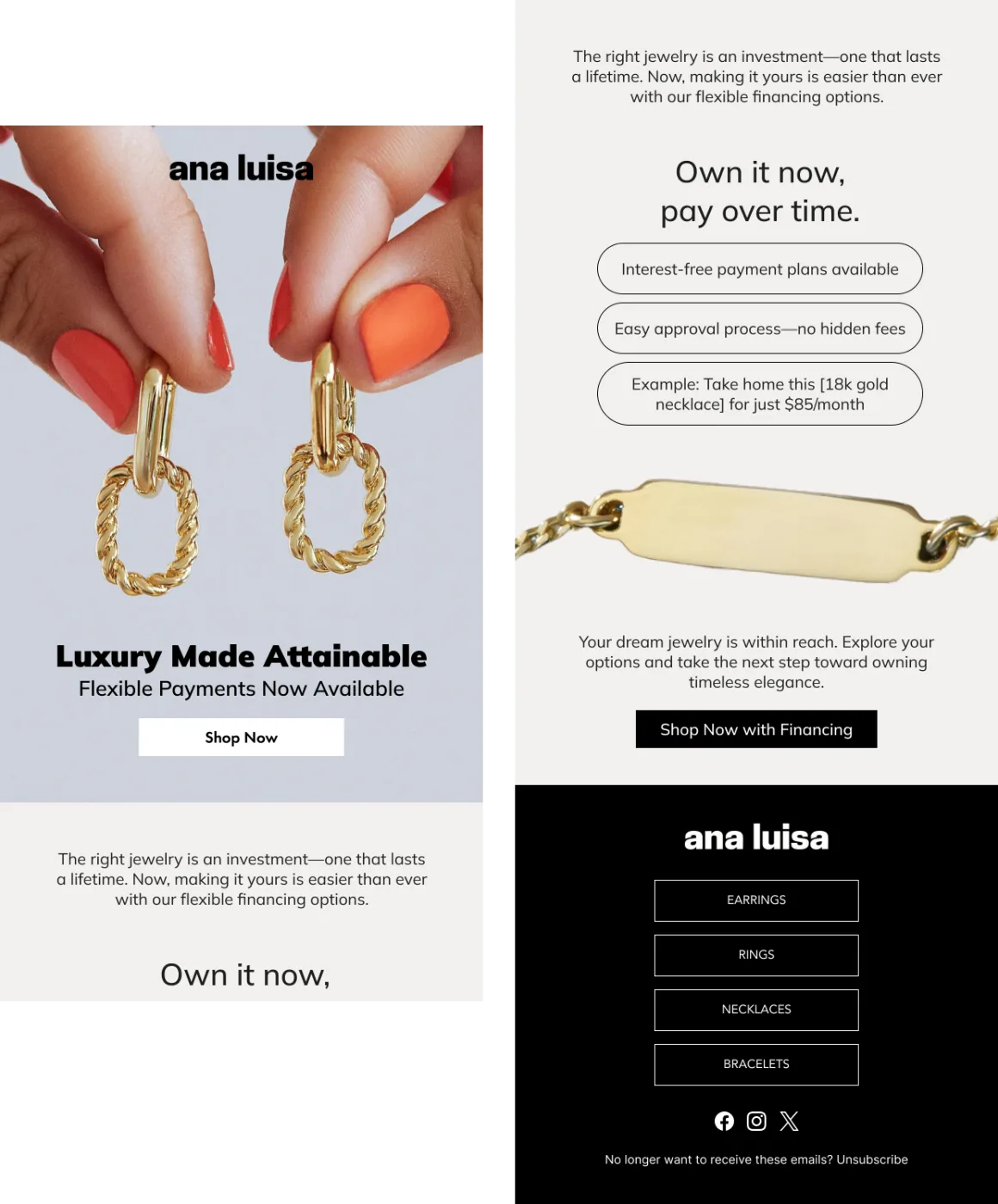
The most effective approach we see is to present financing as a way to make dream pieces attainable. Start by displaying a stunning piece, then break down how financing makes it possible.
Include monthly payment examples, highlight interest-free periods, and emphasize how simple your application process is. Remember to keep the tone professional and focus on making luxury accessible rather than pushing credit.
Instead of leading with “NOW WITH FINANCING!”, which can feel pushy, try showing a signature piece and elegantly introducing flexible payment options as part of its story.
You might say something like “Make this stunning 18k gold necklace yours with payments starting at $85/month.” This approach keeps the focus on the jewelry while making the purchase feel more achievable.
4. Holiday Catalog Email
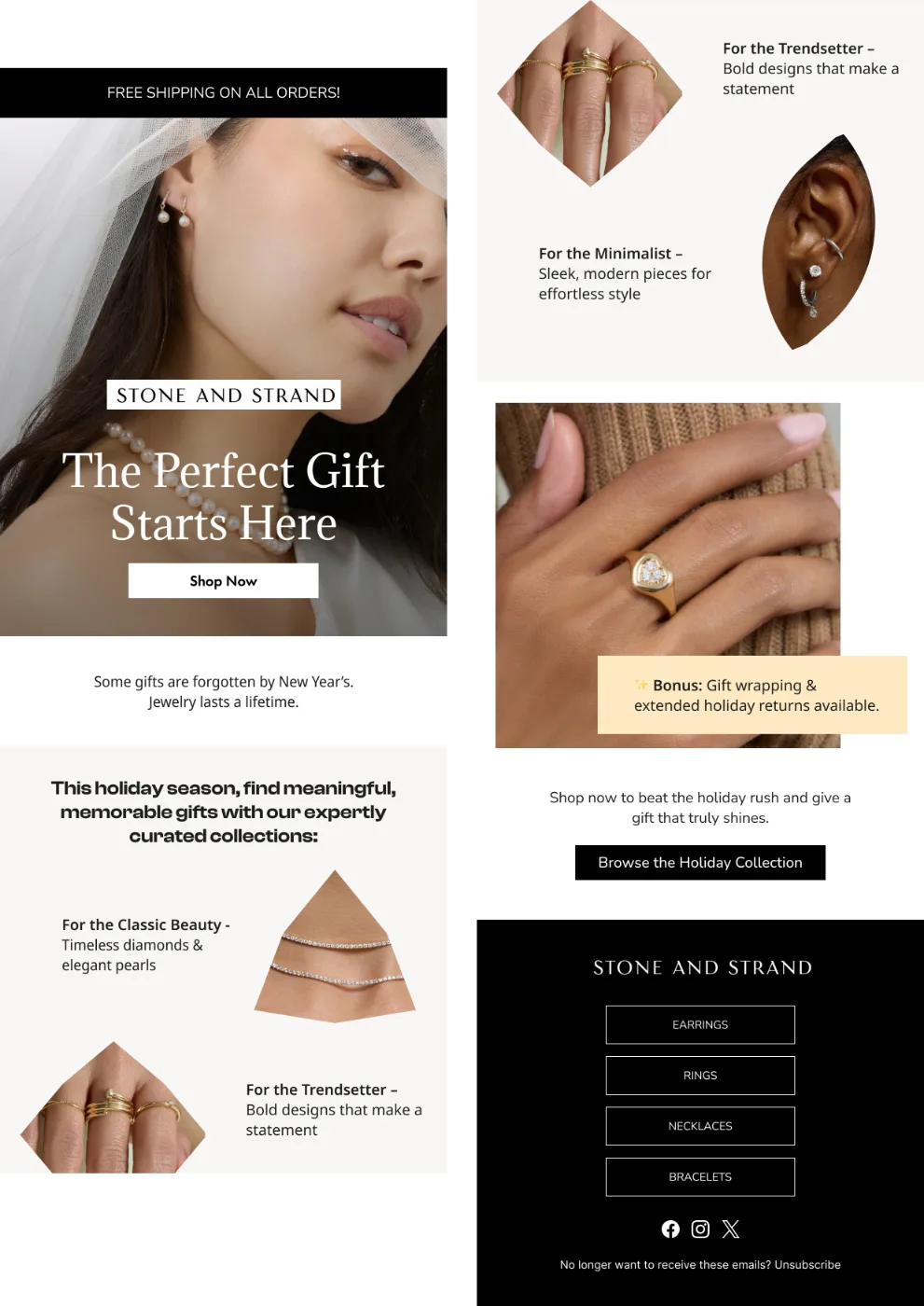
Holiday catalogs deserve special attention in your email strategy. The most successful holiday emails go beyond simple product features to create emotional connections.
Consider structuring your holiday catalog emails around gift-giving personas, like “For the Classic Beauty,” “For the Modern Minimalist,” “For the Trend Setter.” This approach helps customers navigate your collection while making the shopping experience feel more personal.
You should also include high-quality lifestyle photography that shows your pieces in context, and don’t forget to highlight any holiday-specific services like gift wrapping or extended returns.
Break down your holiday selections into intuitive categories that help customers find exactly what they’re looking for. You might organize pieces by price point, by recipient (mother, sister, partner), or by style preference.
Include practical details like shipping deadlines and gift-wrapping services, but present them in a way that enhances rather than interrupts the shopping experience.
5. Discount Email
While frequent discounting can diminish a luxury brand’s value, strategic sales emails have their place in jewelry marketing. The key is your presentation and timing. Instead of broadcasting “SALE!” messages, position your offers as exclusive opportunities for valued customers.
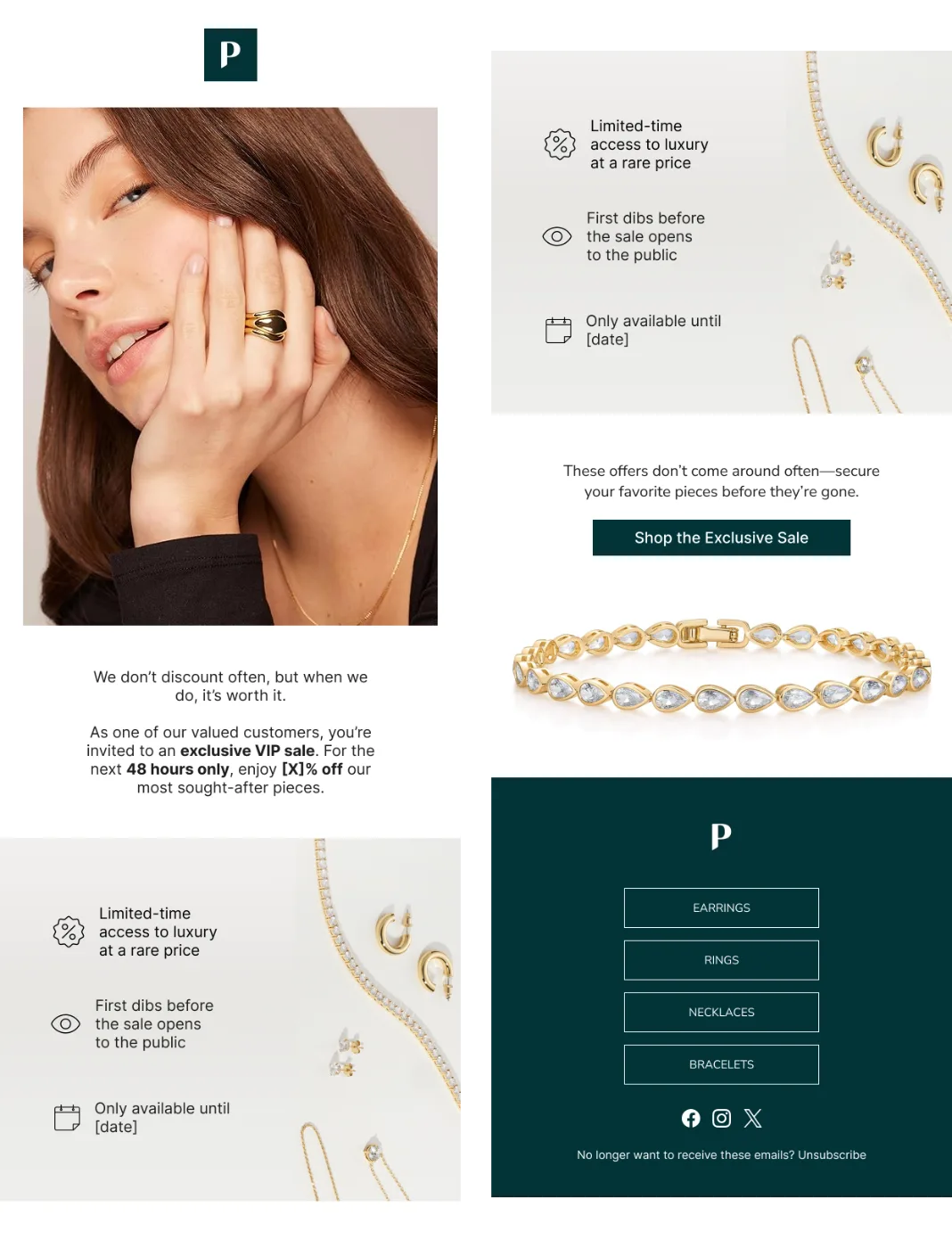
Position your sales around meaningful events such as your store’s anniversary, customer birthdays, or VIP preview events. This approach maintains your brand’s premium positioning while giving customers compelling reasons to purchase.
When designing these promotional emails, you’ll want to keep your photography crisp and professional, your copy clean and elegant, and your calls-to-action clear but tasteful. The goal is to create a sense of opportunity rather than pressure, allowing your customers to feel good about taking advantage of special pricing on premium pieces.
At In-box, we understand the challenges of marketing fine jewelry through email. Our team specializes in creating sophisticated, conversion-focused campaigns that keep your brand’s luxury positioning while driving real results.
We handle everything from strategy and design to automation and analytics, freeing you to focus on curating exceptional jewelry collections.
6 Strategies For Email Marketing For Jewelry Businesses
Success in jewelry email marketing comes from combining the right strategies in ways that resonate with your unique audience.
Email marketing for jewelry businesses requires a delicate balance, you need to maintain the sophistication of your brand while creating messages that drive sales. Your emails should reflect the same attention to detail and quality that your customers expect from your jewelry pieces.
Email marketing stands out as one of the most effective channels for jewelry retailers. You’re not just selling products, you’re helping customers celebrate life’s special moments and express their personal style. Your email strategy needs to recognize and support these deeper motivations.
Before talking more about specific strategies, you’ll want to establish some foundational elements. Make sure your email templates reflect your brand’s aesthetic, your product photography meets the highest standards, and your writing strikes the right tone. These elements work together to create emails that feel as polished as your jewelry collection.
1. Holiday Marketing Campaigns
A well-planned holiday strategy starts months before the actual celebrations. For Valentine’s Day, begin building anticipation in January with early-bird specials and gift guides. Mother’s Day campaigns should launch by early April, showing off pieces that celebrate maternal bonds.
The winter holiday season demands an even longer runway, and you should start teasing your Christmas collections in November to capture early shoppers. You’ll want to maintain regular communication with your customers while avoiding overwhelming them.
Finding the right frequency depends on your specific audience, some customers welcome weekly updates about new collections and special offers, while others prefer monthly digests.
Remember that every email you send should serve a clear purpose.
Whether you’re announcing a new collection, sharing styling tips, or promoting a seasonal sale, each message needs to provide value to your recipients. This purposeful approach helps maintain engagement and prevents email fatigue.
Testing different approaches helps refine your strategy over time. Pay attention to which subject lines drive opens, which calls to action generate clicks, and which types of content spark the most engagement. Use these insights to continually improve your email marketing program.
Success in holiday marketing comes from understanding the emotional drivers behind jewelry purchases. Your campaigns should speak to the sentiments of the season while providing practical assistance through gift guides, size charts, and shipping deadlines. Mix inspiration with information to help customers make confident purchase decisions.
2. Cross-Sell Recommendation Emails
Cross-selling in jewellery retail flows naturally from understanding how pieces work together. When a customer purchases a necklace, they give you valuable information about their style preferences. Use this insight to recommend complementary pieces that enhance their original purchase.
Your cross-sell emails should arrive a few days after the initial purchase when excitement about the new piece is still high. Show how the recommended items pair with their recent purchase through high-quality styling photos.
Include specific details about why these pieces work well together, whether it’s matching metals, complementary gemstones, or coordinated design elements.
3. Seasonal Newsletter
Your seasonal newsletter keeps you connected with customers year-round through relevant, engaging content. Each edition should blend product features with valuable information that helps customers get more enjoyment from their jewelry collection.
Share care tips specific to the season, like protecting pieces from summer sun damage or winter moisture. Feature styling advice that helps customers wear their jewelry confidently in different settings.
Behind-the-scenes glimpses of your business add depth to your seasonal communications. Show how you select gemstones, design new pieces, or prepare collections for launch. This transparency builds trust and helps customers appreciate the craftsmanship behind your pieces.
Your seasonal newsletter also presents perfect opportunities to align with your customers’ changing lifestyles throughout the year. Spring newsletters might focus on graduation gifts and wedding season preparations, while summer editions can highlight beach-ready pieces and travel jewelry care tips.
Fall newsletters often work well for introducing warmer metal tones and discussing layering techniques for the cooler months. Think about incorporating customer stories and testimonials that relate to each season.
Wedding proposals from the previous summer, family heirloom stories during the holidays, or Mother’s Day gift experiences all add authentic voices to your content and make great components of your nurture campaign. These real stories help potential customers envision how your pieces might fit into their own lives.
You’ll also want to use your seasonal newsletter to preview upcoming collections and events. Give subscribers early access to seasonal launches or invite them to exclusive trunk shows. This creates anticipation and rewards your email subscribers for their loyalty
4. Abandoned Cart Recovery Emails
Cart abandonment in jewelry ecommerce often reflects the considered nature of fine jewelry purchases. Your recovery strategy should respect this decision-making process while addressing common concerns that lead to abandonment.
Create a sequence of recovery emails that progresses from gentle reminder to specific problem-solving. The first email might simply show the abandoned items with beautiful photography. Follow-up messages can address common concerns about sizing, returns, and authenticity.
Include customer service contact information and relevant reviews to build confidence. When appropriate, consider offering free shipping or a small discount to help customers feel more comfortable with their purchases.
The timing of your abandoned cart emails plays a critical role in their effectiveness. Send your first reminder within 24 hours while interest is still fresh. Space subsequent emails thoughtfully, about 3 days later, then 5-7 days after that. This gives customers time to consider without feeling pressured.
Your recovery emails should anticipate and address specific concerns about fine jewelry purchases. Include information about your authentication processes, insurance options, and sizing guarantees.
For higher-priced items, consider highlighting financing options or offering to connect customers with a personal shopper who can answer detailed questions.
Cart abandonment can happen often on mobile so make sure your recovery emails display perfectly on phones and tablets, with easy-to-click buttons, and clear calls to action that work well on smaller screens.
5. Audience Segmentation
Understanding different customer segments transforms your email marketing effectiveness. Start by analyzing your purchase history to identify patterns in buying behavior. Look at preferred jewelry types, average order values, and purchase frequency. Consider the lifestyle factors that influence jewelry preferences and buying decisions.
Create segments based on these insights, then tailor your messaging accordingly. High-value customers might receive early access to your new collections and exclusive event invitations.
First-time buyers need more educational content and trust-building communications. Engagement ring customers might appreciate anniversary reminders and information about wedding bands.
You can refine your segments further by looking at browsing behavior and email engagement patterns. Customers who frequently open emails about specific collections or styles signal their preferences clearly. Use this data to create micro-segments that receive highly targeted content about their areas of interest.
Don’t forget to consider purchase timing and occasion-based segments. Someone who bought an engagement ring might be interested in wedding bands within 3-6 months, then anniversary gifts annually after that. Create automated flows that anticipate these natural progression points in the customer journey.
Geographic segmentation also matters in jewelry marketing. Customers in different regions often have varying style preferences and seasonal needs. Urban customers might prefer different styles than suburban ones, and coastal regions might have different seasonal patterns than inland areas.
6. Winback Email Campaigns
Reengaging past customers requires a thoughtful approach that reminds them why they chose your brand initially. Start with an email that showcases new collections they might have missed since their last purchase.
Follow up with content that adds value, like care tips for their previous purchases or styling ideas for pieces similar to what they own.
Consider offering a special “we miss you” discount, but present it as an appreciation offer rather than a desperate plea for business. Ask for feedback about their previous purchases and shopping experience. This information helps you improve your products and services while making customers feel valued.
Your winback campaigns should be strategically timed. Sending them too soon might seem pushy, while waiting too long risks losing the customer entirely. A good rule of thumb is to start your re-engagement efforts after 6-8 months of inactivity.
Break up your winback sequence into 2-3 emails spread over a couple of weeks, each with a different angle. You might start with new collection highlights, follow with styling tips, and end with a special offer. Pay special attention to customers who’ve purchased high-value items in the past, as these relationships are worth extra effort to maintain.
Real-World Examples to Build On
Let’s look at real-world examples from leading jewelry brands that showcase different approaches to email marketing. These campaigns demonstrate how diverse strategies can drive engagement and sales while maintaining brand integrity.
1. Color-Themed Collections
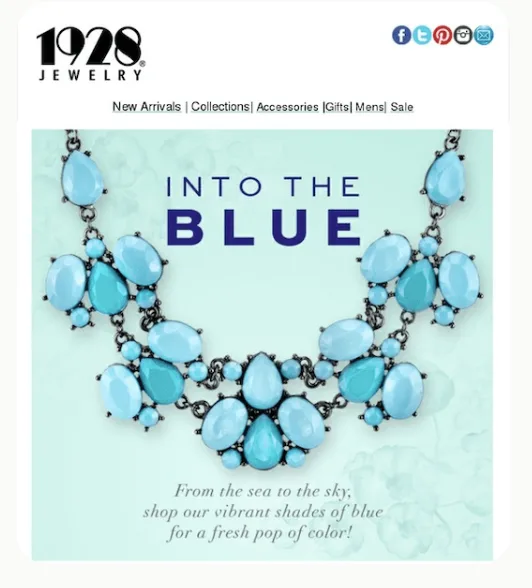
1928 Jewelry’s “Everything Blue” campaign shows the power of color-focused email design. Their approach goes beyond simply featuring blue jewelry, it creates an immersive color experience that captures attention and holds it.
The email bathes subscribers in varying shades of blue, from deep sapphire tones to delicate aquamarine hues, creating a cohesive visual story that makes their pieces feel intentionally curated.
Every element, from the header to product photography to background colors, works in harmony. The result is an email that doesn’t just sell blue jewelry, but it creates an emotional connection through color psychology, making subscribers feel the cool, calming effects of blue while browsing the collection.
2. Minimalist Impact
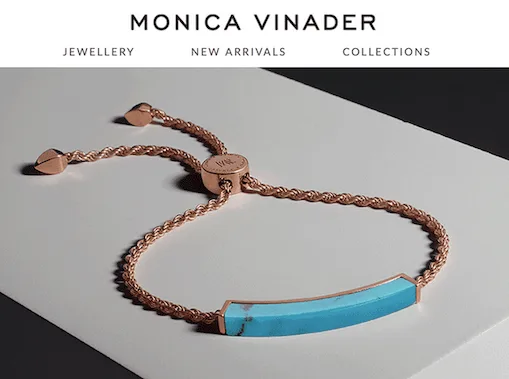
Monica Vinader proves that sometimes one perfect image is worth a thousand words. Their signature email style often features a single hero piece against a clean background, letting the jewelry’s beauty speak for itself.
This minimalist approach creates a powerful impact, a stunning necklace or ring photographed beautifully can outperform busy layouts featuring multiple products.
3. Important Days
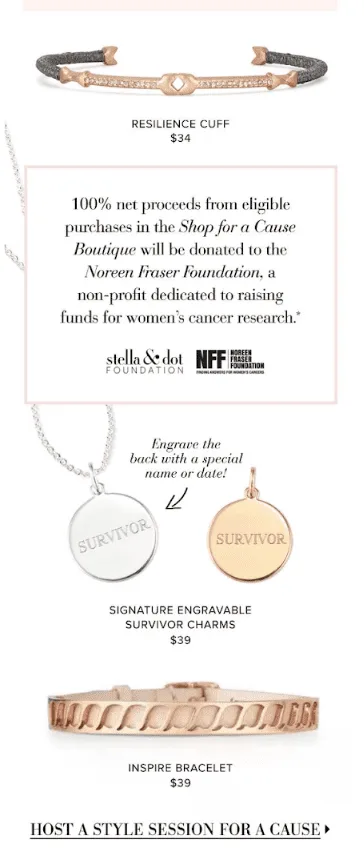
Stella & Dot shows us how to create compelling special day campaigns that align with causes their customers care about. Their limited edition breast cancer awareness collection email campaign combined product promotion with purpose.
The email featured exclusive pieces designed specifically for the cause, with a portion of proceeds going to breast cancer research. This approach not only drove sales but also strengthened emotional connections with their audience.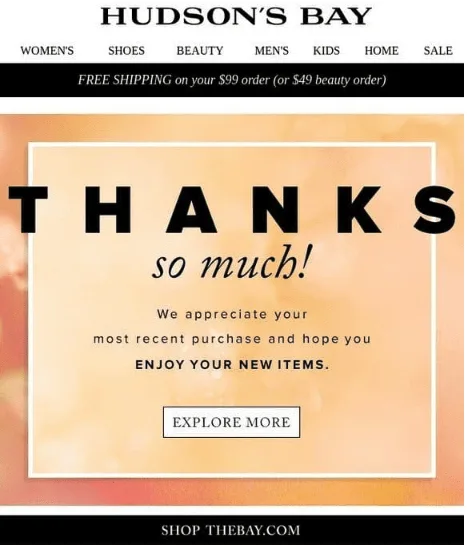
4. Special Offers
Hudson’s Bay excels at creating compelling offer emails that drive immediate action. Their thank-you campaigns often include a free gift with the next purchase, encouraging quick repeat business.
These emails work because they combine gratitude for the recent purchase with a clear incentive for future shopping, all while maintaining a premium feel.
5. Educational Content Marketing
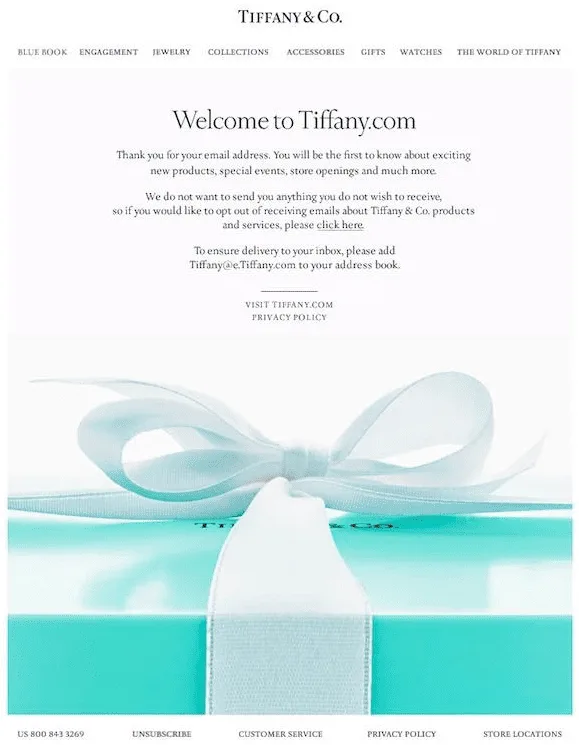
Tiffany & Co. sets the standard for content-rich welcome emails. Their initial message to new subscribers uses the visual metaphor of their iconic gift box to represent the value subscribers will receive in their inbox.
The teal branding carries throughout the email, creating instant recognition and trust. Their welcome series includes care guides, styling tips, and the history behind their iconic designs.
Final Thoughts
Your email marketing strategy should reflect the same attention to detail you bring to selecting and presenting your jewelry collections. By combining beautiful design with strategic thinking, you can create campaigns that resonate with customers and drive sustainable growth for your business.
If you’re ready to elevate email marketing for jewelers, In-box brings years of specialized experience in the jewelry industry to help you create sophisticated, results-driven email campaigns. Our team understands how to maintain your brand’s luxury positioning while driving conversions.
We’ll work with you to develop beautiful, mobile-optimized designs that showcase your pieces effectively. Our expertise in automation helps you deliver the right messages to the right customers at the right time. Through careful tracking and optimization, we’ll help you understand what works and continuously improve your results.
FAQs
How can I prevent my jewelry emails from being marked as spam?
Email deliverability starts with building a quality list through double opt-in subscriptions. Regular list cleaning removes inactive subscribers who might mark your emails as spam. Authentication protocols like SPF and DKIM verify your sending authority to email providers.
A consistent sending schedule helps establish your reputation as a legitimate sender. Pay attention to your email content too and avoid excessive punctuation, all caps, and common spam trigger words.
What are the best times for jewelry businesses to send marketing emails?
It’s important to time your emails based on your audience. Mid-morning and early afternoon on weekdays sometimes work well, but there’s no guarantee that everyone is going to follow that pattern.
Make sure you’re A/B testing and comparing response rates and data based on different times and days. Track everything and use the data to figure out when your audience is most likely to engage with you.