Benefits of Email Marketing for Fashion Brands
Building a successful clothing brand isn’t just about creating great products, it’s about relating to your customers in meaningful ways. Email marketing for clothing brands has unique strengths that other marketing channels simply can’t match.
You Own Your Audience
Social media algorithms constantly change and paid advertising costs keep rising. But with email, you maintain direct access to your audience. Your email list becomes a valuable asset that you completely control, letting you reach customers on your terms.
Think of your email list as a direct pipeline to your most interested customers, people who’ve actively chosen to hear from you. Unlike social media followers who might never see your posts due to algorithm changes, your email subscribers are yours to communicate with as you see fit.
This independence from third-party platforms gives you the freedom to experiment with different marketing approaches and maintain steady communication with your audience, regardless of changes in the digital world.
Cost Effective
Email delivers impressive returns without breaking the bank. According to recent data, email marketing generates $42 for every dollar spent, making it one of the most cost-effective marketing channels available to clothing brands.
Related: List of Best Niches For Email Marketing
Email’s unique ability to reach engaged customers who’ve already shown interest in your brand creates this high ROI. Compared to the rising costs of social media advertising and pay-per-click campaigns, email’s value becomes even clearer.
You’re not just paying for impressions or clicks, but you’re investing in direct communication with people who want to hear from you. Plus, as your list keeps growing, your cost per contact typically decreases, making email marketing for clothing brands even more cost-effective at scale.
Ability to Automate
Set up your campaigns once, and they’ll keep working for you around the clock. From welcome sequences to abandoned cart reminders, automation helps you stay connected with your customers at every stage of their journey, without needing constant attention.
Smart automation lets you create sophisticated, personalized customer journeys that trigger based on specific actions or timeframes. For example, you can automatically send size recommendations based on previous purchases, or trigger care instructions a week after someone buys a delicate item.
These automated sequences ensure that no customer falls through the cracks, while freeing up your time to focus on strategy and creative work.
Consistent Communication Channel
Email continues to be a stable, trusted communication channel. Unlike social media where posts might get lost in the feed, emails land directly in your customers’ inboxes. This direct line of communication helps build stronger customer relationships.
Email’s reliability isn’t only about reliability, but it’s also about creating consistent touchpoints with your audience. When your customers know they can count on receiving your newsletters, updates, and special offers, they’re more likely to engage with your brand regularly.
This consistency helps you build trust and recognition, helping your customers feel more comfortable making purchases and recommending your brand to others. Plus, the email’s format allows for both quick updates and in-depth content, giving you flexibility in how you communicate.
Testing and Experimentation
If you want to know what resonates with your audience, email lets you test different approaches, from subject lines to offers, and see real results. This data helps you refine your strategy and improve your marketing over time.
Email marketing platforms provide detailed analytics that show exactly how your audience interacts with your content. For ecommerce brands, tracking metrics like revenue per email, average order value, and post-purchase email engagement can reveal insights that drive significant sales growth.
You can track open rates, click-through rates, conversion rates, and even how long people spend reading your emails. This wealth of data lets you make the best possible decisions about what works and what doesn’t.
Test everything from the time of day you send emails to the types of product photography that drive the most sales. These insights help you continuously optimize your marketing efforts and improve your results.
Ongoing Relationship Building
Email excels at nurturing customer relationships throughout their journey with your brand. From first-time buyers to loyal customers, email helps you maintain meaningful connections that drive repeat purchases.
Long-term success in fashion retail depends on building a loyal customer base, and email provides the perfect marketing platform for relationship building. You can create targeted campaigns that acknowledge and reward customer loyalty, share exclusive behind-the-scenes content, and make customers feel like valued members of your brand community.
All of these help turn one-time buyers into brand advocates who not only make repeat purchases but also recommend your brand to others.
Necessary Types of Fashion Email Campaigns
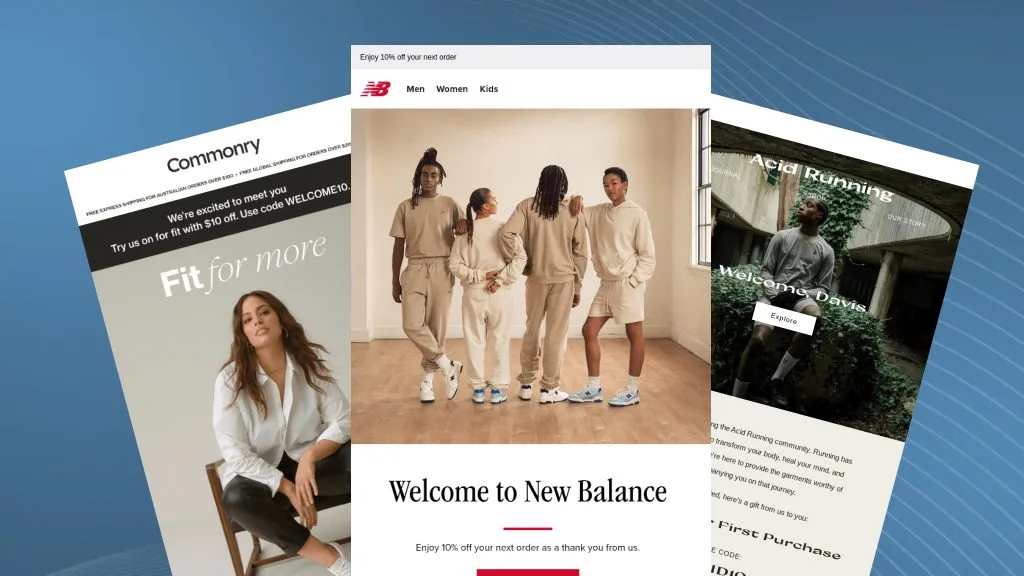
Let’s look at the different types of email campaigns you should consider for your clothing brand. Each serves a specific purpose in your customer’s journey.
Welcome Series
First impressions matter. Your welcome series sets the tone for your brand relationship. Start with a warm greeting and an exclusive offer, maybe 10% off their first purchase. Follow up with emails that promote your brand story, bestsellers, and style tips. The key is to make your new subscribers feel valued while educating them about your brand’s unique selling points.
A good welcome sequence might look like this:
- Day 1: Welcome + Discount
- Day 3: Brand Story
- Day 5: Popular Products
- Day 7: Style Guide
The timing of your welcome sequence plays a huge role in its success. Strategically space your emails to maintain engagement without overwhelming your new subscribers. Your first email should arrive immediately after signup when interest is at its highest.
Each subsequent email should build on the previous one, creating a story that draws subscribers deeper into your brand world. You should start with a welcome message and discount on day one. This shows appreciation for their signup and encourages that important first purchase.
On day three, share your brand story, like what makes you unique, your values, and your mission. Day five is perfect for promoting popular products, and helping your new subscribers understand what other customers love. Wrap up the sequence on day seven with a style guide that demonstrates your expertise and helps your customers envision how to wear your pieces.
Post-Purchase Communications
After someone buys from you, keep the conversation going. Send order confirmations, shipping updates, and delivery notifications, but don’t stop there. Follow up with care instructions, style suggestions, and requests for reviews.
These emails build trust and show customers you care about their experience besides just the sale. Your post-purchase sequence should anticipate and address customer needs before they arise. Include detailed care instructions specific to the items purchased, ensuring your customers get maximum value from their purchases.
Share styling ideas that help them integrate new pieces into their existing wardrobe. Time your review requests thoughtfully, but until customers have had time to experience your product before asking for feedback.
Consider adding unexpected touches that make your customers happy, like a thank you note or exclusive member perks. These small gestures can turn one-time buyers into loyal fans. Track your customer satisfaction through these communications and use the feedback to improve your products and service.
Cart Abandonment Sequences
People leave items in their cart for a lot of reasons. A well thought out abandoned cart sequence can recover lost sales by addressing common concerns and offering gentle reminders.
Studies show that abandoned cart emails have an average open rate of 45%, with many leading to recovered sales. The key to a successful cart recovery is understanding and addressing abandonment reasons.
Some common issues include unexpected shipping costs, price concerns, or simple distractions. Be sure to structure your sequence to systematically tackle these barriers. Start with a friendly reminder, then address potential concerns in subsequent emails.
Consider offering free shipping or a small discount in your second or third email if the first reminder doesn’t work. You can also include social proof like customer reviews and ratings to build confidence. Create urgency by mentioning limited stock or time-sensitive offers, but always maintain a helpful rather than pushy tone.
Promotional Campaigns
Sales, discounts, and special offers drive immediate action. But don’t overdo it. Make sure you focus on creating genuine value. Mix time-limited offers with exclusive deals for your email subscribers to maintain engagement.
Set up your promotions to reward your loyal customers and encourage specific behaviors. Create tiered discounts based on purchase amounts to increase average order value. You can also use flash sales strategically to create excitement and urgency.
Remember to segment your promotional emails based on customer behavior and preferences, what appeals to one group might not resonate with another.
Plan your promotional calendar carefully to avoid discount fatigue and space out your offers, aligning them with natural buying cycles in the fashion industry.
Content/Engagement Emails
Share style tips, outfit inspiration, and fashion advice. These emails build your brand authority and keep your subscribers engaged between purchases. Include user-generated content to show real customers wearing your pieces.
These content-focused emails maintain relationships during non-promotional periods and position your brand as a valuable resource. The content that you create solves real problems for your audience.
Share seasonal styling guides, care tips for different fabrics, or trend forecasts. Mix professional photography with authentic customer photos to show your pieces in various real-life contexts. Use these emails to gather feedback and insights about what your customers want to learn more about.
You can also consider developing themed content series that your subscribers look forward to receiving. This could be weekly outfit inspiration, monthly trend reports, or seasonal fashion guides.
New Collection Launches
Build excitement for new releases with sneak peeks and early access for email subscribers. Create a sense of exclusivity by giving your email list first dibs on new items.
Start with teaser emails that give glimpses of what’s coming. Share behind-the-scenes content showing the design process or inspiration. Create VIP preview events for your most engaged subscribers. Use countdowns and early access periods to drive immediate action when the collection launches.
Think about creating lookbooks or styling guides specific to the new collection. Show how new pieces work with previous collections to encourage additional purchases. Use segmentation to target customers based on their past purchase patterns and preferences.
Back-in-Stock Notifications
When popular items return to stock, let your interested customers know right away. These targeted emails often see high conversion rates because they reach people who’ve already shown interest in specific products.
Set up an easy way for customers to request notifications when items come back in stock. Use this list to build anticipation before the restock happens. Think about offering pre-orders for highly sought-after items and include recommended alternative items in case the desired product sells out again quickly.
Track which items generate the most restock requests to inform your inventory planning. Use this data to adjust your purchasing patterns and better meet customer demand.
Special Event Campaigns
From holiday sales to pop-up shops, special events deserve dedicated email campaigns. Create excitement and urgency around these limited-time opportunities.
Develop unique themes and creative assets for each event to make them memorable. Use countdown timers and exclusive previews to build excitement. Create VIP experiences for your most valuable customers and include clear calls-to-action and all necessary event details in every email.
For in-person events, use email to gather RSVPs and send reminders. Follow up after events with highlights and special offers for those who couldn’t attend.
Seasonal Marketing Messages
Align your emails with the changing seasons. You can help your customers prepare for upcoming weather changes with relevant product recommendations and styling tips.
Create thorough seasonal guides that help customers transition their wardrobes. Show how to style pieces across seasons to maximize their value. Include care tips for seasonal items and storage advice for off-season pieces.
Use weather-triggered campaigns to deliver timely, relevant content. Share early access to seasonal collections with your most engaged subscribers. Create lookbooks that showcase how to build complete seasonal wardrobes.
Cross-Sell/Upsell Campaigns
Recommend complementary items based on past purchases. Show customers how to complete looks or suggest accessories that pair well with their recent buys.
You can use purchase history data to make these recommendations highly relevant and personalized. Carefully time your cross-sell emails and send them when customers are most likely to be interested in complementary items. Create complete look guides that show how different pieces work together.
Use social proof to showcase how other customers style similar items. Track which product combinations perform best and use this data to refine your recommendations. Think about offering bundle deals that make it attractive to purchase multiple items together.
Referral Programs
You can turn your happy customers into brand advocates. Offer incentives for both the referrer and their friends to encourage word-of-mouth marketing through email.
Make sharing easy with clear instructions and pre-written messages. You can also provide rewards that motivate customers to participate. Track referral success rates and adjust your incentives accordingly.
Anniversary/Birthday Campaigns
Celebrate customer milestones with personalized offers. These thoughtful touches help your customers feel valued and it encourages repeat purchases.
Setting up effective email marketing campaigns takes time, expertise, and the right tools. At In-box, we specialize in creating and managing email marketing programs. Our team can help you:
- Design and implement all the campaign types mentioned above
- Create automated sequences that work while you sleep
- Track performance and optimize for better results
- Build stronger relationships with your customers
Don’t let email marketing opportunities slip away.
Contact us today to discuss how we can help your clothing brand grow through strategic email marketing. We’ll create a custom plan that fits your brand’s unique needs and goals.
Get in touch with our team to start your email marketing journey. Let’s work together to turn your email list into a valuable resource that drives consistent sales and customer loyalty.
5 Steps to Build Your Fashion Email Marketing Strategy
Let’s break down how to build an effective email marketing strategy for your clothing brand. These steps will help you create a solid foundation for your email marketing efforts.
1. Select The Right Email Service Provider
Your email service provider (ESP) will be the backbone of your email marketing efforts.
When choosing an ESP, consider these essential features, an intuitive email builder with fashion-friendly templates, strong automation capabilities, advanced segmentation options, reliable deliverability, comprehensive analytics and reporting, A/B testing functionality, and mobile optimization tools.
Don’t just pick the cheapest option, consider what you’ll need as your brand grows. A good ESP will scale with your business and support your evolving needs.
2. Build Your List
Growing your email list takes time and strategy. Sign-up forms on your website should be visible but not intrusive. Strategically place them in your header, footer, and product pages. Remember, cleaning your email list is just as important as growing it, so do so periodically.
You should also offer something valuable in exchange for email addresses, like a first-purchase discount or exclusive style guide. Pop-ups can work well when timed right. Consider showing them after someone’s spent a minute on your site or when they’re about to leave.
In-store collection works too. Train your staff to collect email addresses at checkout, explaining the benefits customers will receive.
3. Segment and Personalize Your Audience
Breaking your list into segments lets you send more relevant emails. Your segmentation strategy should consider your customers’ purchase history, browsing behavior, email engagement, geographic location, and their product preferences.
You can use this data to personalize your messages. According to recent data, personalized emails generate 6x higher transaction rates than generic ones.
4. Create The Best Email Content
Your email content needs to reflect your brand while driving action. Strong copy that speaks to your audience’s needs and desires is essential, keep it short but compelling.
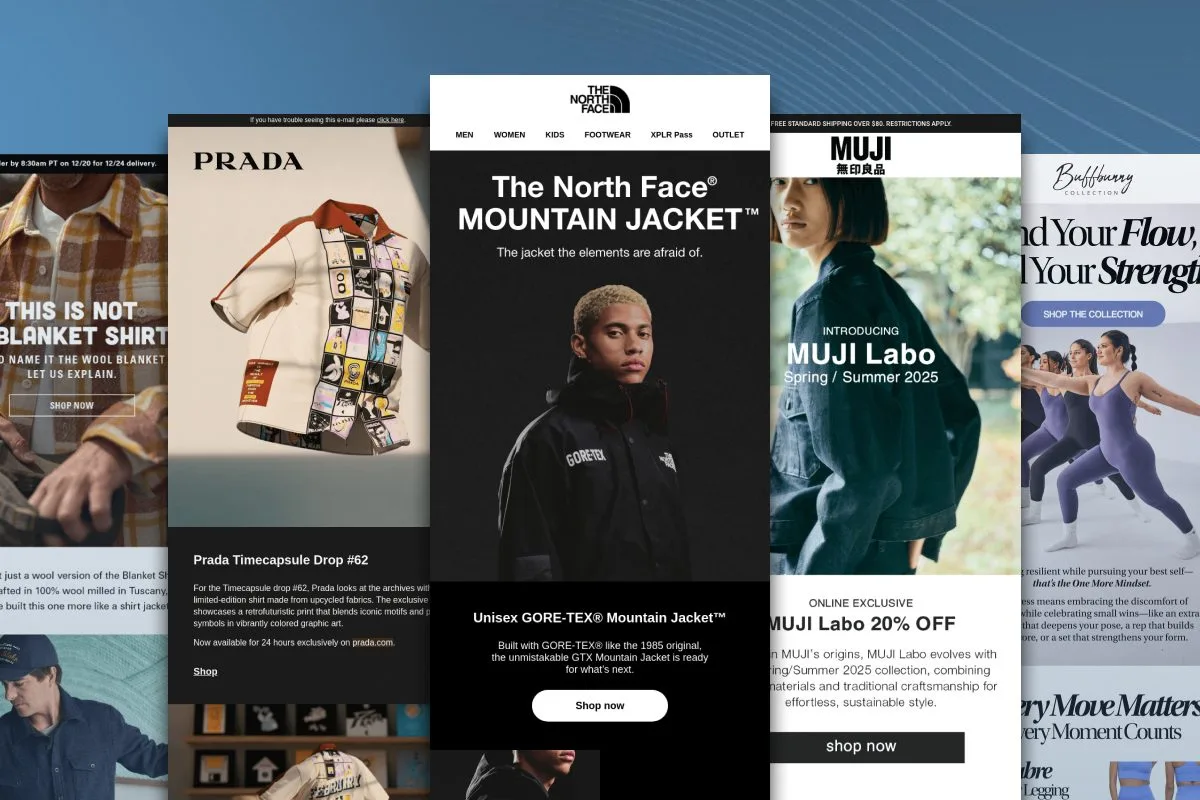
Professional product photography should show your clothing in the best light, including lifestyle shots that can help your customers imagine themselves wearing your pieces. Using design elements like white space, modular layouts, and balanced color schemes will make your fashion emails look as stylish as your products.
Clear calls-to-action should stand out and create urgency when it’s appropriate. You can mix promotional and value-add content to keep your subscribers engaged by sharing style tips, care instructions, and fashion advice alongside your sales messages.
5. Set Up Automation
Automation saves time and ensures consistent communication. Your essential automated workflows should include welcome sequences that introduce your new subscribers to your brand and encourage first purchases, and abandoned cart reminders that bring shoppers back to complete their purchases.
It should also include post-purchase flows that build customer loyalty and encourage reviews, and birthday and anniversary messages that make your customers feel special and drive repeat purchases.
Future Trends and Innovations
The email marketing landscape keeps evolving. Here’s what’s shaping the future:
AI In Email Marketing
AI is transforming how brands create and optimize email campaigns. It’s restructuring subject line optimization, send time prediction, content recommendations, customer behavior analysis, and predictive analytics.
These tools make email marketing more effective and efficient, letting you focus on strategy while AI handles the details.
Personalization Evolution
There is more to personalization than just using someone’s name. Advanced data analytics enables hyper-personalized experiences through product recommendations based on your customers’ browsing and purchase history, and dynamic content that changes based on customer behavior.
It also enables weather-based recommendations, local store inventory updates, and style predictions based on past preferences.
Interactive Email Capabilities
Emails are becoming more interactive, allowing your customers to shop directly from emails, participate in surveys and quizzes, engage with games, view 360-degree product images, and experience virtual clothing try-ons. These features boost engagement and make emails more valuable to your subscribers.
Privacy Considerations
With increasing focus on data privacy, brands need to prioritize transparency about data collection, honor privacy preferences, follow email marketing regulations, use data responsibly, and build trust through clear communication.
Final Thoughts
Email marketing remains one of the most effective ways to grow your clothing brand. By following these strategies and staying current with trends, you’ll build stronger customer relationships and drive more sales.
At In-box, we understand the unique challenges and opportunities in fashion email marketing. Our team stays ahead of industry trends and best practices to deliver results for clothing brands like yours.
We can help your fashion brand choose and set up the right ESP, create engaging email templates that reflect your brand identity, build automated workflows that drive sales, implement advanced segmentation strategies, and track and optimize email performance.
Don’t let the complexities of email marketing hold your brand back. Partner with us and transform your email marketing into a powerful sales channel.
Contact us today and let’s discuss how we can help your clothing brand succeed with email marketing.