50 Ecommerce Email Subject Line Examples
Welcome Emails
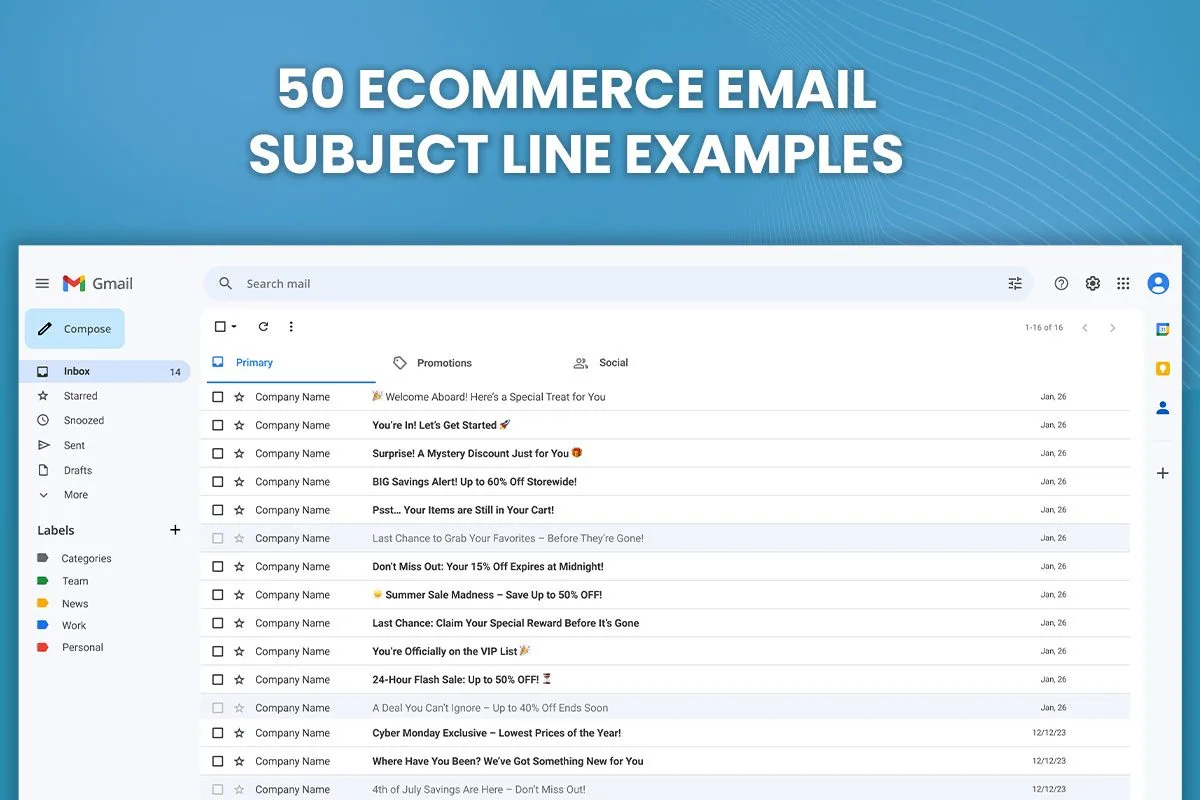
Your first impression matters, a lot. These subject lines help you start the relationship off right:
-
- “Welcome aboard!
-
- Here’s your gift 🎁”
-
- “Thanks for joining us, let’s get started”
-
- “Your exclusive welcome offer inside”
-
- “First-time customers save 20% today”
-
- “Welcome to the family, here’s what’s next”
Each of these welcome emails work because they combine a warm welcome with clear value. They tell new subscribers exactly what they’re getting and give them a reason to open right away.
Promotional Emails
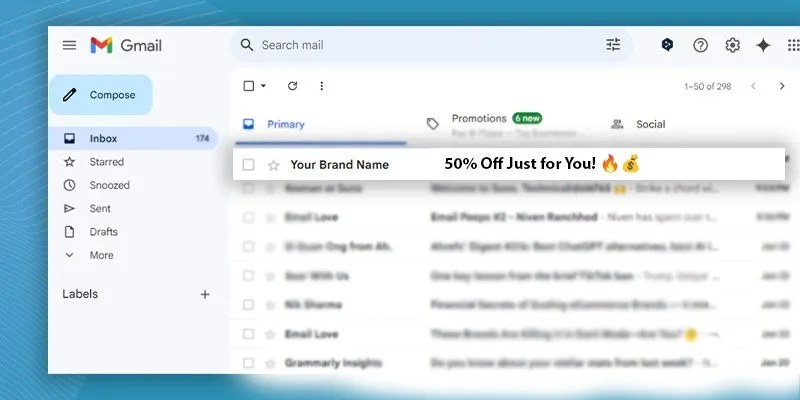
When you’re running a sale or promotion, your subject line needs to create excitement:
-
- “24 hours only: 40% off everything”
-
- “Don’t miss this, flash sale starts now”
-
- “Early access: Shop the sale before anyone else”
-
- “Last chance for summer savings”
-
- “Your exclusive discount ends at midnight”
These subject lines create urgency without feeling pushy. They give specific details about the offer and often include a time element to encourage immediate action.
Cart Abandonment Emails
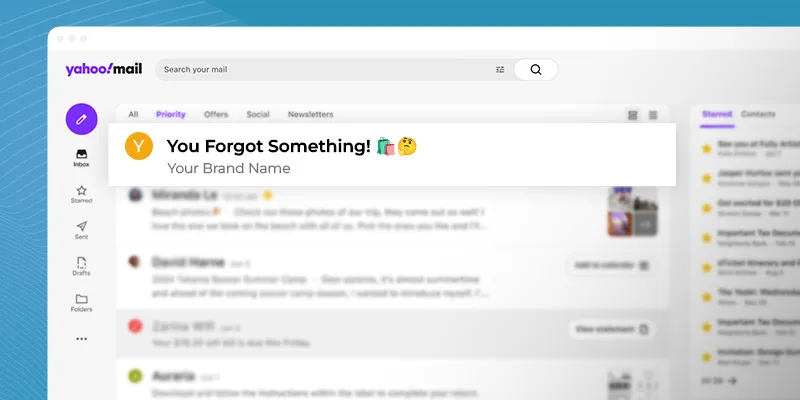
Getting customers back to their abandoned carts takes a delicate touch:
-
- “Did you forget something?”
-
- “Still thinking about it?”
-
- “Your cart misses you”
-
- “Complete your order, items selling fast”
-
- “Come back, we saved your cart”
The best abandoned cart email subject lines use a light, friendly tone and often add a touch of humor or personality. They remind without pressuring and sometimes hint at scarcity to encourage action.
Thank You Emails
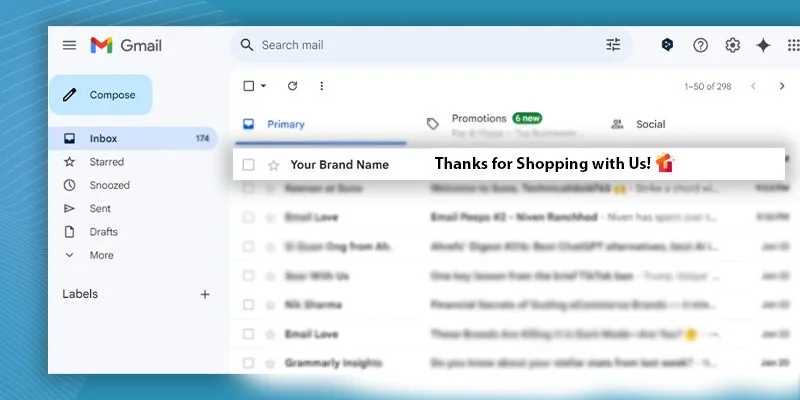
Showing appreciation builds loyalty:
-
- “Thanks for being awesome!”
-
- “A little thank you gift for you”
-
- “You’re the best, here’s 10% off”
-
- “Thanks for shopping with us”
-
- “We appreciate you, special inside”
These subject lines work because they’re genuine and often include an unexpected bonus or reward. They make customers feel valued while giving them another reason to shop.
Anniversary Emails
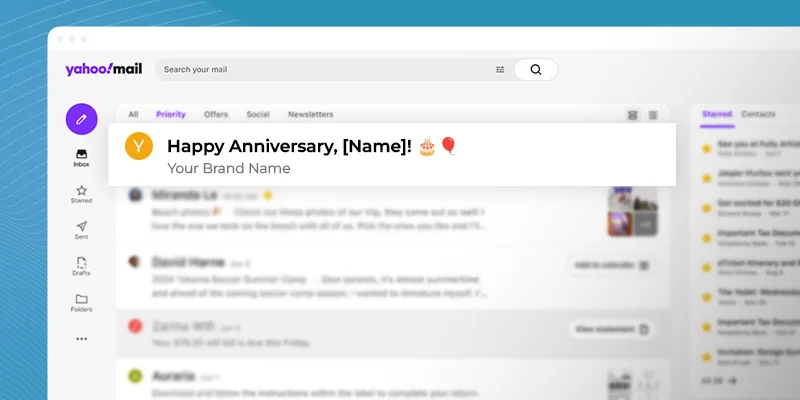
Celebrating milestones with customers creates connections:
-
- “Happy shopping anniversary!”
-
- “One year together, time to celebrate”
-
- “It’s been a year, here’s your gift”
-
- “Anniversary surprise inside”
-
- “Celebrating you with 20% off”
Anniversary subject lines succeed when they make the customer feel special and include a reward for their loyalty.
Upsell Emails
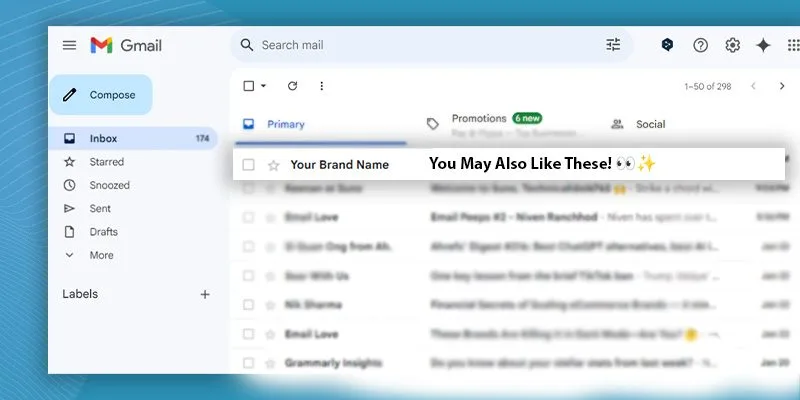
Smart upselling starts with the subject line:
-
- “You liked that? You’ll love this”
-
- “Perfect pairs for your recent purchase”
-
- “Complete your collection”
-
- “Recommended just for you”
-
- “Add these to your favorites”
These work because they’re personalized and relevant to the customer’s interests and previous purchases.
Seasonal Emails
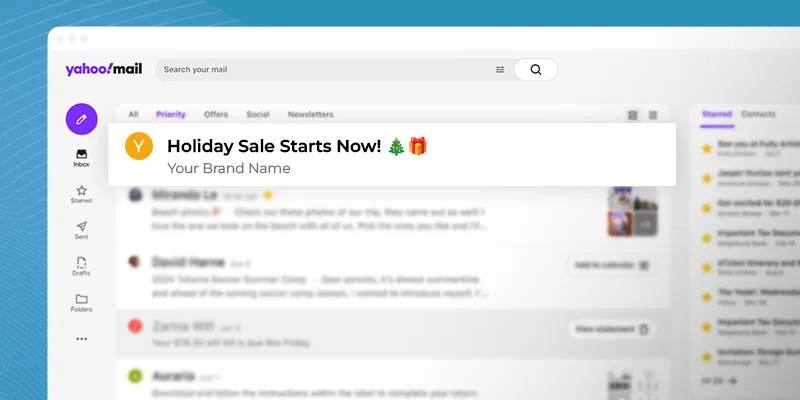
Timing your emails with seasons and holidays adds relevance:
-
- “Summer’s hottest deals are here”
-
- “Your Black Friday preview”
-
- “Christmas came early, unwrap your offer”
-
- “New year, new deals just for you”
-
- “Spring into savings today”
These subject lines work by connecting current events or seasons with your offers, making them feel timely and relevant.
Product Launch
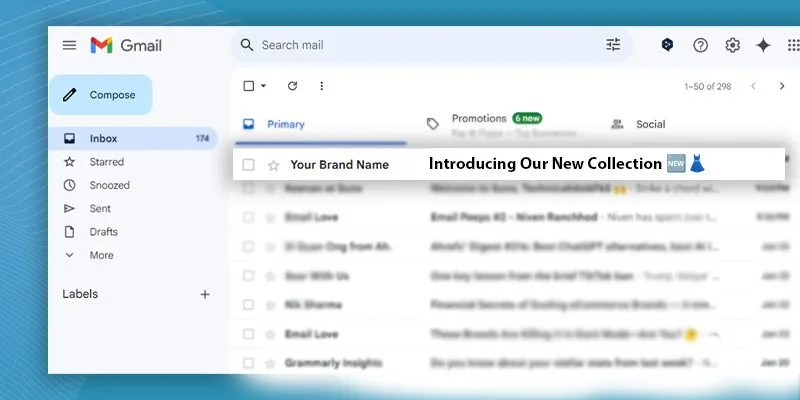
Emails Building excitement for new products requires strong subject lines:
-
- “Meet your new favorite product”
-
- “You’ll want to see this new arrival”
-
- “New launch: Early access inside”
-
- “Be the first to shop our latest collection”
-
- “Something new just dropped”
These subject lines create anticipation and make subscribers feel like insiders getting special access.
Back-in-Stock Emails
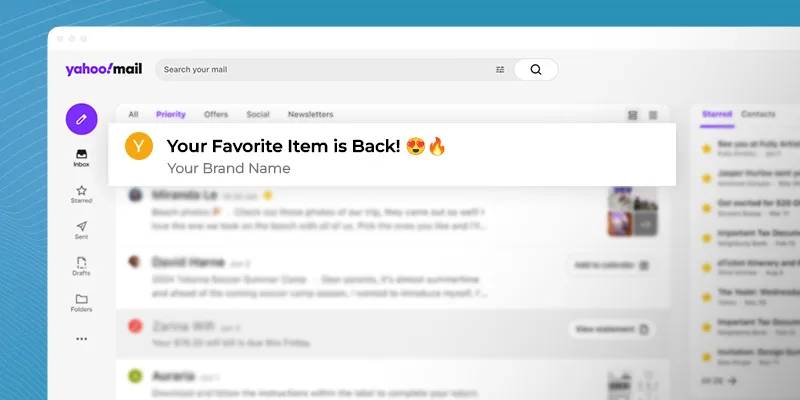
When popular items return, let customers know:
-
- “The wait is over, it’s back!”
-
- “Your wishlist item is here”
-
- “Back in stock: Grab it before it’s gone”
-
- “Look what just came back”
-
- “You wanted it, it’s here”
These ecommerce email flows work because they tap into existing interest and create urgency around limited availability which is so important for digital commerce.
Time-Sensitive Offers
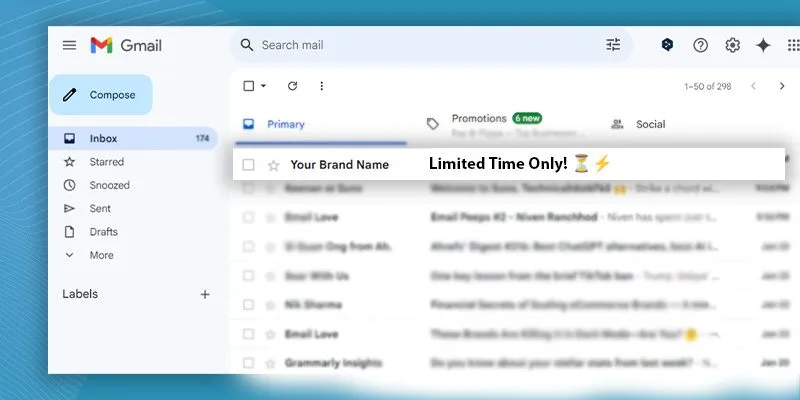
Creating urgency drives action:
-
- “4 hours left, don’t miss out”
-
- “Today only: Double rewards points”
-
- “Ends at midnight: 30% off everything”
-
- “Last chance for free shipping”
-
- “Final hours of our biggest sale”
These subject lines succeed by giving specific deadlines and clear value propositions. Remember the importance of segmentation when it comes to subject lines. By having your audience properly broken up into different categories based on how they interact with you, you can better target your ecommerce email subject lines based on their behaviors.
Ecommerce Email Subject Line Best Practices
1. Keep It Short and Clear
Your subject line needs to work on mobile devices, that means keeping it under 35-40 characters when possible. Think about how your subject line looks when it’s cut off on a phone screen. You want the most important information right at the start.
Write your subject lines like you’re talking to a friend. Skip the fancy words and marketing speak. Simple, clear language gets better results every time. “Sale ends tonight” works better than “Final opportunity to take advantage of our limited-time pricing event.”
2. Add Personal Touches
Personalization goes far beyond just dropping someone’s name into a subject line. While using names can boost open rates by 10-15%, smart personalization digs deeper into your customer data. Think about everything you know about your subscribers, their purchase history, browsing patterns, wishlist items, and even their time zone.
You can reference specific products they’ve looked at: “Sarah, that dress you loved is back in stock.” You might mention their customer status: “VIP members like you get early access.” Or tap into their shopping habits: “Based on your last purchase, you’ll love these new arrivals.”
The key is making these personal touches feel natural, not creepy. Don’t show off everything you know about a customer, use just enough information to make the email feel relevant to them. Remember that personalization works best when it provides real value to the recipient.
3. Create Real Urgency
Creating genuine urgency in your ecommerce email subject lines takes more than just adding “Act Now!” to every message. Your customers have seen all the standard urgency tactics, and they’re getting better at spotting fake pressure tactics.
Real urgency comes from actual limitations, whether that’s time, quantity, or availability. If you’re running a 24-hour sale, say so specifically: “Today only: 30% off ends at midnight.” If you’re down to the last few items in stock, be precise: “Only 5 leather jackets left in size M.”
The best email marketing ideas use urgency and scarcity. Don’t claim something is almost gone if you have a warehouse full of inventory. Don’t announce a “one-day-only” sale that mysteriously extends for a week. Your customers remember these things, and each false claim damages their trust in your future emails.
4. Test Everything
A/B testing your subject lines isn’t just a nice-to-have, it’s essential for understanding what drives your audience to action. Every subscriber list has its own unique preferences and patterns, and testing helps you uncover these patterns.
Start with simple tests comparing two variations:
-
- Length comparisons: “Flash Sale Today” vs “Don’t miss our biggest flash sale of the season, one day only”
-
- Tone differences: “Professional attire: 40% discount” vs “Look sharp & save big on workwear”
-
- Personal vs generic: “Sarah, your wish list items are on sale” vs “Wishlist items now on sale”
-
- Emoji use: “New arrivals are here! 👗” vs “New arrivals are here!”
-
- Question vs statement: “Ready for summer?” vs “Summer styles are here”
-
- Numbers vs words: “50% off everything” vs “Half off everything”
Track not just open rates but click-through rates and conversions too. Sometimes a subject line that gets lots of opens doesn’t lead to sales, while a less-opened email drives more revenue.
Keep in mind that testing doesn’t only include the copywriting but testing different email designs is just as important.
5. Skip the Spam Triggers
Getting caught in spam filters can kill your email campaign before it even starts. Modern spam filters look at more than just individual words, they analyze patterns, sending behavior, and overall message content. Still, certain elements in your subject lines can raise red flags.
Beyond the obvious spam triggers like “FREE!” and “ACT NOW!”, there are subtler patterns to avoid. Multiple exclamation points, excessive capitalization, and dollar signs combined with numbers often trigger spam filters. Even seemingly innocent phrases like “no obligation” or “satisfaction guaranteed” can cause problems.
Here’s what to watch for in your subject lines:
-
- Money-related terms: “cash,” “price,” “cost,” “investment”
-
- Pressure tactics: “don’t wait,” “last chance,” “expires today”
-
- Over-promising: “guaranteed,” “no risk,” “100% free”
-
- Spammy formatting: Multiple dollar signs ($$), repeated punctuation (!!!), or mixing numbers and special characters ($100)
Instead of relying on these trigger words, focus on describing real value. Replace “FREE SHIPPING!!!” with “We’ll cover your shipping today.” Instead of “LAST CHANCE, DON’T MISS OUT!!!” try “Sale ends at midnight.” These natural phrases convey the same message without setting off spam alerts.
6. Make Mobile Your Priority
Mobile email opens aren’t just common, they’re becoming the norm. With 46% of all email opens happening on mobile devices, optimizing for small screens isn’t optional anymore. Your perfect subject line needs to work on a tiny phone screen while still making sense on desktop.
Think about how mobile email apps display subject lines. Most show about 30-40 characters, sometimes even less on smaller devices. Your key message needs to fit in that space. This doesn’t mean all your subject lines need to be super short, but the most important information should come first.
Performing an effective email marketing audit early on in the campaign can help you ensure that your campaigns are working properly on all platforms.
Consider these mobile-specific factors:
-
- Preview text matters more on mobile, make sure it complements your subject line
-
- Emojis take up valuable character space but can help your message stand out
-
- Different email apps show different character counts, test on multiple devices
-
- Screen orientation affects how much text shows, test both portrait and landscape
Remember that mobile users often check email while doing other things. They’re scanning quickly, making split-second decisions about what to open. Your subject line needs to grab attention and communicate value in that brief moment.
7. Use Numbers and Specifics
Numbers cut through the clutter in an inbox. They’re specific, scannable, and they make promises concrete. When you use numbers in subject lines, you’re not just catching attention, you’re setting clear expectations.
Research shows that subject lines with numbers often outperform those without. The reason is simple: numbers give readers something tangible to grasp. “Save up to 40% on winter coats” tells readers exactly what to expect, unlike “Big savings on winter wear.”
The key is using numbers strategically:
-
- For discounts, be exact: “32% off” feels more authentic than “30% off”
-
- For quantities, create urgency: “Last 3 in your size” is more compelling than “Limited stock”
-
- For timing, be specific: “Ends in 6 hours” works better than “Ending soon”
-
- For lists, odd numbers often perform better: “7 styles you need this season” vs “10 new looks”
Combine numbers with strong context. Don’t just say “50% off”, say “50% off all winter boots.” Give the number meaning that connects to customer value.
8. Ask Questions Strategically
Questions in subject lines work because they engage your reader’s mind, they naturally want to answer them. But not all questions are created equal. The best email ecommerce subject line questions tap into specific customer needs, challenges, or desires.
Think about questions that speak directly to your customers’ situations. If someone’s been browsing running shoes on your site, “Training for a marathon?” might grab their attention. If they’ve been looking at winter coats, “Ready for the cold weather?” feels relevant and timely.
Your questions should do more than just ask, they should suggest solutions:
-
- “Want free shipping?” suggests opening the email will reveal how to get it
-
- “Looking for the perfect gift?” implies you’ve got gift recommendations inside
-
- “Need new workout gear?” hints at fitness-related products or deals
Avoid questions with obvious answers or ones that might get a “no.” “Want to save money?” is too generic. “Interested in our new collection?” might get a “not really.” Instead, make your questions specific and valuable to your target audience. The best email marketing strategy helps keep the conversation going.
9. Add Personality Without Going Overboard
Your subject lines are your brand’s voice in the inbox. They need to sound like you, but a professional version of you. Finding this balance takes practice, but it’s worth the effort.
If your brand is playful, your subject lines can include wordplay or jokes: “These deals are snow joke ❄️” might work for a winter sale. If you’re more professional, stick to clean, clear language: “Professional wear: New collection available.”
Here’s how to add personality while staying professional:
-
- Use your brand’s typical tone and vocabulary
-
- Include culturally relevant references when they fit naturally
-
- Add emojis if they match your brand voice
-
- Keep humor appropriate for all audiences
-
- Stay consistent across all your communications
Remember that personality doesn’t mean unprofessional. Even fun, casual brands need to maintain credibility. Your subject line can be entertaining while still respecting your readers’ time and intelligence.
10. Make Every Word Count
In subject lines, every character costs you valuable space. That means each word needs to justify its existence. This isn’t just about being brief, it’s about being precise and purposeful with your language.
Start by writing your subject line normally, then challenge each word:
-
- Does this adjective add real value?
-
- Could a shorter word work just as well?
-
- Is this information necessary for the reader?
-
- Would removing this word change the meaning?
Look at these examples:
-
- “Our amazing huge blowout sale starts today” becomes “Sale starts today: Up to 70% off”
-
- “Check out these incredible new products we just got in” becomes “New arrivals: Fall collection”
-
- “Don’t miss out on this wonderful opportunity to save” becomes “24-hour flash sale: Save 40%”
The shorter versions aren’t just briefer, they’re clearer and more powerful. They get straight to what matters to the reader without unnecessary fluff. Remember, your subject line has one job: get the email opened. Every word should serve that purpose.
How to Improve Your Email Subject Lines
Let’s get practical about making your subject lines better. You don’t need fancy tools or complicated strategies, you need a systematic approach to testing and improving what you send.
Start with your data. Look at your most successful emails from the past six months. What patterns do you see in the subject lines? Which words or phrases seem to get the best response? Don’t just look at open rates, check click rates and conversions too.
Testing makes perfect. Set up regular A/B tests for your subject lines. Change one element at a time. Using email marketing tools like Mailchimp and Klaviyo can help you automate some of this testing.
Focus on length. Send the same email with a long and short subject line. Track which performs better with your audience. Then test different tones, professional versus casual. Keep testing one element at a time until you build a clear picture of what your subscribers prefer.
Think about timing too. The same subject line might perform differently at different times. Test sending your emails at various times and days to find your sweet spot. Your customers might be more responsive to certain types of subject lines early in the morning versus late at night.
Pay attention to your metrics over time. If you see open rates dropping, it might be time to refresh your approach. Watch for signs that your audience is getting tired of certain phrases or styles.
Consider your customer segments. Different groups might respond better to different styles of subject lines. New customers might need more explanation, while loyal customers respond better to insider language and exclusive offers.
Use your automation tools wisely. Many email platforms can help you personalize subject lines automatically based on customer data. Test these features carefully, personalization works best when it feels natural, not forced.
Keep a swipe file of subject lines that catch your attention. When you see a great subject line in your own inbox, save it. Think about why it worked on you and how you might adapt that approach for your own emails.
Watch your competition but don’t copy them. See what subject line styles they’re using, but focus on developing your own unique approach. Your goal isn’t to sound like everyone else, it’s to stand out in the inbox.
Final Thoughts
Creating great email subject lines isn’t just about following a formula, it’s about understanding your audience and giving them a reason to engage with your messages. The best subject lines feel personal, timely, and valuable to the person receiving them.
Remember that what works today might not work tomorrow. Keep testing, keep measuring, and keep adapting your approach based on what your data tells you. Your subscribers’ preferences will change over time, and your subject lines need to evolve too.
Focus on building trust with your subject lines. Every time you send an email with a subject line that delivers on its promise, you make it more likely that subscribers will open your next email. Every time you disappoint them with clickbait or false promises, you damage that trust.