Target Audience
When comparing Hubspot vs Klaviyo, understanding who each platform serves best will help guide your decision.
HubSpot shines for B2B companies and service-based businesses that need a complete marketing and sales solution. Think software companies, consulting firms, and professional services, businesses with longer sales cycles and complex customer relationships. You’ll get tools designed for lead nurturing, content marketing, and sales pipeline management all in one place.
Klaviyo, on the other hand, is built from the ground up for eCommerce and direct-to-consumer (DTC) brands. If you’re selling products online, Klaviyo’s specialized features, like abandoned cart recovery, post-purchase flows, and product recommendations, make it a natural fit. It’s designed to help you drive sales through personalized customer experiences.
Pricing and Plans
Both platforms offer free plans, but they’re structured quite differently.
Klaviyo Free Plan:
- Up to 250 contacts
- 500 monthly emails
- Access to nearly all features
- 150 SMS/MMS credits monthly
- Email support for first 60 days
HubSpot Free Plan:
- Basic marketing tools
- Simple contact management
- Forms and landing pages
- Limited email templates
- Basic reporting features
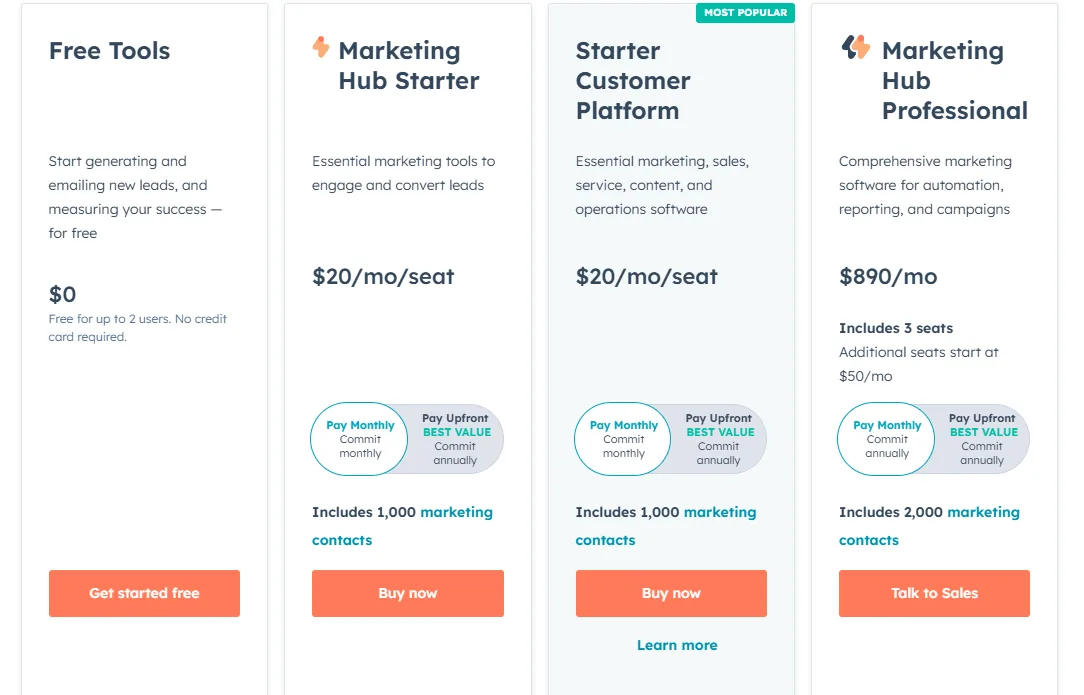
HubSpot’s free plan gives you basic marketing tools, simple contact management, and forms, but you’ll need to upgrade for features like eCommerce integration and advanced automation. Their paid plans start at $20/month for the Starter Marketing Hub, but costs can climb quickly as you add features and contacts.
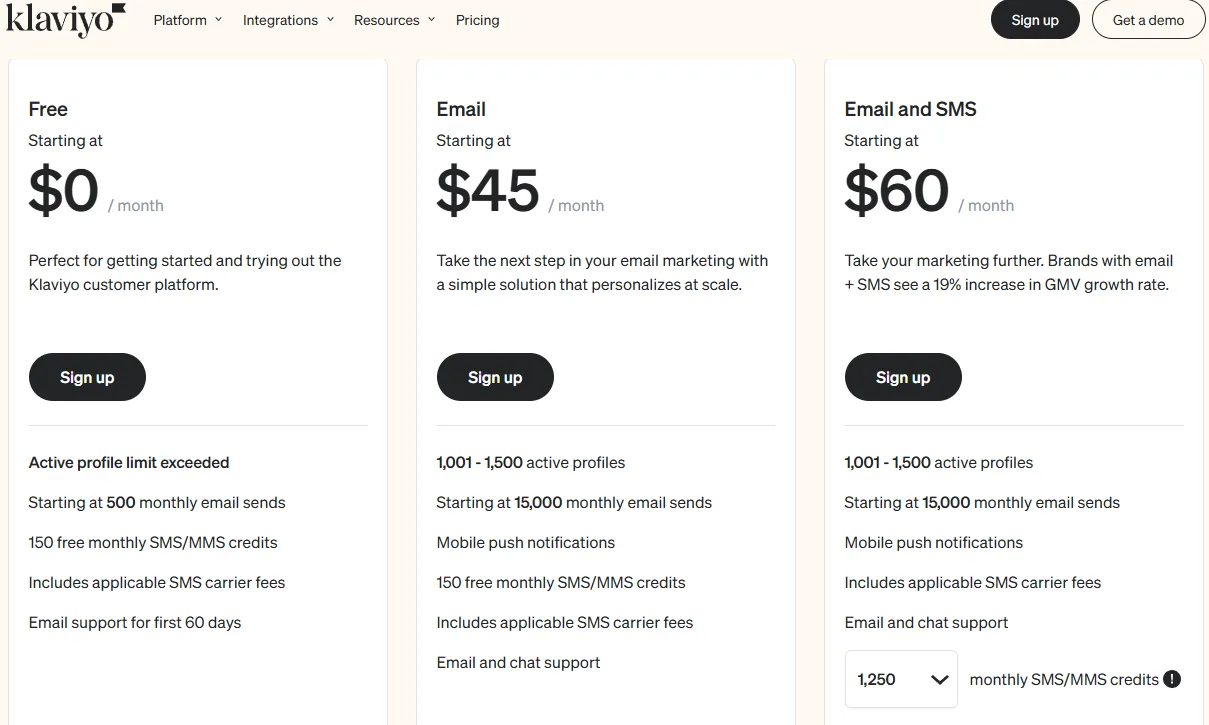
Klaviyo’s free plan lets you manage up to 250 contacts and includes access to nearly all features, that’s pretty generous for testing the waters. Paid plans scale based on your contact list size, starting at $45/month for email marketing. While not the cheapest option, you’re getting specialized eCommerce features from the get-go.
Klaiyo Paid Plans:
- Starting at $45/month for email marketing
- Pricing scales with contact list size:
- $45/month for up to 1,500 contacts
- $95/month for up to 3,500 contacts
- $150/month for up to 5,000 contacts
- All features included at every tier
- SMS marketing can be added to any plan
HubSpot Paid Plans:
- Starter Marketing Hub: $20/month
- Professional Marketing Hub: $890/month
- Enterprise Marketing Hub: $3,600/month
- Additional costs for:
- Extra marketing contacts
- Sales Hub features
- Service Hub features
- Operations Hub features
Both platforms offer flexible pricing tiers as your business grows, but Klaviyo’s structure is more straightforward, you pay based on contacts and email volume. HubSpot’s pricing can get complex with different hubs and feature tiers to consider.
Ease of Use and Setup
Getting started with any new platform takes time, here’s what to expect from each.
Klaviyo’s interface is clean and focused on eCommerce needs. The initial setup process guides you through connecting your store and importing contacts. While there’s a learning curve with advanced features, the basics are pretty intuitive. Their flow builder, used for creating automated campaigns, uses a visual interface that makes sense once you get the hang of it.
HubSpot’s setup process is more involved, simply because there’s more to configure. The interface is polished and user-friendly, but you’ll need time to explore all the features and options available. Navigation is logical, with clear sections for different marketing activities, but it can feel overwhelming at first.
Both platforms offer extensive documentation and tutorials. HubSpot’s got a slight edge here with their comprehensive academy and certification programs, while Klaviyo focuses on practical eCommerce-specific guides and resources.
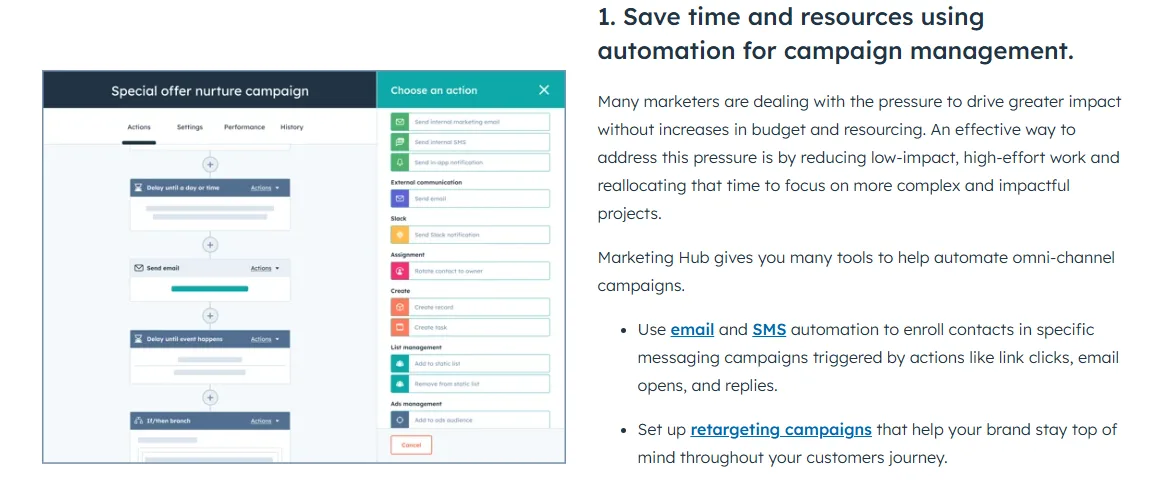
Marketing Automation Capabilities
As you can expect if you’d made it this far, these tools vary quite a bit in how they handle automation.
Klaviyo’s automation revolves around “flows”, think welcome series, abandoned carts, and browse abandonment campaigns. These are triggered by customer behavior and purchase data from your eCommerce email marketing platform. What’s cool is how deeply these flows can tap into your store’s data to create super relevant messages.
HubSpot’s workflows are more broadly focused, handling everything from lead nurturing to internal tasks. Their automation ties closely with their CRM, letting you create complex sequences based on contact properties and behaviors across multiple channels, not just email.
Key Differences:
- Klaviyo excels at eCommerce-specific triggers and actions
- HubSpot offers more variety for general business processes
- Klaviyo focuses on customer purchase behavior
- HubSpot emphasizes lead scoring and qualification
- Klaviyo provides deeper product-related personalization
- HubSpot enables broader business process automation
Comparing the two, Klaviyo is better at eCommerce-specific triggers and actions, while HubSpot offers more variety for general business automation needs.
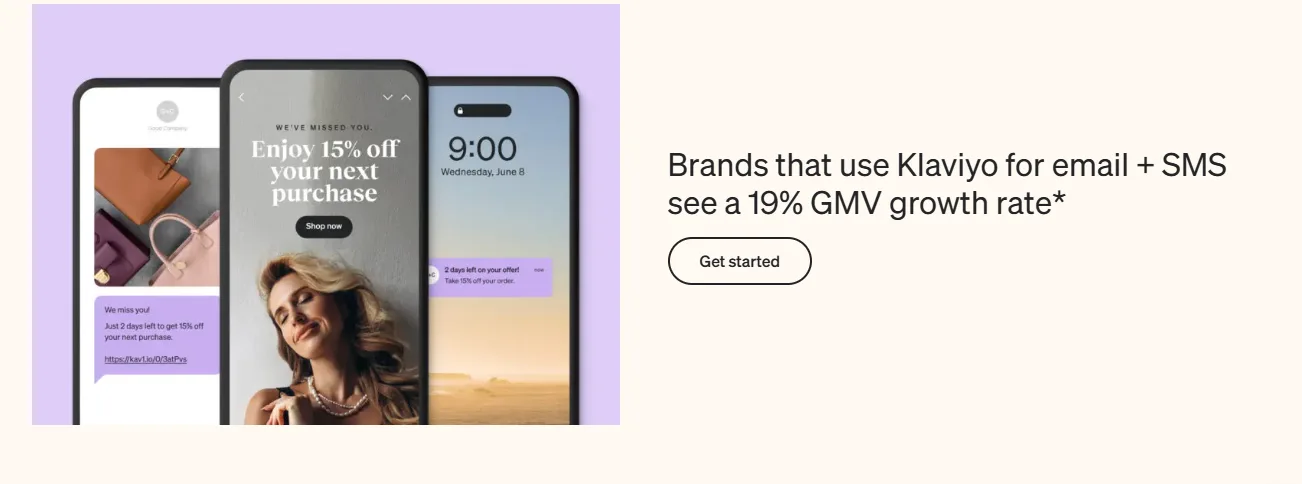
Email Marketing Features
Let’s dig into how these platforms approach email marketing:
Design and Templates
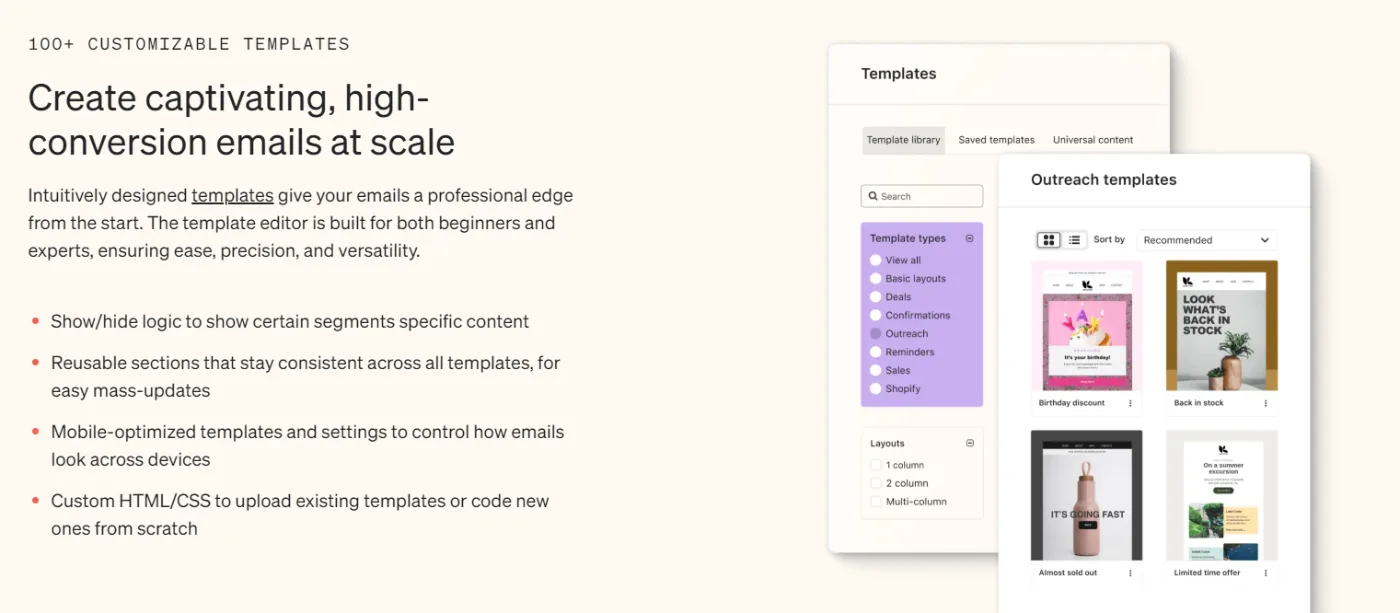
Klaviyo’s email designer feels like it was built specifically for online sellers. You’ll get a drag-and-drop editor packed with eCommerce elements, think product blocks, recommendation feeds, and dynamic pricing displays.
What sets it apart is how these elements pull live data from your store, creating emails that showcase your products in real-time. Their template library focuses on driving sales with layouts for product launches, seasonal promotions, and cart recovery campaigns.
HubSpot takes a different approach with their email tools. Their editor emphasizes clean, professional designs that work well for B2B communication. You’ll find templates geared toward lead nurturing, event promotion, and company updates.
While you can add products to HubSpot emails, the platform really shines when creating polished business communications that integrate with your sales process.
Personalization and Segmentation
This is where Klaviyo’s eCommerce focus becomes crystal clear. You can slice and dice your audience based on intricate shopping behaviors, what they’ve bought, browsed, or abandoned in their cart.
What’s really impressive is their predictive analytics, which helps you target customers based on their likely future behavior. Want to send an email to customers who typically buy during sales and are due for another purchase? Klaviyo makes that possible.
HubSpot’s segmentation takes a business-focused approach. You’ll segment contacts based on lead scores, deal stages, and engagement metrics.
Their CRM integration means you can target emails based on where prospects are in your sales pipeline or which industry they’re in. It’s perfect for B2B marketing where relationship stage matters more than shopping behavior.
Testing and Optimization
Both platforms offer A/B testing, but they prioritize different elements. Klaviyo’s testing features are built for eCommerce success, test different product displays, offer combinations, or recovery email timing. You’ll get clear data on how these variables impact your bottom line.
HubSpot’s testing capabilities focus on improving business communication. Test subject lines, sender names, and content formatting to boost engagement. Their analytics help you understand how these elements influence lead progression through your sales funnel.
Key Differences:
- Klaviyo excels at product-focused emails and eCommerce engagement
- HubSpot shines with professional B2B communications
- Klaviyo offers deeper product personalization
- HubSpot provides better business relationship management
- Klaviyo’s testing focuses on sales optimization
- HubSpot’s testing centers on engagement metrics
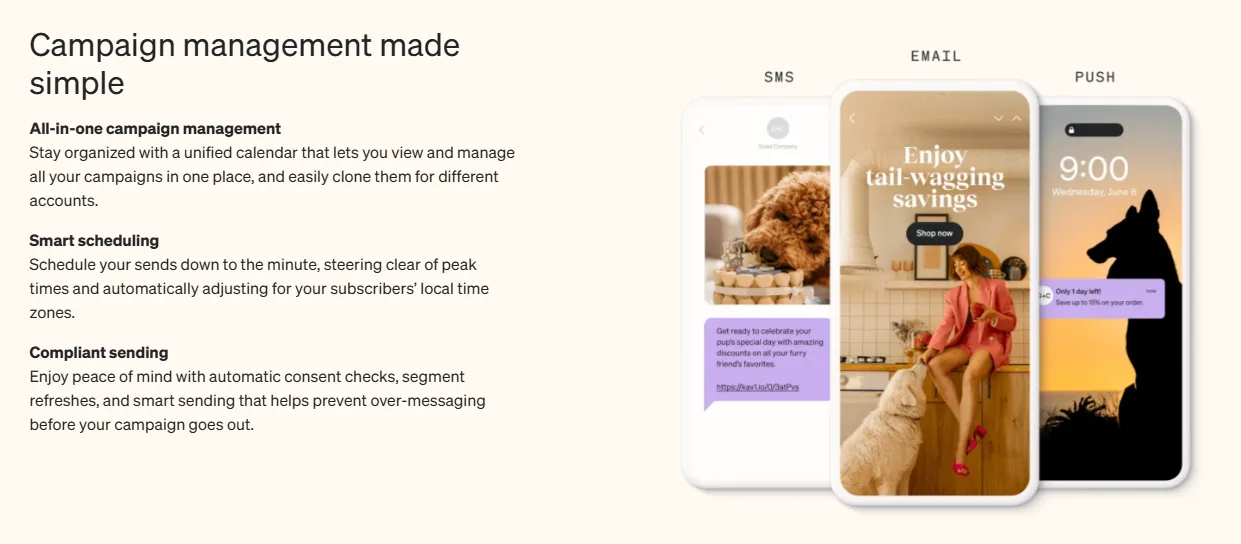
CRM and Contact Management
This is where we see some of the biggest differences between these platforms.
HubSpot’s CRM is comprehensive, it’s practically a platform in itself. You get detailed contact records, deal tracking, pipeline management, and sales tools all integrated with your marketing efforts. It’s perfect for businesses with dedicated sales teams and complex sales processes.
Klaviyo’s contact management is more focused on the eCommerce customer journey. While it’s not a full CRM, it excels at tracking customer interactions with your store, purchases, browsing history, cart activity, and engagement with marketing campaigns.
For tracking customer engagement, both platforms do well but in different ways. HubSpot gives you a broader view of business relationships, while Klaviyo provides deeper insight into shopping behavior.
Integrations and Ecosystem
Integration capabilities can make or break your marketing tech stack, let’s see how these platforms connect with other tools.
Hubspot:
- 1,600+ total integrations
- Key integration categories:
- CRM platforms
- Social media tools
- Accounting software
- Project management
- Customer service tools
- Basic eCommerce connections
- Custom API access available
Klaviyo:
- 350+ specialized integrations
- Strong eCommerce connections:
- Deep Shopify integration
- WooCommerce
- Magento
- BigCommerce
- Facebook/Instagram shops
- Detailed data syncing:
- Product catalogs
- Customer behavior
- Purchase history
HubSpot boasts over 1,600 integrations across a wide range of business tools. You’ll find connections to major CRM platforms, social media tools, accounting software, and more. While they do offer eCommerce integrations, they’re not as deep as what you’ll find with Klaviyo.
Klaviyo may have fewer total integrations (around 350) but they’re deeply focused on eCommerce. Their Shopify integration, for example, pulls in detailed product data, customer behavior, and purchase history. This specialized focus means better data for personalization and targeting.
Both platforms offer APIs for custom integrations, but HubSpot’s ecosystem is broader while Klaviyo is deeper in the eCommerce space. Your choice depends really on whether you need a broad spectrum of features to fit a more generic profile or in-depth ecommerce functionality.
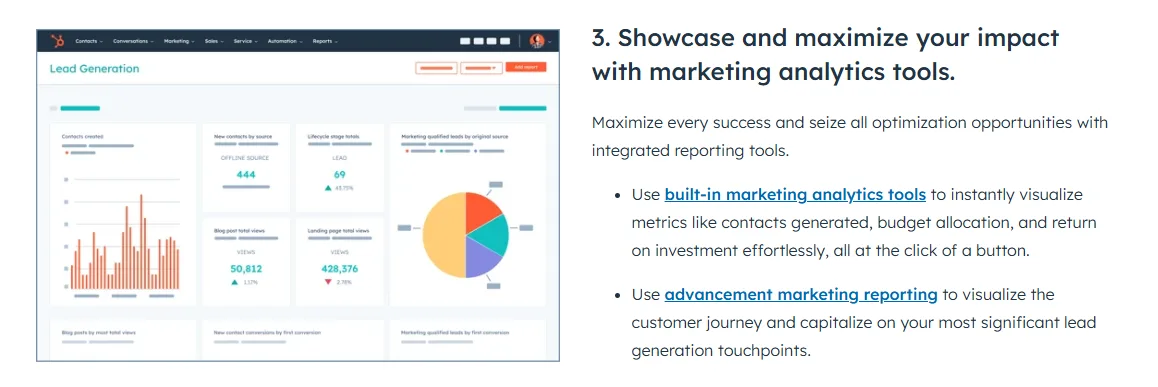
Analytics and Reporting
Data drives decisions, here’s how each platform helps you measure success.
Klaviyo’s analytics shine in the eCommerce space. You’ll get detailed insights into revenue generation, customer lifetime value, and product performance. Their predictive analytics can even forecast which customers are likely to make another purchase, and when. The reporting interface makes it easy to track how your marketing efforts directly impact sales.
HubSpot’s reporting capabilities cover a broader spectrum. You can track everything from email performance to website traffic to sales pipeline metrics. Their dashboards are customizable and can pull data from multiple sources across your marketing and sales activities.
When comparing analytics tools, Klaviyo excels at eCommerce-specific metrics while HubSpot offers more comprehensive business reporting options.
Customer Support and Community
Getting help when you need it, that’s what support is all about.
HubSpot’s support system is extensive. Their knowledge base is massive, and they offer chat support, email support, and phone support depending on your plan level. The HubSpot community is active and helpful, with users sharing tips and solutions in their forums. Reading email marketing case studies are also a great way to determine the success and performance of a platform.
Klaviyo provides solid support with a focus on eCommerce expertise. While their support team might be smaller, they really understand the challenges of online retail. They offer email support to all users and chat support on higher tiers.
Use Cases and Industry Recommendations
Let’s look at where each platform really shines for your email marketing agency:
HubSpot is the go-to choice for:
- B2B companies with longer sales cycles
- Professional service firms needing full CRM capabilities
- Businesses focused on content marketing and lead generation
- Companies with dedicated sales teams
Klaviyo stands out for:
- eCommerce brands selling direct to consumers
- Online retailers needing sophisticated customer segmentation
- Businesses focused on personalized shopping experiences
- Companies wanting to automate product-focused marketing
Want to learn about other platforms like Mailchimp? Check out our Mailchimp vs Klaviyo review!
Pros and Cons Summary
HubSpot’s Advantages:
- Complete marketing and sales solution
- Powerful CRM functionality
- Extensive integration options
- Comprehensive reporting tools
HubSpot’s Limitations:
- Can be expensive as you scale
- Complex pricing structure
- Less specialized for eCommerce
Klaviyo’s Advantages:
- Deep eCommerce functionality
- Advanced segmentation capabilities
- Straightforward pricing model
- Powerful automation for online retail
Klaviyo’s Limitations:
- Limited beyond eCommerce use cases
- Basic CRM capabilities
- Fewer total integrations
Final Thoughts
Your choice between Klaviyo and HubSpot really comes down to your business model and goals. If you’re primarily selling products online, Klaviyo’s specialized eCommerce features make it the clear winner. That’s why we at In-box have chosen to partner with Klaviyo, we’ve seen firsthand how its powerful eCommerce capabilities drive results for our clients.
HubSpot makes more sense if you need a complete marketing and sales solution, especially for B2B or service-based businesses. Its broad feature set and CRM capabilities make it ideal for managing complex business relationships.
Remember, the best platform is the one that aligns with your specific needs. Consider your business type, growth plans, and budget when making your choice. Need help deciding? At In-box, we specialize in helping businesses make the most of Klaviyo’s eCommerce marketing capabilities. We can help you evaluate if Klaviyo’s the right choice for your business and get you set up for success.
Learn more about how In-box can help support your efforts with Klaviyo bring your email marketing campaigns to the next level!