How Email Marketing Platforms Price Their Services
Almost all ESPs charge on a usage-based model. In practical terms, that usually means one or both of the following:
- The number of active profiles in your account.
- The number of emails sent or received per month.
Whichever limit you hit first determines your bill. Understanding this distinction matters, because sending frequent campaigns to a small list can sometimes cost the same as sending fewer campaigns to a much larger one.
As your list grows, costs rise, but so should the revenue generated by that list. At scale, email platform costs tend to become a small line item relative to what the channel produces.
Klaviyo: Premium Pricing for Advanced E-Commerce
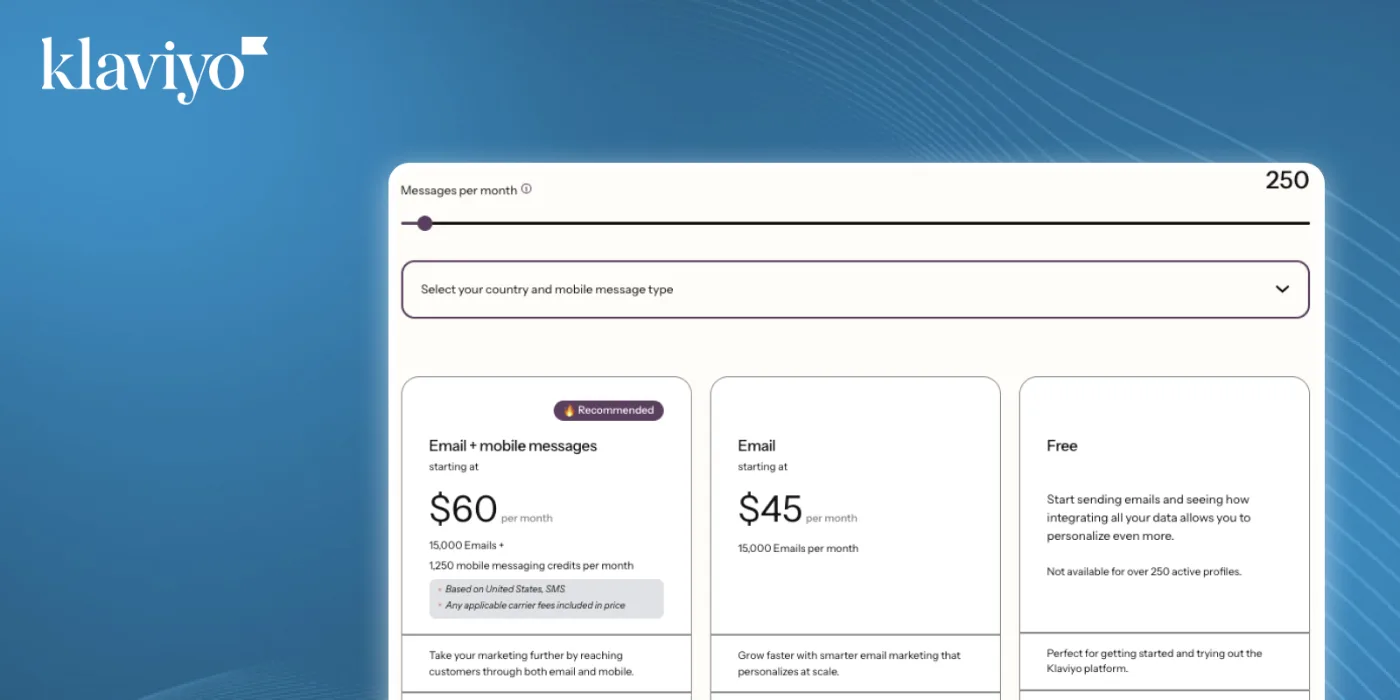
Klaviyo is widely considered the premium option for e-commerce email marketing. It’s also one of the most expensive platforms on the market.
Plans start at a relatively low monthly cost for small lists, but pricing increases quickly as your database grows. Klaviyo charges based on:
- Active profiles in your account
- Monthly email sends
If you exceed either threshold, you move into the next pricing tier. This means costs can rise quickly if you send frequent campaigns, even with a modest list size.
The trade-off is capability. Klaviyo offers advanced segmentation, deep behavioral tracking, and complex automation logic that supports sophisticated email and SMS strategies. For stores running mature lifecycle marketing programs, the higher cost is often justified.
Omnisend: A More Affordable E-Commerce Alternative
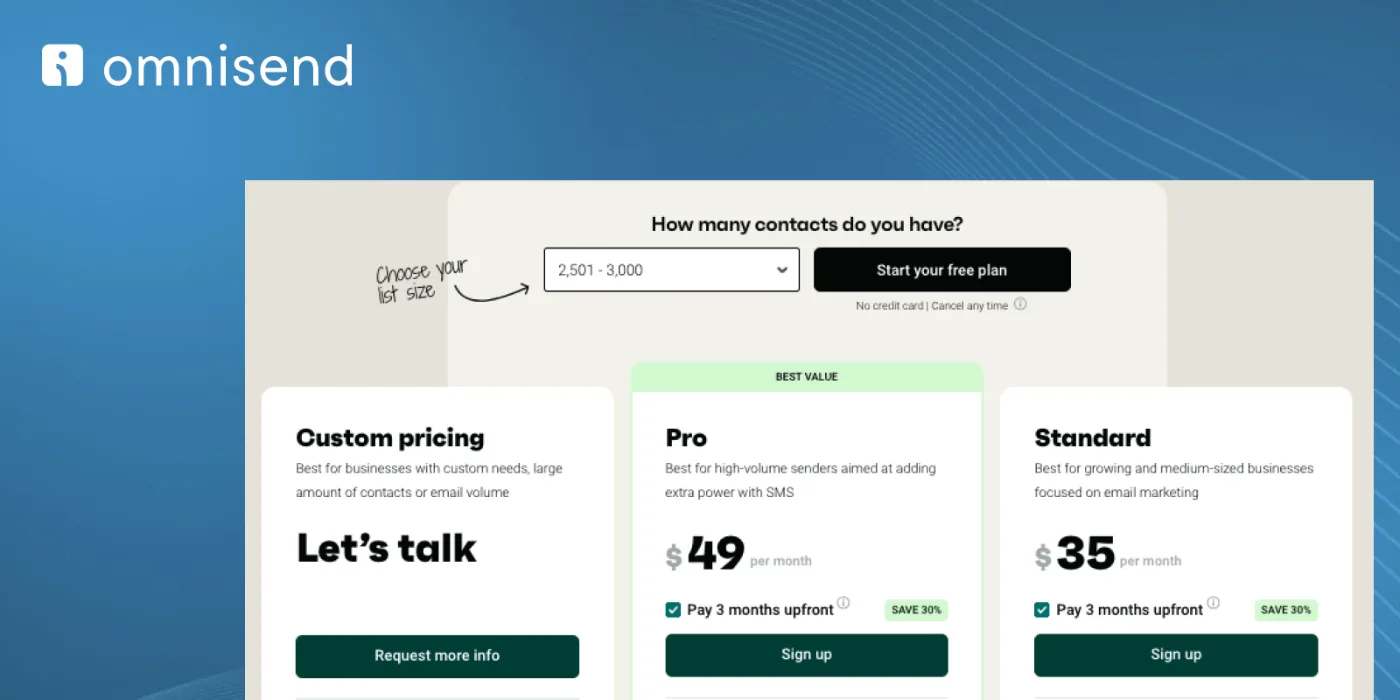
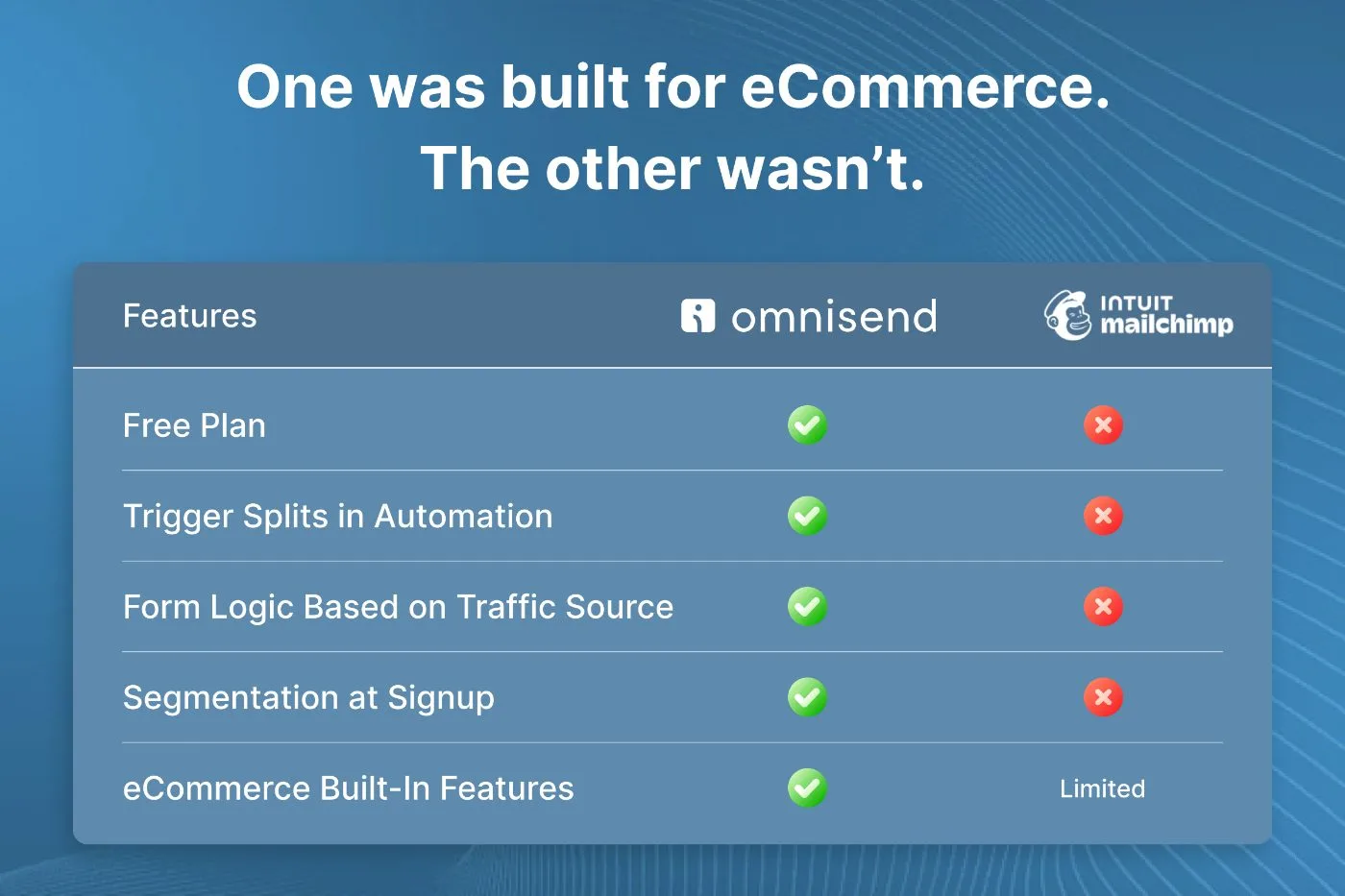
Omnisend is often positioned as a more accessible alternative to Klaviyo. It’s designed specifically for e-commerce but comes at a lower price point, especially as list sizes increase.
One of the key differences is that many Omnisend plans include unlimited email sends. That removes the risk of surprise overages when campaign frequency increases.
While Omnisend doesn’t include every advanced feature Klaviyo offers, it covers the essentials well: automation, segmentation, and combined email and SMS workflows. For many growing stores, the feature set is more than sufficient.
The platform also frequently offers introductory discounts, making it easier for newer brands to get started without committing to high monthly fees.
Why Mailchimp Often Falls Short
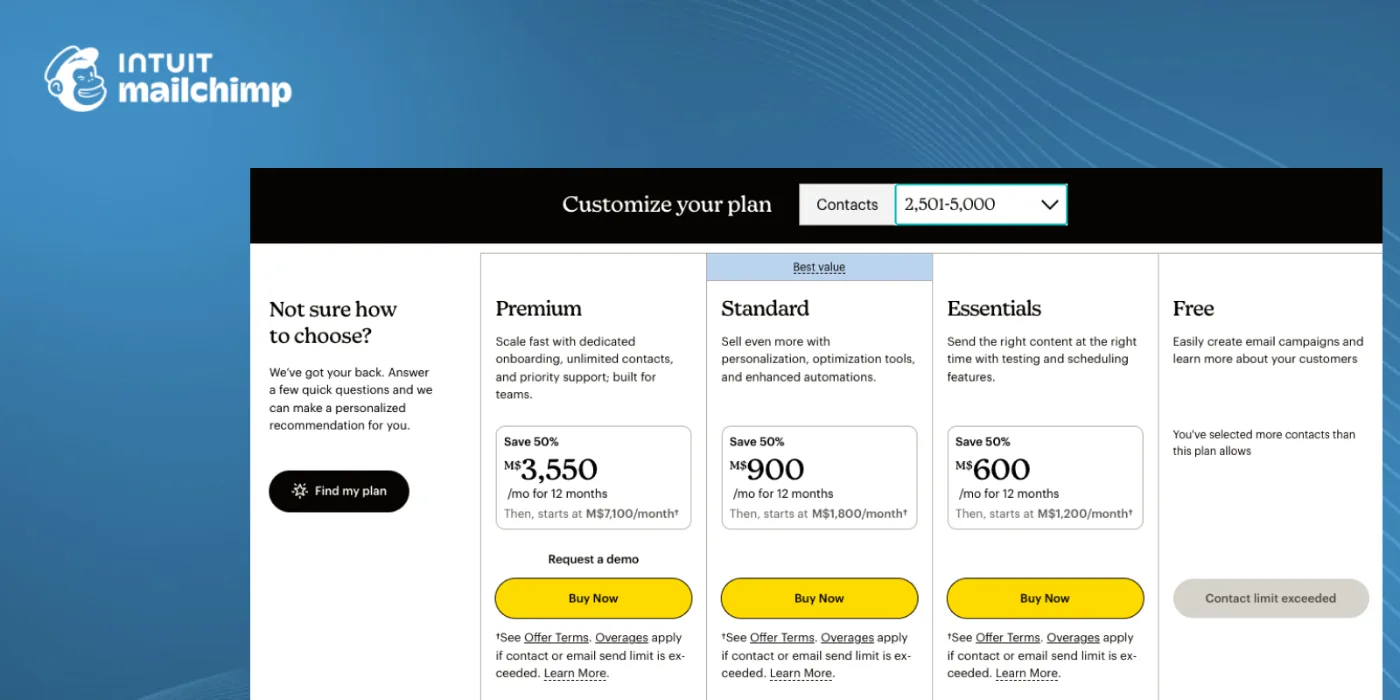
Mailchimp is one of the most well-known email platforms, but recognition doesn’t always equal suitability.
Despite its popularity, Mailchimp tends to be expensive for what it offers, particularly for e-commerce businesses. Integrations are limited, automation capabilities are weaker, and forms and data handling are often restrictive.
Many brands that start on Mailchimp eventually migrate to another platform once they outgrow its limitations. For that reason, it’s rarely recommended for stores that plan to build serious email-driven revenue.
Beehiiv: Built for Newsletters, Not Stores
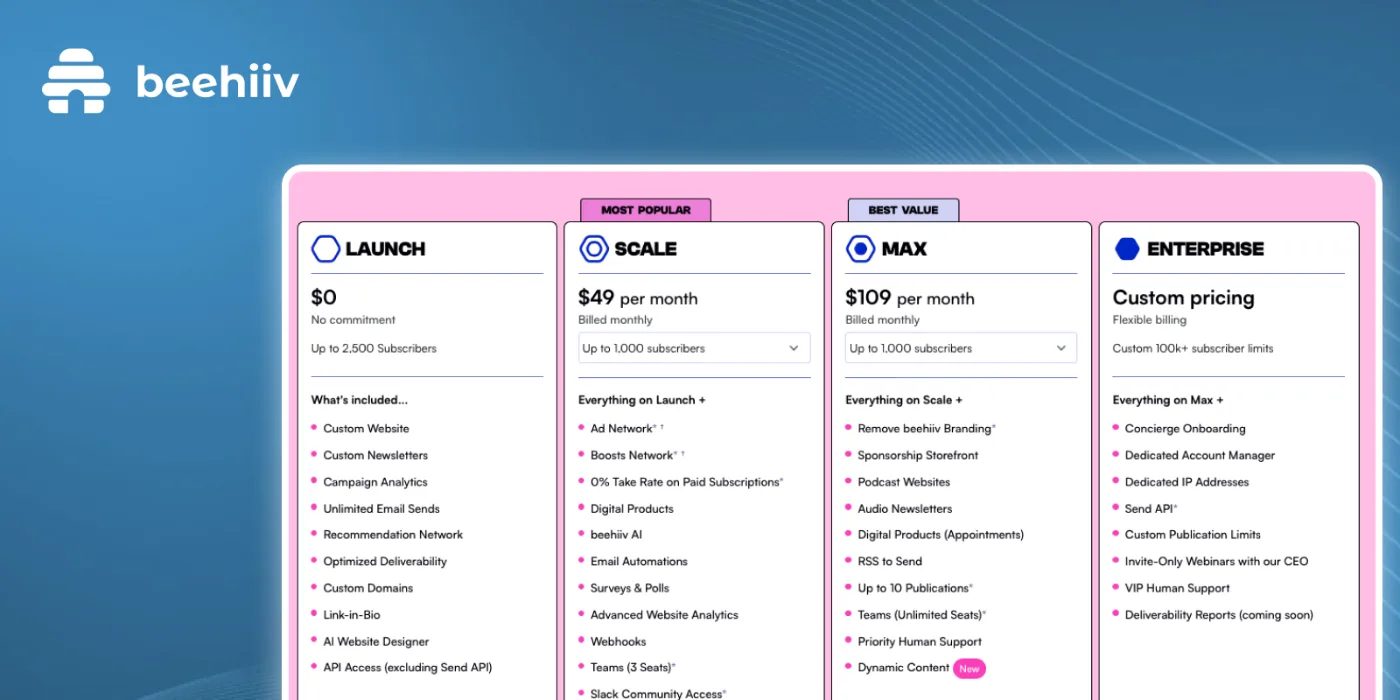
Beehiiv occupies a different category entirely. It’s built for creators, consultants, and B2B operators who run newsletter-first businesses.
The platform supports basic automations, such as welcome sequences, but it’s not designed for e-commerce use cases like abandoned cart recovery or product-based segmentation.
Beehiiv pricing can appear high on the surface, but it includes access to an integrated ad network. For many publishers, sponsorship revenue offsets a meaningful portion of the monthly cost, reducing the effective spend.
For businesses focused on content, thought leadership, or audience monetization through newsletters, Beehiiv is a strong fit. For online stores, it’s not.
Choosing the Right Platform for Your Business
The best email platform depends on what you sell and how you sell it.
- E-commerce brands running advanced lifecycle campaigns tend to benefit most from Klaviyo.
- Growing stores looking for strong automation at a lower cost often choose Omnisend.
- Coaches, consultants, and creators publishing newsletters typically prefer Beehiiv.
- Mailchimp, despite its visibility, is often a temporary stop rather than a long-term solution.
Final Thoughts
Email marketing costs scale with usage, but that scaling usually mirrors business growth. The goal isn’t to find the cheapest platform, but the one that aligns with your revenue model and marketing complexity.
A well-chosen ESP supports your strategy rather than limiting it. Once set up correctly, email becomes a predictable, compounding channel that justifies its cost many times over.
Choosing the right platform early can save time, money, and future migrations as your business grows.