Klaviyo vs Mailchimp: Main Takeaways
When you’re comparing Mailchimp vs Klaviyo, think of it like choosing between a Swiss Army knife and a specialized chef’s knife. Mailchimp’s your versatile all-in-one marketing tool that’s great for beginners, while Klaviyo’s your specialized ecommerce powerhouse.
Free Plans: What You’ll Get
Mailchimp’s free plan is pretty generous, you can manage up to 500 contacts and send 2,500 emails monthly. You’ll get basic templates, a website builder, and some automation features. It’s a solid starting point if you’re just testing the waters.
Klaviyo’s free plan caps at 250 contacts, but don’t let that smaller number fool you. You’re getting access to almost all features, including advanced segmentation and automation flows that you’d typically need to pay for with other platforms.
Paid Plans: Breaking Down the Costs
When it comes to klaviyo vs mailchimp pricing, here’s what you need to know: Mailchimp starts cheaper but can get expensive fast as you grow.
Mailchimp’s paid plans:
- Essentials: $13/month (500 contacts)
- Standard: $20/month (500 contacts)
- Premium: $350/month (10,000+ contacts)
Klaviyo’s pricing scales with your contact list:
- $45/month for 1,500 contacts
- $95/month for 3,500 contacts
- $150/month for 5,000 contacts
One key difference, Klaviyo includes SMS credits in their plans, while Mailchimp charges separately for SMS marketing.
Ease of Use
The platform’s usability directly impacts your team’s efficiency and effectiveness in executing email marketing campaigns.
Mailchimp: Interface and Setup
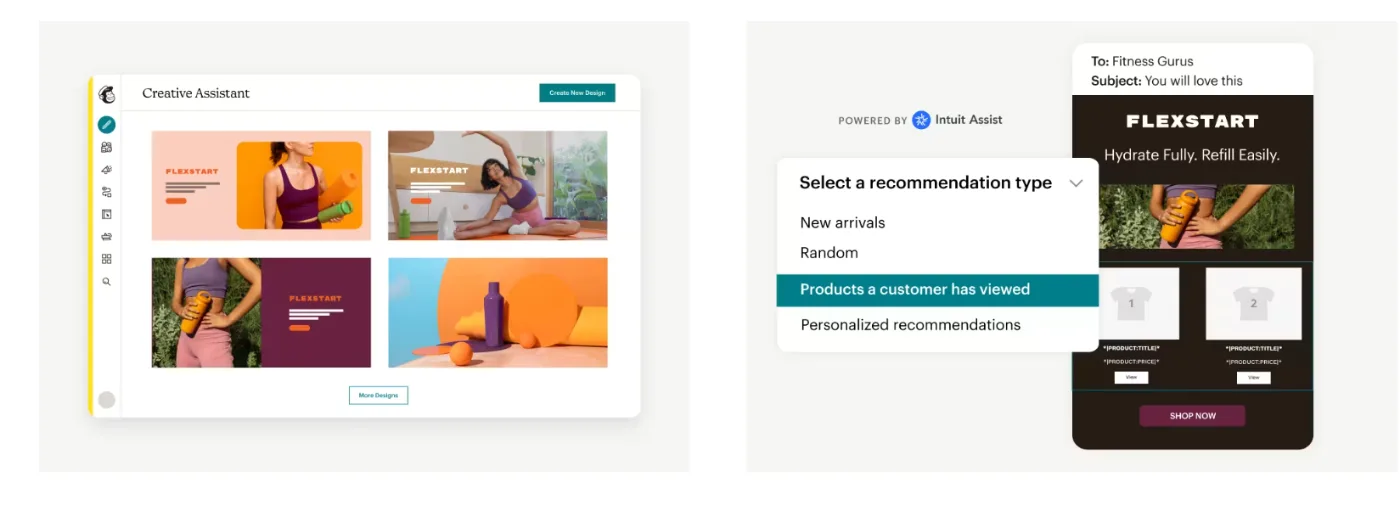
Mailchimp presents an intuitive interface that prioritizes accessibility. The dashboard provides clear navigation paths to essential functions, with a left-hand menu organizing key features logically. Their drag-and-drop email builder allows for quick campaign creation, a significant advantage for teams seeking rapid deployment capabilities.
The platform’s template organization system enables straightforward access to previous campaigns and saved designs. New users will find themselves creating basic campaigns within minutes, thanks to Mailchimp’s straightforward approach to campaign setup and execution. This ease of use extends to their automation interface, where pre-built workflows streamline the creation of standard marketing sequences.
Klaviyo: Advanced Functionality
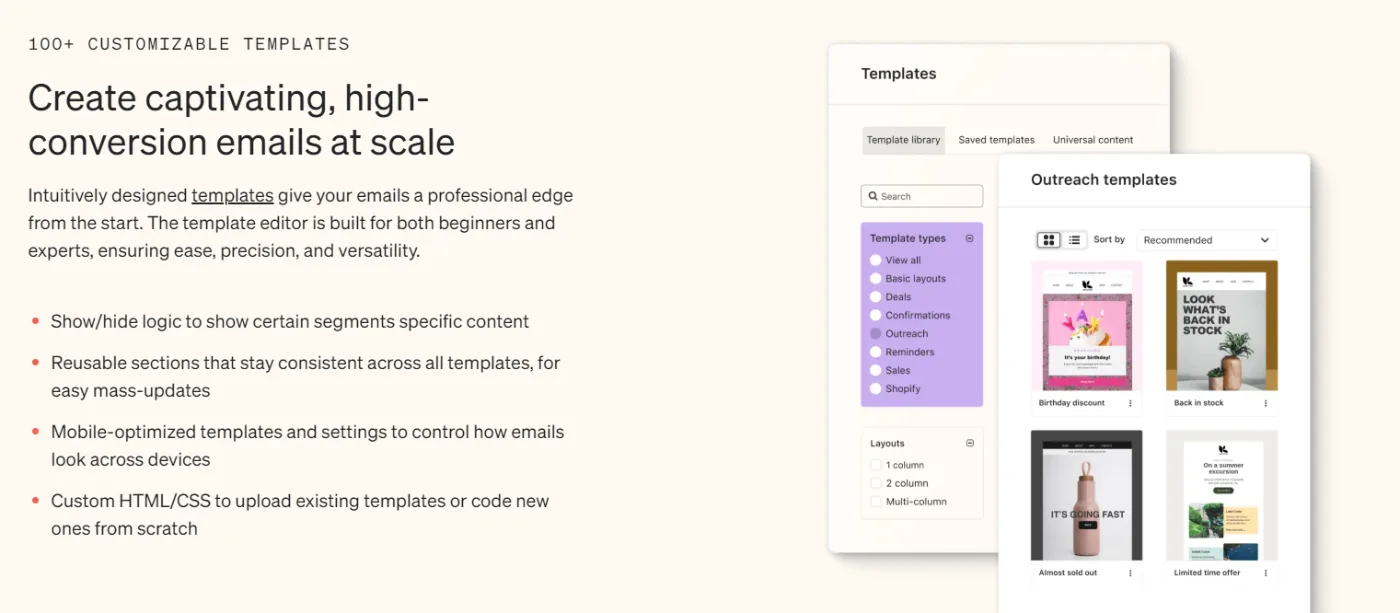
Klaviyo’s interface reflects its ecommerce specialization, presenting a more sophisticated, and initially more challenging, user experience. The learning curve is steeper, but this complexity enables more sophisticated marketing capabilities that prove invaluable for ecommerce operations.
The platform’s workflow builder requires more initial investment in learning, yet provides granular control over customer communications. You’ll find Klaviyo’s segmentation interface particularly powerful, enabling the creation of highly specific customer segments based on behavioral data, purchase history, and engagement metrics, a level of precision that justifies the additional complexity.
Target Audience
Understanding each platform’s ideal user base helps inform your selection decision. The differences between these platforms become particularly apparent when examining their core users.
Mailchimp’s Core Users
Mailchimp has positioned itself as the go-to platform for small to medium-sized businesses requiring broad marketing capabilities. The platform serves organizations with diverse marketing needs beyond email, particularly those new to email marketing seeking an accessible starting point.
Its broad feature set and intuitive interface make it especially suitable for organizations that need comprehensive marketing capabilities without extensive technical expertise.
Teams operating with limited marketing experience will find Mailchimp’s approach particularly beneficial. The platform excels at providing integrated social media marketing tools alongside email capabilities, making it a strong choice for businesses seeking to manage multiple marketing channels from a single platform.
Klaviyo’s Primary Market
Klaviyo has carved out a distinct niche in the ecommerce sector, specifically targeting online retailers and direct-to-consumer brands focused on personalized marketing. The platform shines brightest when deployed by companies seeking sophisticated automation based on customer behavior and those prioritizing data-driven marketing decisions.
Ecommerce businesses operating through platforms like Shopify or WooCommerce will find Klaviyo’s specialized features particularly valuable. The platform’s deep integration with ecommerce systems enables advanced segmentation and personalization capabilities that surpass what’s possible with more generalist platforms.
Reviewing The Features
Email Marketing Capabilities
Both platforms offer robust email marketing tools, but their approaches differ significantly in execution and depth.
Mailchimp’s email creation system emphasizes accessibility and speed. Their straightforward template editor includes drag-and-drop functionality that makes creating professional-looking emails straightforward.
Mobile-responsive designs adapt automatically to different screen sizes, while basic personalization options and A/B testing capabilities meet the needs of most standard marketing operations.
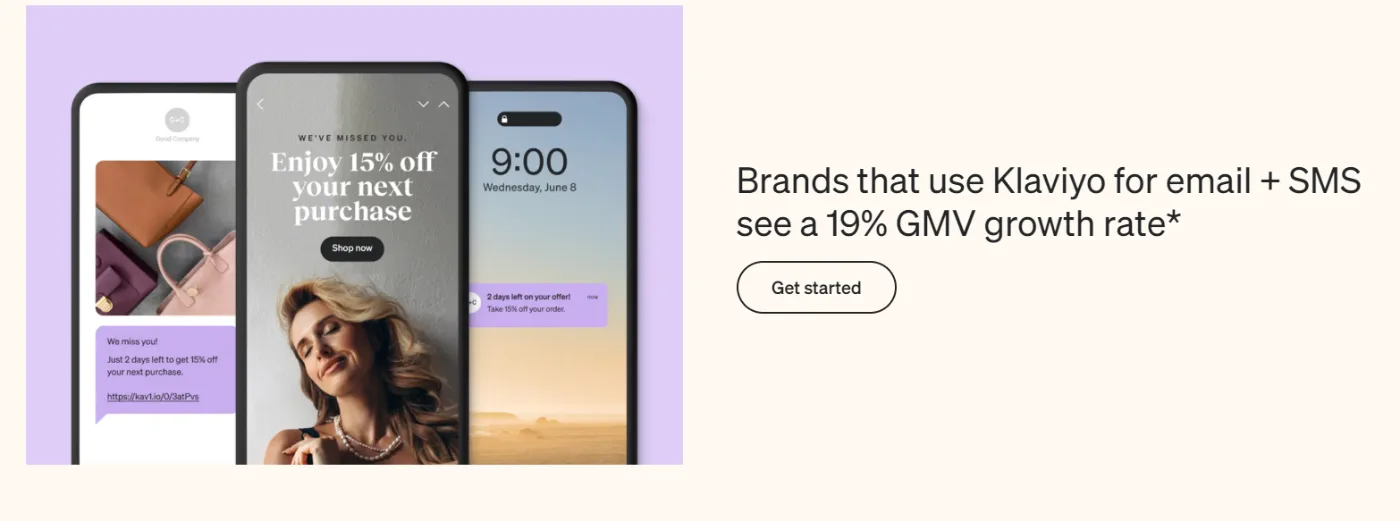
Klaviyo takes email marketing several steps further, offering advanced dynamic content blocks that adapt based on customer data. The platform’s sophisticated product recommendations leverage your ecommerce data to create highly relevant content.
Predictive analytics inform optimal send times, while complex segmentation enables content variation based on detailed customer profiles. This is why many of our top email marketing agencies choose Klaviyo.
Contact Management and Workflow
The foundation of effective email marketing lies in how well you can manage and utilize your customer data. Both platforms take distinct approaches to contact management and workflow organization, with Mailchimp structuring around a traditional list-based system and Klaviyo centering on a unified customer database.
Mailchimp organizes contacts into audiences with basic tagging and custom field creation, serviceable for standard marketing needs, though contacts in multiple audiences count separately toward your limit.
Their workflow management provides a straightforward campaign builder that works well for basic marketing needs, with standard workflows like welcome series and abandoned cart recovery.
Klaviyo’s approach pulls together online and offline interactions, automatically enriching customer profiles with behavioral data, purchase history, and predictive insights.
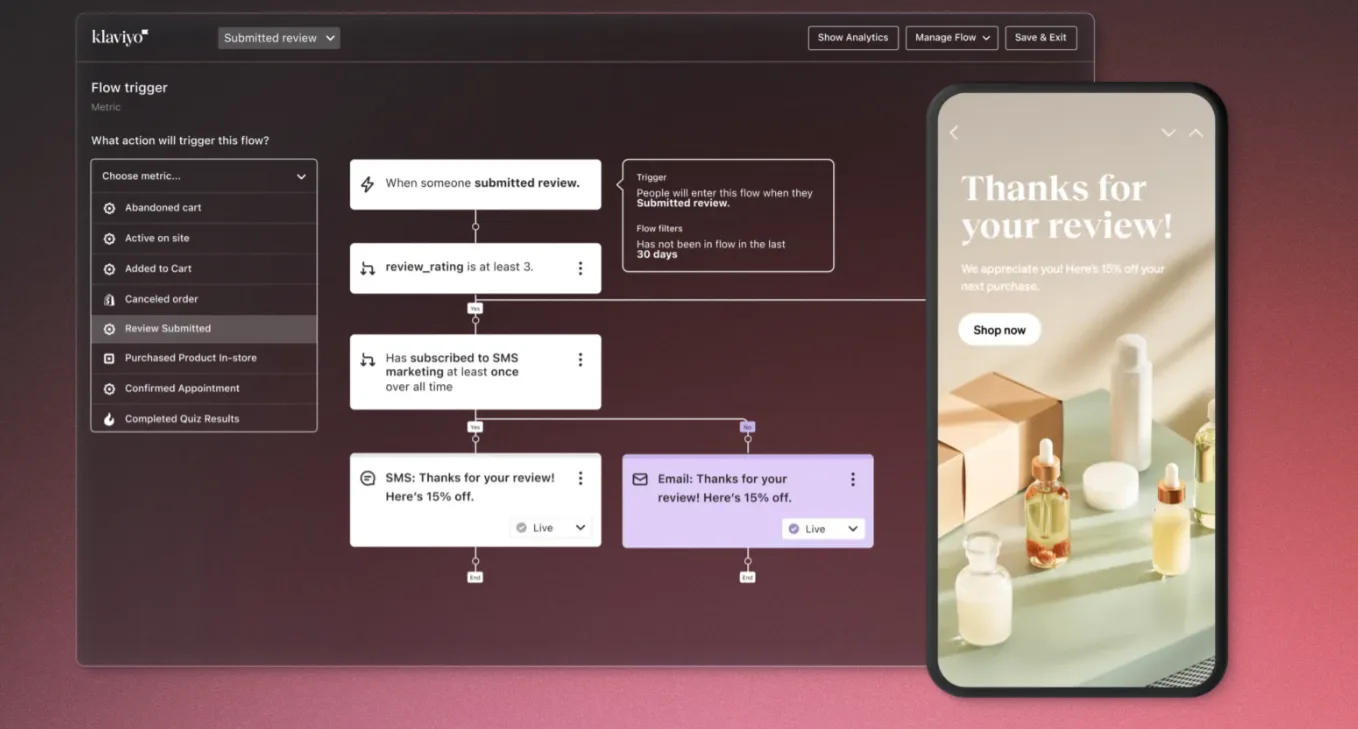
Their workflow system, called “flows” offers sophisticated options for creating intricate, multi-step sequences that adapt based on customer behavior, with real-time data processing that updates segments and automations instantly as customer behavior changes.
Multi-Channel Marketing and SMS Capabilities
The ability to reach customers across multiple channels has become essential for modern marketing strategies.
Mailchimp offers a broader range of channel integrations, including email, SMS, social media advertising, and digital ad management. Their social media tools let you schedule posts and manage advertising campaigns directly from the platform. The addition of SMS capabilities, while newer to their offering, integrates smoothly with their existing automation tools.
Klaviyo takes a more focused approach, concentrating primarily on email and SMS marketing. This specialization enables deeper integration between these channels, particularly for ecommerce businesses and marketing agencies.
Their SMS features include advanced segmentation and targeting, allowing you to send messages based on customer behavior and purchase history.
Integrations and Third-Party Tools
Here’s a quick breakdown:
Total Integrations
- Mailchimp, 300+
- Klaviyo, 220+
Integration Types
- Mailchimp, CRM, Social, Basic ecom, Marketing
- Klaviyo, Advanced ecom, Customer Data, Analytics, Shopify
API Availability
- Mailchimp, Custom API
- Klaviyo, Full API Access
Your marketing platform needs to work seamlessly with your existing tech stack. Both services offer extensive integration options, but with different focuses.
Mailchimp boasts over 300 integrations across various categories, from CRM systems to social media platforms. Their API enables custom integrations, and their app marketplace makes finding and implementing new connections straightforward. The platform works well with general business tools and services.
Klaviyo, while offering fewer total integrations (approximately 220), provides deeper ecommerce-specific connections. Their integrations with platforms like Shopify and WooCommerce go beyond basic data sync, enabling real-time customer behavior tracking and advanced segmentation capabilities.
Analytics and Reporting
Data-driven decision making requires robust analytics capabilities, and this is where these platforms show significant differences.
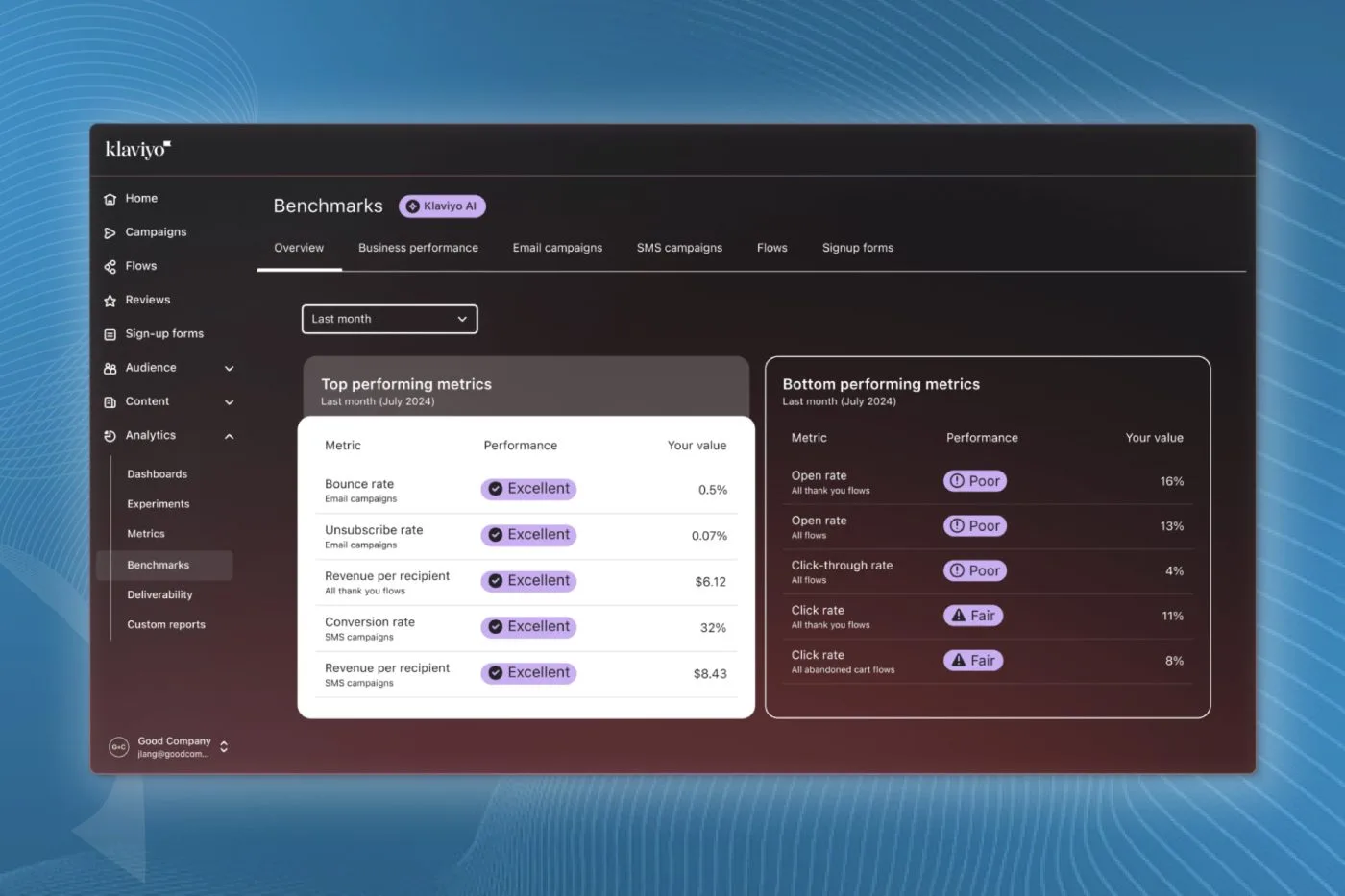
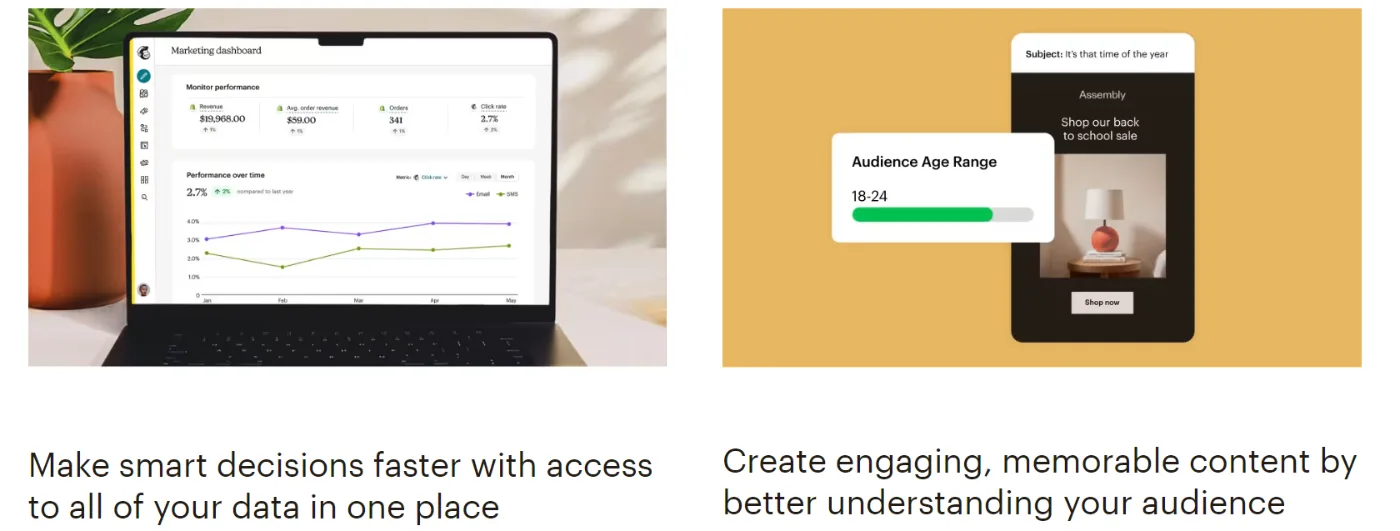
Mailchimp provides solid basic reporting features, including open rates, click rates, and basic revenue tracking. Their reporting interface is clean and accessible, making it easy to understand campaign performance at a glance. Standard A/B testing tools help optimize subject lines and content.
Klaviyo’s analytics suite is notably more sophisticated, especially for ecommerce businesses. The platform provides detailed customer lifetime value predictions, advanced segmentation analytics, and comprehensive revenue attribution tracking. Their predictive analytics help forecast customer behavior and optimize campaign timing.
Customer Support and Resources
Support availability can make or break your experience with a marketing platform.
Mailchimp offers 24/7 email support for paid plans, with chat support available on higher tiers. Their knowledge base is extensive, featuring detailed guides and tutorials. The community forum provides additional peer support options.
Klaviyo’s support model focuses on quality over availability. While their support hours are more limited, their team’s ecommerce expertise often leads to more actionable solutions. Their documentation specifically addresses ecommerce use cases, and their academy provides structured learning paths.
Use Cases and Industry-Specific Strengths
Real-world applications showcase where each platform truly excels. Let’s examine how different businesses leverage these tools to achieve their marketing objectives.
For general business, Mailchimp demonstrates quite a bit of versatility. Small businesses, particularly service-based companies like consultancies and local retailers, find Mailchimp’s all-in-one approach invaluable.
Take a local fitness studio that uses Mailchimp to manage class schedules, send promotional emails, and track member engagement, all from one platform. Professional services firms often leverage Mailchimp’s landing page builder and email automation to generate leads and nurture client relationships.
The platform’s straightforward approach to campaign management makes it particularly effective for businesses without dedicated marketing teams.
Klaviyo shines as an ecommerce email marketing platform with a portfolio of success stories, particularly among growing DTC brands.
A standout example includes a skincare brand that increased their email revenue by 350% after switching to Klaviyo, primarily through sophisticated segmentation and personalized product recommendations.
The platform’s specialized features have proven especially powerful for businesses in specific verticals:
- Fashion and apparel brands utilize dynamic product recommendations
- Beauty and wellness companies leverage post-purchase flows for repeat sales
- Food and beverage brands employ precise targeting for subscription offerings
- Home goods retailers capitalize on abandoned cart recovery sequences
These industry-specific situations demonstrate why Klaviyo has become the go-to choice for serious ecommerce store owners, while Mailchimp remains the versatile solution for general business needs.
AI and Automation Innovations
Both platforms have embraced AI technology, but their implementations differ significantly.
Klaviyo’s AI features focus on predictive analytics and customer behavior modeling. Their natural language processing enables easier segment creation, while their predictive tools help forecast customer lifetime value and churn risk. The platform’s AI assists in optimizing send times and personalizing content based on individual customer behavior patterns.
Mailchimp’s AI implementation centers on their Creative Assistant and content optimization tools. These features help create visually appealing campaigns and suggest improvements to email content. While useful, their AI capabilities are more focused on content creation than predictive analytics.
Mailchimp vs Klaviyo: Which Should You Choose?
Your choice between these platforms should align with your business needs and growth trajectory.
Choose Mailchimp if you’re:
- Starting out with email marketing
- Running a small business with diverse marketing needs
- Looking for an all-in-one marketing solution
- Operating on a limited initial budget
Choose Klaviyo if you’re:
- Running an ecommerce business
- Seeking advanced customer segmentation
- Planning to scale your email marketing
- Wanting sophisticated automation capabilities
At In-box, we’ve chosen to work with Klaviyo for our clients because of its superior ecommerce capabilities and advanced automation features. The platform’s robust segmentation tools and deep ecommerce integrations enable us to create highly targeted, effective campaigns that drive real results for our clients.
The initial learning curve with Klaviyo is worth the investment, especially for ecommerce businesses seeking to maximize their email marketing ROI.
While Mailchimp offers a solid foundation for general marketing needs, Klaviyo’s specialized features and ecommerce focus make it the superior choice for serious online retailers looking to scale their operations.