Turn Your Best Campaigns Into a High-Converting Evergreen Welcome Flow
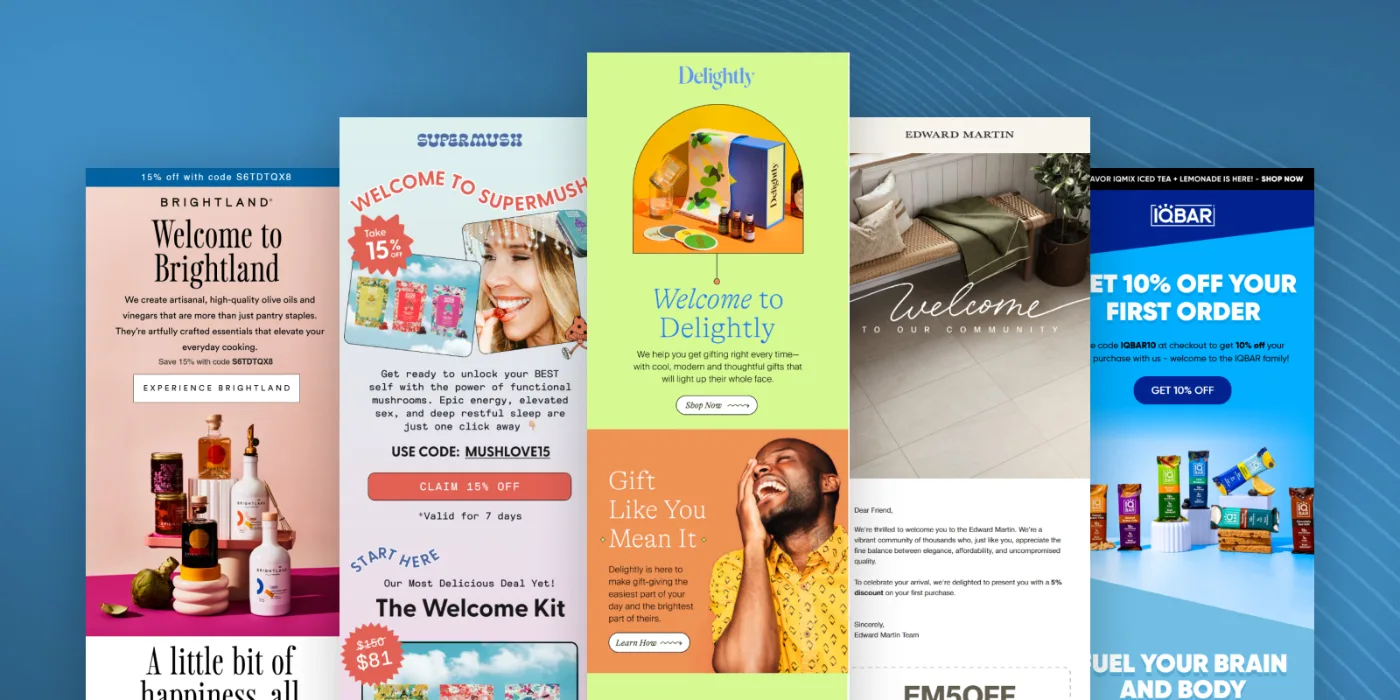
Most brands build a short welcome series and leave it alone.
That’s a mistake.
Instead, we recommend expanding your welcome flow using your historically highest-revenue evergreen campaigns.
Step 1: Find your highest revenue campaigns (then filter for evergreen)
Go into your email platform’s campaign reporting, set the date range wide (he references “all time”), and sort by highest revenue.
Then look through the top performers and identify the emails that are not time-sensitive, such as:
- education emails
- product “how it works” emails
- best-seller spotlights that make sense anytime
- brand story, founder story, proof, FAQs
- customer favourites, routines, use cases
Avoid anything tied to a specific moment (sales, launches, restocks) since those age quickly.
Step 2: Save those evergreen emails as templates
Once you’ve found evergreen winners, save them as templates so they’re easy to reuse.
Step 3: Drop them into your welcome flow over time
Now you expand the welcome series by adding those templates as additional steps with time delays.
This point is simple: new subscribers should consistently receive your historically best-performing evergreen content, not just a short “hi nice to meet you” flow.
Why this works
- Higher subscription-to-first-purchase conversion because your flow is stacked with content that already proved it can sell
- Less campaign workload because a bigger chunk of your “revenue-driving messaging” happens automatically
- Compounding effect because the flow gets stronger every time you add a new evergreen winner
If you want a deeper dive into flow structure, you might also find these helpful:
- Email Flow Examples: The Complete Guide to Automated Email Marketing Success
- Welcome Email Series: The Complete Guide to Converting New Subscribers
2) Stop Killing Conversions With Poor SMS Pop-Up Strategy
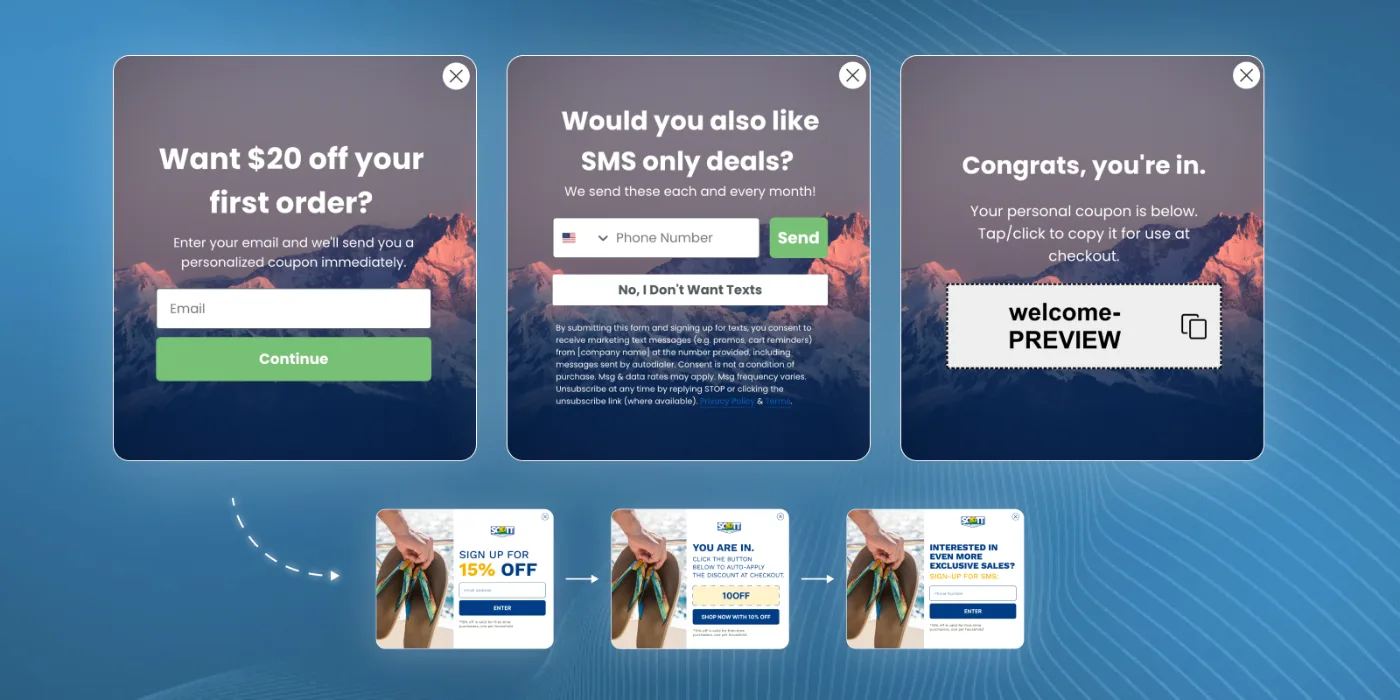
The second strategy focuses on sign-up forms.
A very common mistake.
Example:
- “Enter your email for 15% off.”
- “Now enter your phone number.”
This creates a major drop-off at step two, and the bigger issue is what happens next:
When people abandon the multi-step form, they often never see the final screen where the discount code is revealed, which forces them to go hunt through their inbox to find it.
That is bad UX, and it can cost you sales because you’ve added friction right at the moment someone is ready to buy.
The better approach: separate forms, staged timing
Instead of stacking email + SMS in one sequence:
- Email-first opt-in form
Keep this frictionless. Get them the discount code quickly. - SMS-only form for email subscribers
Create a second form that only asks for SMS, and only targets people who are already email subscribers (and not yet SMS subscribers). - Add a delay window
Our experience suggests giving new email subscribers a short window (he uses a 3-day example) before showing the SMS form, so you don’t interrupt the initial on-site conversion moment.
If you’re refining segmentation and list growth strategy, this is worth reviewing as well:
- The Complete Guide to Email Marketing Segmentation
- SMS Marketing in Klaviyo: What Works (and What to Avoid)
3) Track Subscribers Longer to Recover More Abandoned Revenue
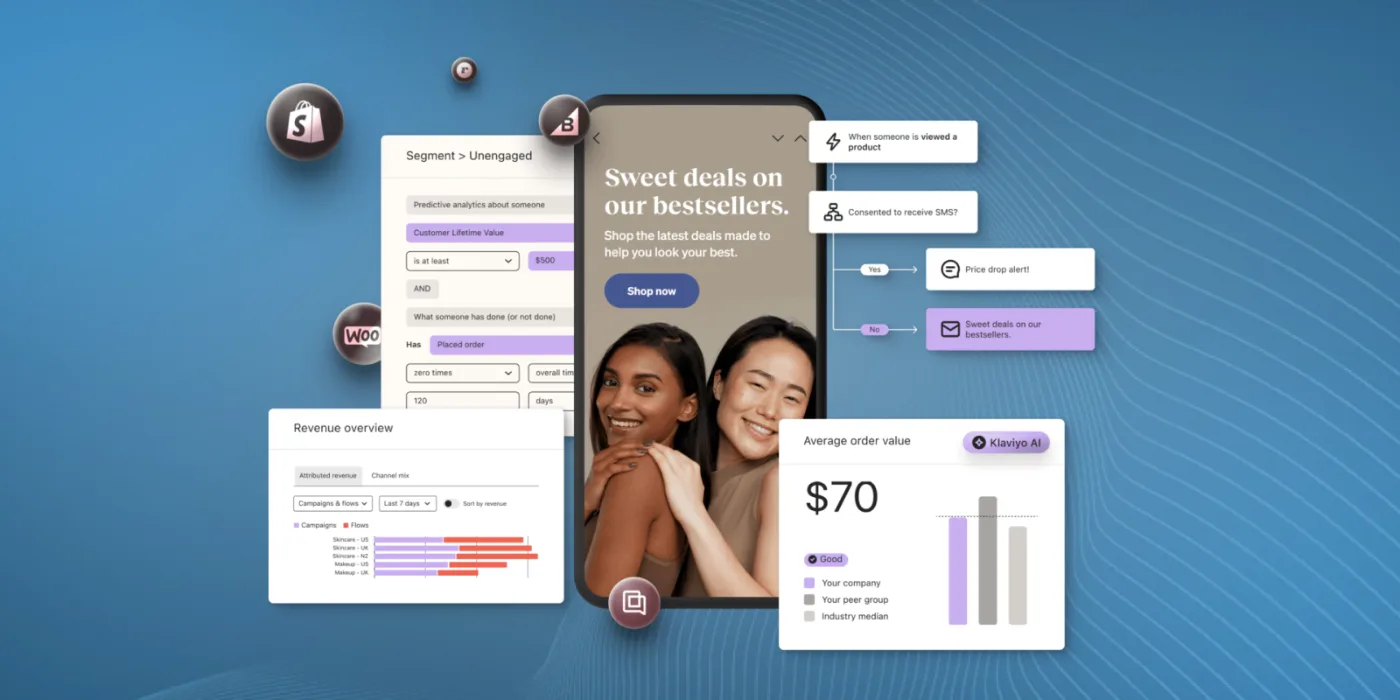
The third strategy is one of the simplest to implement.
Email platforms like Klaviyo track user behaviour through a pixel:
- Browse activity
- Add to cart
- Checkout starts
That tracking enables browse abandon and cart abandon flows.
However, this tracking degrades over time. When that happens, some subscribers stop being eligible for those flows.
The solution is installing a stronger tracking layer using a tool called Kluvos.
This allows you to:
- Track subscribers for longer
- Capture more abandoned cart and browse behaviour
- Recover revenue your default setup may miss
It’s a “set it once” optimisation that can be measured directly through incremental flow revenue.
Quick Implementation Checklist
If you want to action this fast, here’s a simple order of operations:
This week
- Pull your top revenue campaigns and tag evergreen winners
- Save evergreen winners as templates
- Add 3, 5 evergreen emails into the welcome flow with spacing
Next
- Remove SMS from your email pop-up flow (if it’s currently step 2)
- Build a separate SMS-only form targeted to email subscribers
- Add a short delay window before the SMS form can appear
Then
- Audit your abandonment flows and tracking coverage
- If tracking is a limitation, test a stronger pixel solution and measure incremental flow revenue
Final Thoughts: 2026 Is About Efficiency, Not Volume
All three strategies share a common theme:
- Repurpose what already works
- Reduce friction in list growth
- Strengthen your tracking so fewer buyers slip through
You do not need more complexity.
You need smarter structure.
If you implement:
- A revenue-backed evergreen welcome flow
- A clean, conversion-first SMS capture strategy
- Extended behavioural tracking
You increase ROI while reducing workload.
That’s the edge in 2026.
If you’d like the full walkthrough with platform demonstrations and screen shares from Gavin (an email + SMS agency owner), you can watch the complete breakdown here:
Watch on YouTube: [Click here]