Brief Overview of ActiveCampaign and Klaviyo
ActiveCampaign entered the scene in 2003, establishing itself as a comprehensive marketing automation platform that combines email marketing, CRM, and sales automation. It’s grown into a versatile solution that serves over 145,000 customers across 170 countries, with a strong focus on helping businesses create meaningful customer experiences through automation.
Klaviyo, founded in 2012, took a different approach by zeroing in on eCommerce. Their platform is built from the ground up to help online stores drive sales through personalized email and SMS marketing. They’ve helped generate over $14 billion in revenue for online stores in 2022 alone.
Your choice between these platforms will impact everything from your daily marketing operations to your bottom line. Email marketing drives an average ROI of $36 for every $1 spent , but that’s only when you’re using the right tool for your specific needs. Let’s get into it.
Target Audience
ActiveCampaign is the go-to choice for small to medium-sized businesses, particularly those in the B2B space. Service providers, consultants, and companies with longer sales cycles find its CRM and automation features particularly valuable. The platform’s ability to handle complex sales processes and lead nurturing makes it perfect for businesses that rely on relationship building.
On the flip side, Klaviyo speaks directly to eCommerce brands and direct-to-consumer (DTC) businesses. If you’re selling products online, whether through Shopify, WooCommerce, or other platforms, Klaviyo’s deep eCommerce integration and revenue-focused features align perfectly with your needs.
Pricing and Plans
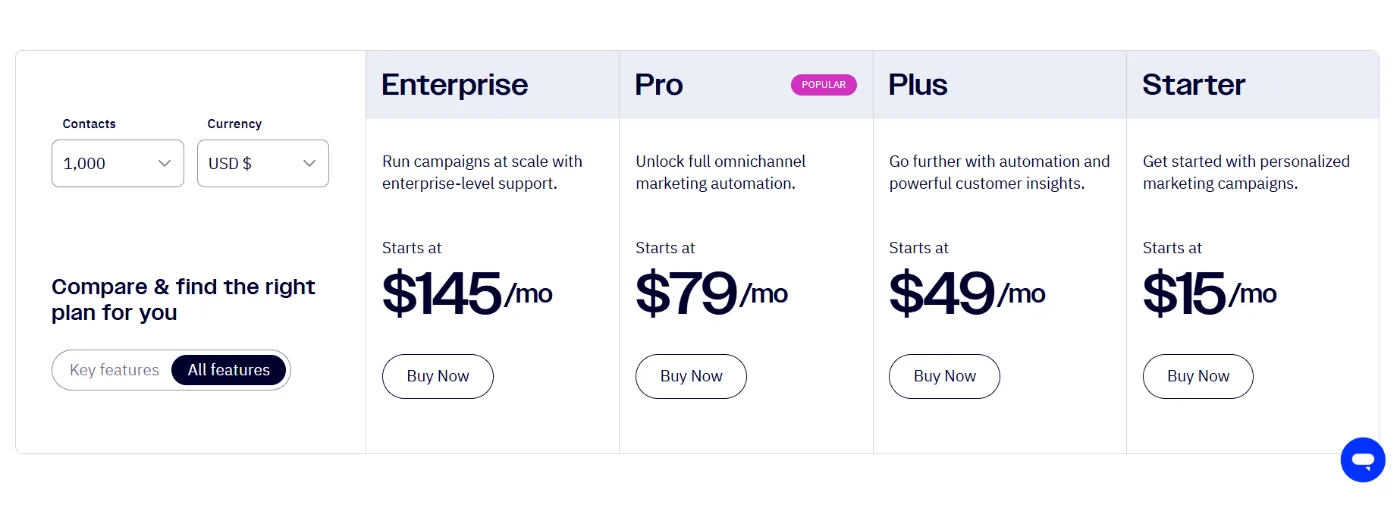
ActiveCampaign’s pricing starts with their Starter plan at $15/month (when billed annually) for up to 1,000 contacts. The Plus plan, which includes most eCommerce features, starts at $49/month. They don’t offer a free plan, but you get a 14-day trial to test the waters.
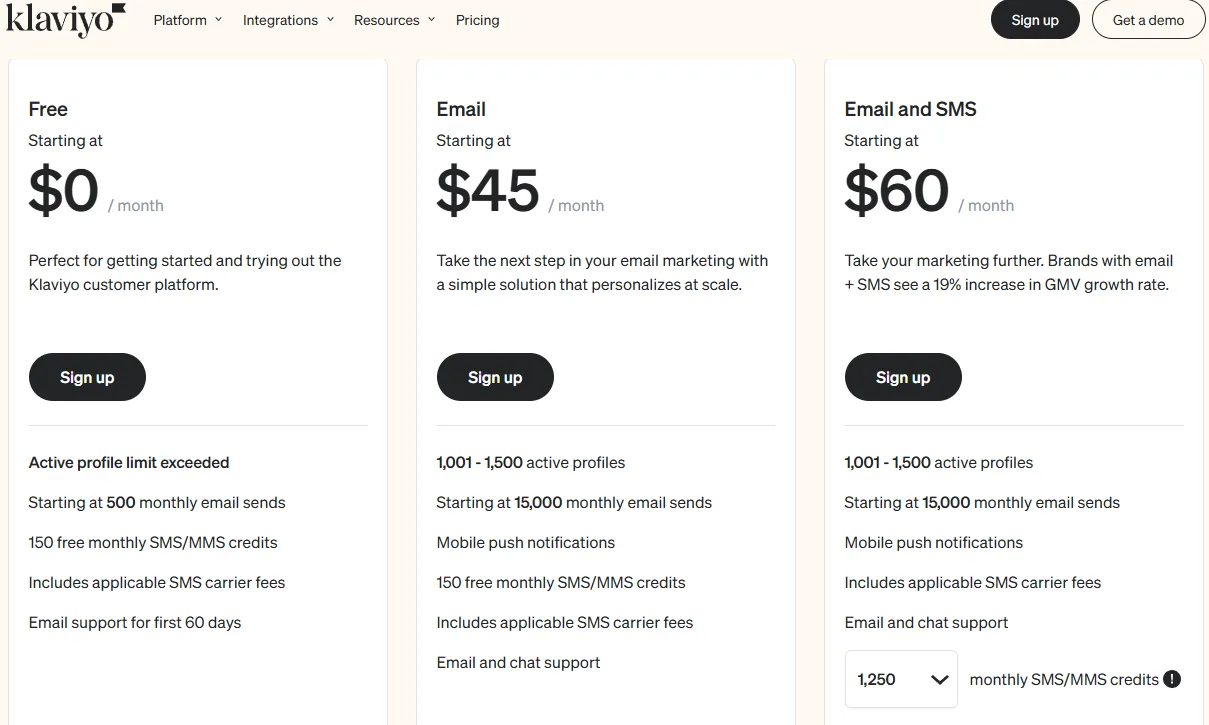
Klaviyo takes a different approach, they offer a free plan for up to 250 contacts and 500 email sends monthly. Paid plans start at $45/month for up to 1,500 contacts, scaling up based on your subscriber count. While Klaviyo might seem pricier at first glance, their pricing includes access to all features from the start.
Price comparison for 5,000 contacts:
- ActiveCampaign Plus: $49/month
- Klaviyo: $150/month
Ease of Use
Setting up ActiveCampaign requires some initial learning, the platform’s depth of features can feel overwhelming at first and we particularly found quite a bit of a learning curve when trying to navigate through the dashboard.
The interface uses a left sidebar navigation system with secondary menus that slide out for specific features. While logical, new users might need time to get comfortable with the layout.
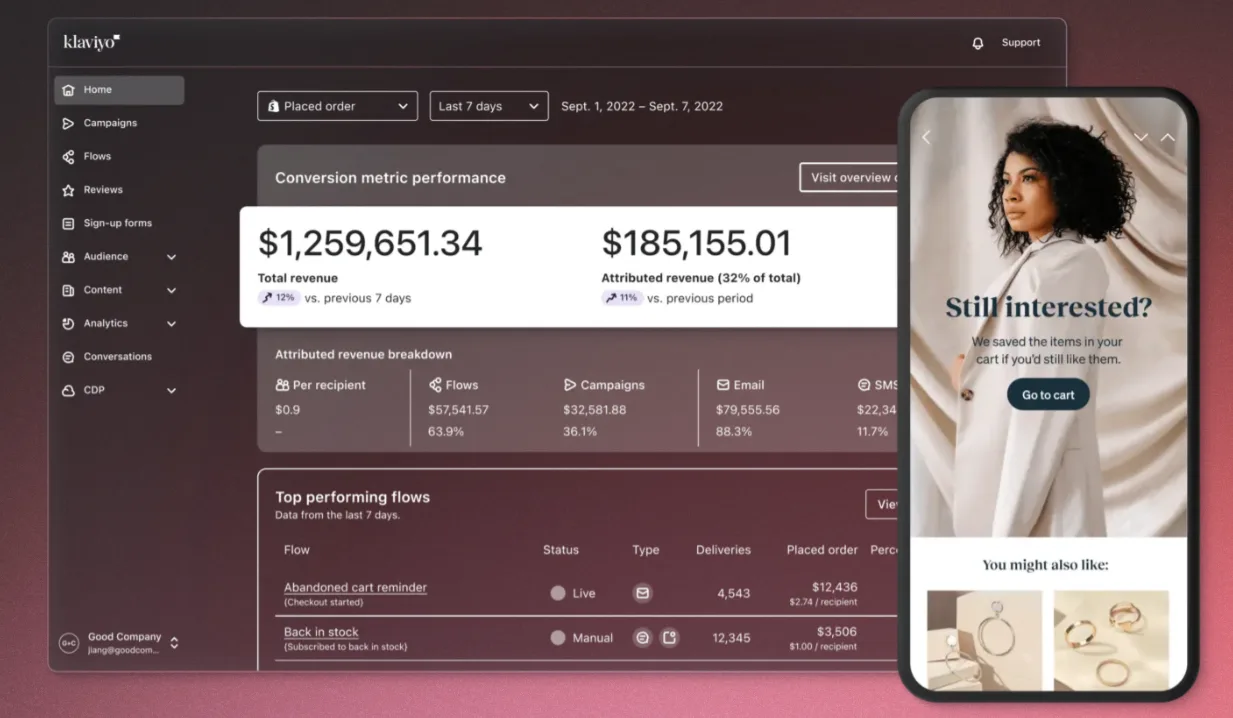
When looking at Klaviyo vs ActiveCampaign, the Klaviyo interface feels more streamlined, focused, and zeroed in on singular tasks.
The onboarding process guides you through connecting your eCommerce store and importing contacts. Their flow builder uses an intuitive visual interface that makes sense even to beginners. The learning curve isn’t as steep because the features are more focused on eCommerce-specific needs.
Email Marketing Capabilities
Email Template Design & Customization
Building emails in ActiveCampaign gives you access to over 250 responsive templates and an intuitive drag-and-drop editor. Their design tools let you create professional-looking emails quickly, with options for custom HTML if you need more control. While the template selection might feel overwhelming at first, they’re well-organized by industry and purpose, from newsletters to promotional campaigns to transactional emails.
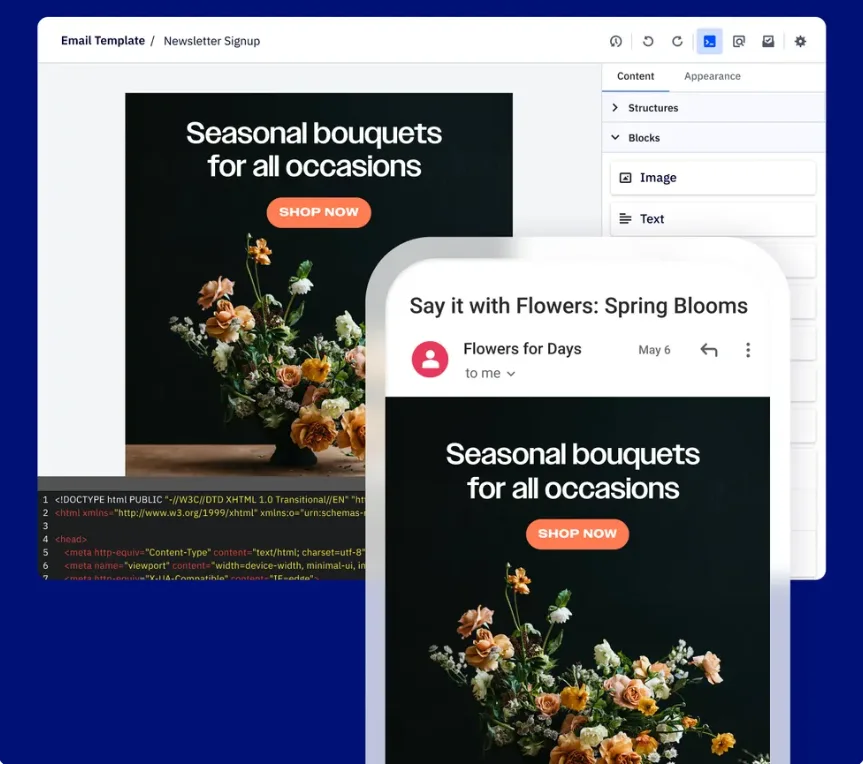
Klaviyo’s email builder includes about 100 templates focused specifically on eCommerce needs. Each template is designed with conversion in mind, featuring layouts optimized for product showcases, sales announcements, and abandoned cart recovery.
If you put Klaviyo vs Active Campaign side-by-side you would definitely see that Klaviyo’s drag-and-drop editor is more streamlined and intuitive. But, that comes with less general options and more eCommerce specific elements.
Personalization and Dynamic Content
ActiveCampaign shines with its conditional content feature, you can show different content to different subscribers based on their attributes or behaviors. For example, you might display different product recommendations to VIP customers versus first-time buyers. The platform also supports personalization tokens for basic subscriber data and custom fields.
Klaviyo takes personalization to another level with its dynamic product feeds feature. You can automatically pull in products from your store based on categories, tags, or popularity. These product blocks update automatically when your inventory changes, saving you time on email updates.
The platform also lets you personalize content based on browsing history and past purchases, something ActiveCampaign can’t match without additional integrations.
A/B Testing Capabilities
Email testing works differently across both platforms. ActiveCampaign lets you test up to five variations of your emails, including subject lines, sender names, content, and sending times. You can set the winner based on opens, clicks, or revenue, and the platform will automatically send the winning version to your remaining subscribers.
Klaviyo’s testing features focus more on revenue impact. While you can test standard elements like subject lines and content, the platform excels at testing different product recommendations and offer combinations. You’ll see exactly how much revenue each variation generates, making it easier to optimize your emails for sales.
Email Deliverability
Both platforms take deliverability seriously, but their approaches differ. ActiveCampaign maintains dedicated IP addresses for high-volume senders and provides detailed engagement metrics to help you maintain a healthy sender reputation. They also offer tools to clean your list and remove inactive subscribers.
Klaviyo emphasizes deliverability through engagement-based sending. The platform automatically adjusts sending frequency based on subscriber engagement and provides clear deliverability reporting. Their smart sending feature prevents subscribers from receiving too many emails in a short period, particularly useful for eCommerce brands running multiple campaigns.
Marketing Automation Features
Marketing automation is where both platforms flex their muscles, but in distinctly different ways.
ActiveCampaign’s automation builder lets you create complex workflows with multiple triggers and conditions. You’ll find pre-built templates (they call them “automation recipes”) for everything from welcome series to lead scoring. The platform really excels with its automation splits and conditional paths, you can create intricate customer journeys based on subscriber behavior, tags, or custom fields.
One standout feature is ActiveCampaign’s ability to manage multiple automations simultaneously. You can start or stop other automations based on subscriber behavior, ensuring your contacts don’t receive conflicting messages. Their automation map gives you a bird’s-eye view of how all your automations connect, super helpful for complex marketing strategies.
Klaviyo approaches automation through what they call “flows.” While they offer fewer triggers than ActiveCampaign, they’ve focused on the ones that matter most for eCommerce: list membership, metric triggers, segment triggers, and date-based triggers. Each flow can track revenue generated per recipient, helping you understand exactly which automated emails drive sales.
The real magic of Klaviyo’s flows lies in their deep integration with eCommerce platforms. Want to send an email when someone views a specific product? Or maybe trigger a series when someone purchases from a certain category? Klaviyo handles these scenarios effortlessly, with all the relevant product data automatically synced.
CRM and Contact Management
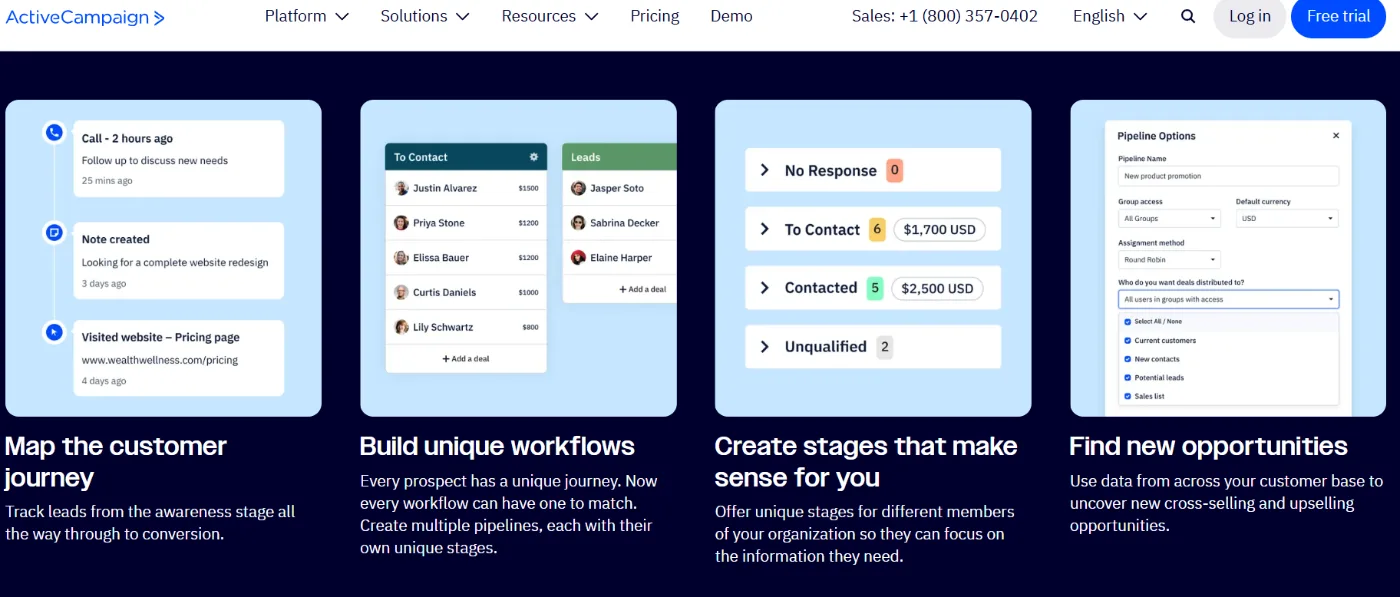
ActiveCampaign built their CRM from the ground up to handle complex sales processes.
ActiveCampaign:
- Core Focus: Sales Process Management
- Contact Management:
- Complete interaction history
- Deal tracking and pipeline views
- Custom field creation
- Tag-based organization
- Team collaboration tools
- Sales Features:
- Lead scoring
- Deal probability
- Sales automation
- Meeting scheduling
- Task management
Every contact record includes detailed interaction history, deal tracking, and pipeline management tools. Sales teams can score leads, track conversations, and move deals through custom pipelines, all while keeping marketing automation in sync.
The platform also includes task management and meeting scheduling features, making it a true all-in-one solution for sales teams. Custom fields and tags give you flexibility in organizing contacts, while the built-in email tracking tells you exactly when prospects engage with your messages.
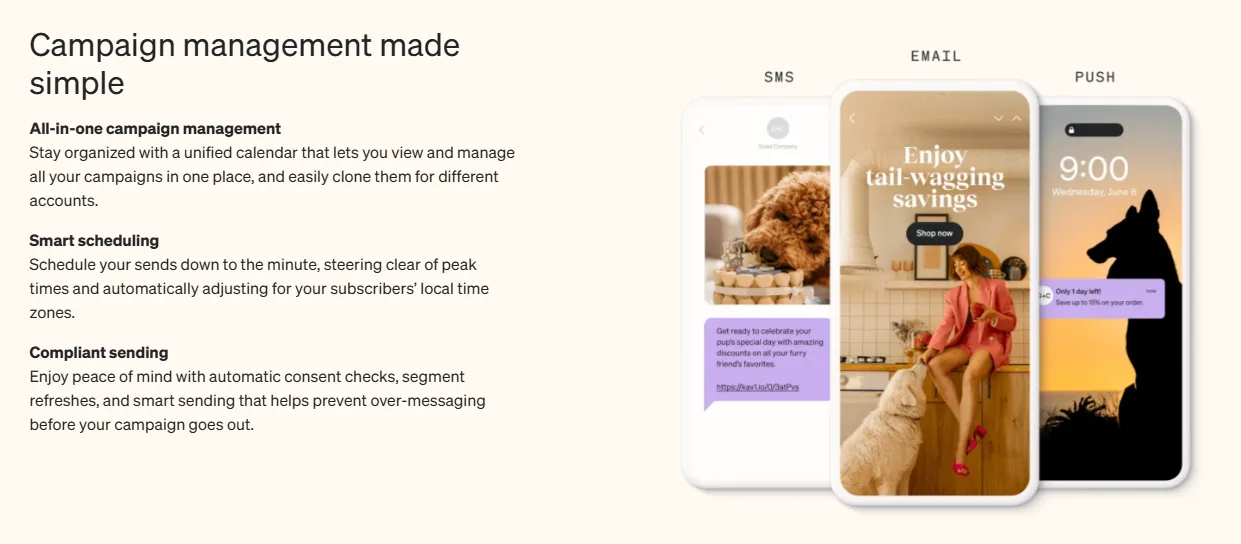
Klaviyo:
- Core Focus: Customer Shopping Behavior
- Profile Features:
- Complete purchase history
- Product viewing patterns
- Cart abandonment tracking
- Email engagement metrics
- Website interaction timeline
- Analytics Tools:
- Customer lifetime value
- Predicted next order date
- Churn risk assessment
- Revenue per customer
Klaviyo takes a different approach to contact management, focusing heavily on shopping behavior and purchase history. Each contact profile shows a complete timeline of store interactions, from email opens to product views to purchases. The platform automatically calculates metrics like customer lifetime value and predicted next order date.
What’s particularly impressive about Klaviyo’s contact management is how it uses this data for segmentation. You can create incredibly specific segments based on purchase history, browsing behavior, and engagement metrics. Want to target customers who’ve bought red shoes in the last 30 days and viewed your new collection? That’s just a few clicks away.
Want to check out some other platforms? Read our review comparing Klaviyo vs Hubspot here!
Multichannel Marketing
Both platforms recognize that email isn’t the only game in town anymore.
ActiveCampaign integrates email marketing with SMS, site messaging, and even Facebook Custom Audiences. Their site tracking capabilities let you personalize messages based on which pages contacts visit, while their Facebook ad integration helps you create targeted social campaigns.
The platform’s strength lies in coordinating messages across channels. You can, for example, send an SMS follow-up if someone doesn’t open your email, or trigger a Facebook ad to target cart abandoners. All these interactions sync back to the contact record, giving you a complete view of your marketing impact.
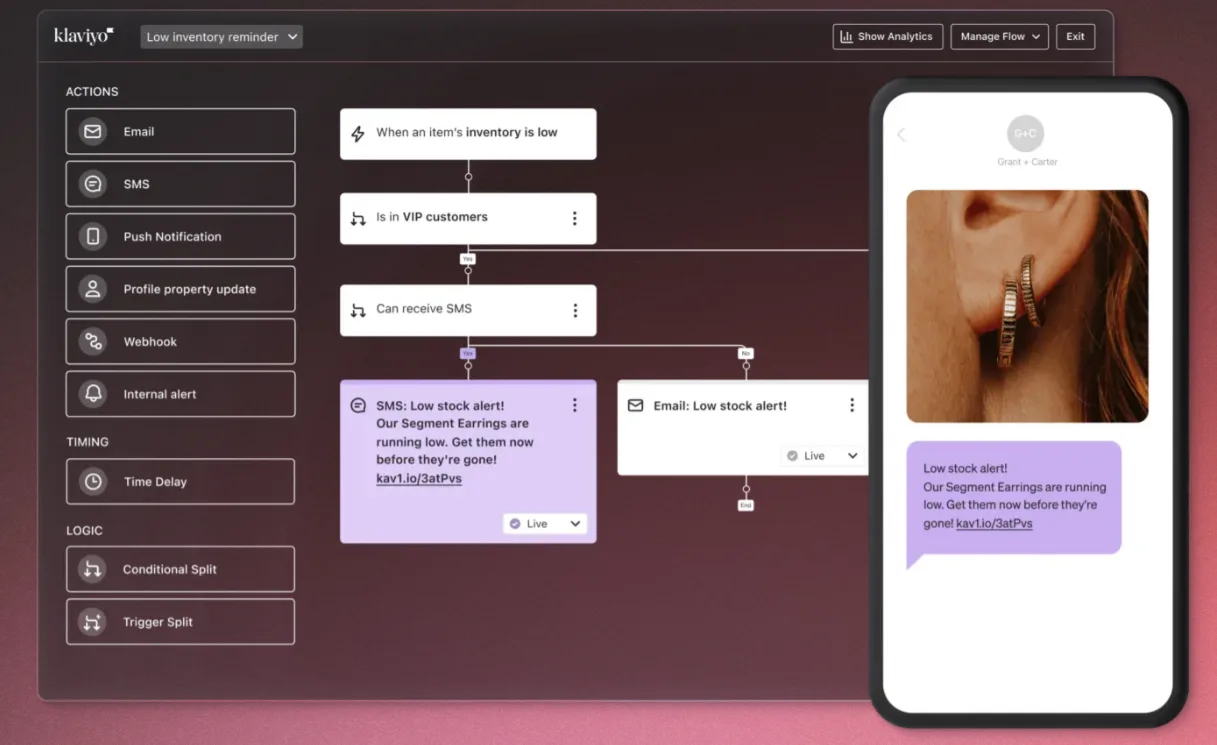
Klaviyo’s multichannel approach centers on the eCommerce customer journey. Their SMS marketing features integrate seamlessly with email flows, you can mix text and email messages in the same automation based on customer preferences. They’ve also built strong connections with Facebook and Instagram, letting you sync customer segments for social advertising.
A unique aspect of Klaviyo’s multichannel marketing is their focus on predicted customer behavior. The platform can identify which channel each customer prefers and automatically adjust your communication strategy accordingly.
Integrations and Platform Ecosystem
The integration story tells us a lot about each platform’s priorities.
ActiveCampaign:
- Total Integrations: 900+
- Integration Categories:
- CRM & Sales Tools
- Social Media Platforms
- Business Software
- Marketing Tools
- Website Builders
- Payment Processors
- Integration Depth: Broad but moderate
- API Access: Full access, well-documented
- Data Import: Basic historical data
- Custom Options: Extensive through Zapier
ActiveCampaign boasts over 900 integrations, covering everything from CRM systems to social media tools to accounting software. They’ve built deep connections with platforms like Salesforce, WordPress, and Shopify. The breadth of integrations makes ActiveCampaign incredibly versatile, whatever tools you’re using, chances are ActiveCampaign can connect with them.
Their API is well-documented and flexible, allowing for custom integrations if you need them. Plus, their Zapier integration opens up connections to thousands more apps, though this might require an additional subscription.
Klaviyo:
- Total Integrations: 350+
- Integration Categories:
- eCommerce Platforms
- Marketing Tools
- Customer Service
- Review Platforms
- Analytics Tools
- Integration Depth: Deep, especially for eCommerce
- API Access: Full access, eCommerce-focused
- Data Import: Complete historical backfill
- Custom Options: Limited but specialized
Klaviyo offers fewer integrations, around 350, but they’re laser-focused on eCommerce needs. Their Shopify integration is particularly robust, pulling in detailed product data, customer behavior, and purchase history in real-time. They also integrate well with other major eCommerce platforms like WooCommerce, Magento, and BigCommerce.
One of Klaviyo’s standout integration features is their data backfill capability. When you connect a new integration, Klaviyo can import historical data, giving you immediate access to valuable customer insights. This proves especially useful when switching from another platform or adding new data sources.
Analytics and Reporting
Data drives decisions for the best ecommerce marketing agencies, and both platforms offer robust analytics, but with different focuses.
ActiveCampaign’s reporting suite covers traditional email metrics like open rates and click-through rates, but also dives deep into automation performance and contact engagement. Their goal tracking feature lets you measure conversions beyond just email clicks, while their attribution reporting helps you understand which marketing efforts drive results.
The platform also offers detailed contact reporting, showing you how individuals and segments engage with your marketing over time. Their site tracking analytics add another layer, letting you see how contacts interact with your website after clicking through from an email.
Klaviyo’s analytics are built around revenue, everything ties back to sales performance. Their dashboard immediately shows you how much money your emails generate, broken down by campaigns and automated flows. They also provide predictive analytics, forecasting customer lifetime value and purchase behavior.
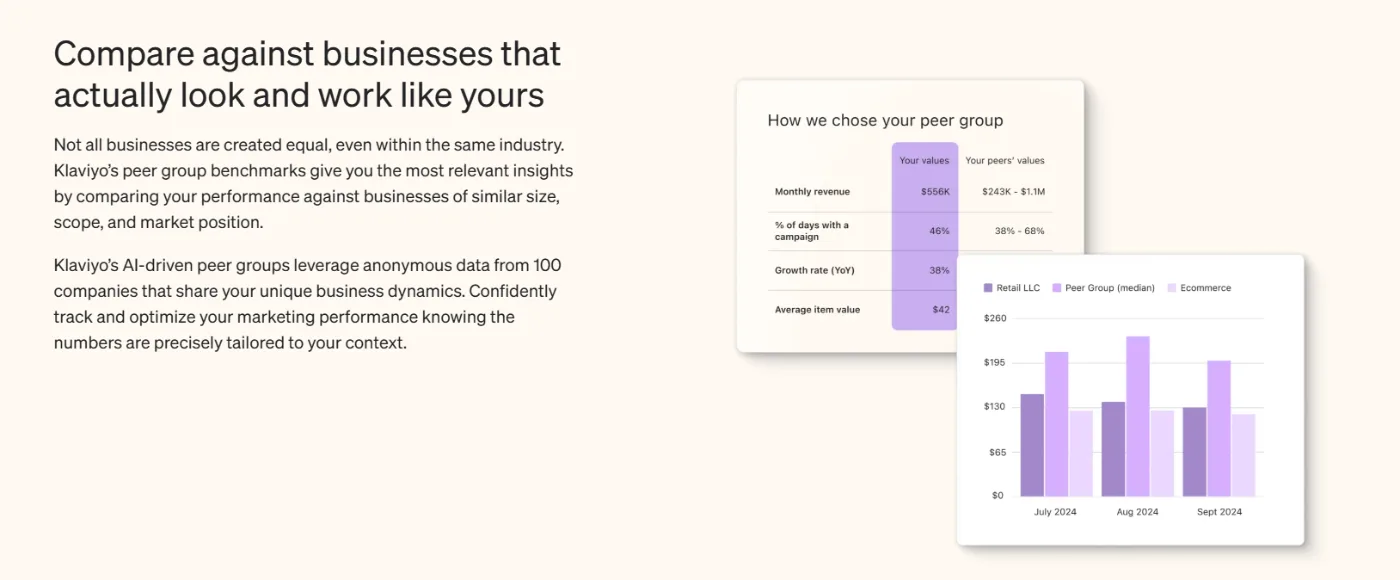
What sets Klaviyo’s reporting apart is their benchmarking feature. You can compare your performance against similar businesses in your industry, helping you understand where you excel and where you need improvement. Their cohort analysis tools help you understand how different customer groups perform over time, informing your segmentation and targeting strategies.
Customer Support and Resources
Getting stuck with your email marketing platform can cost you time and money, so support matters.
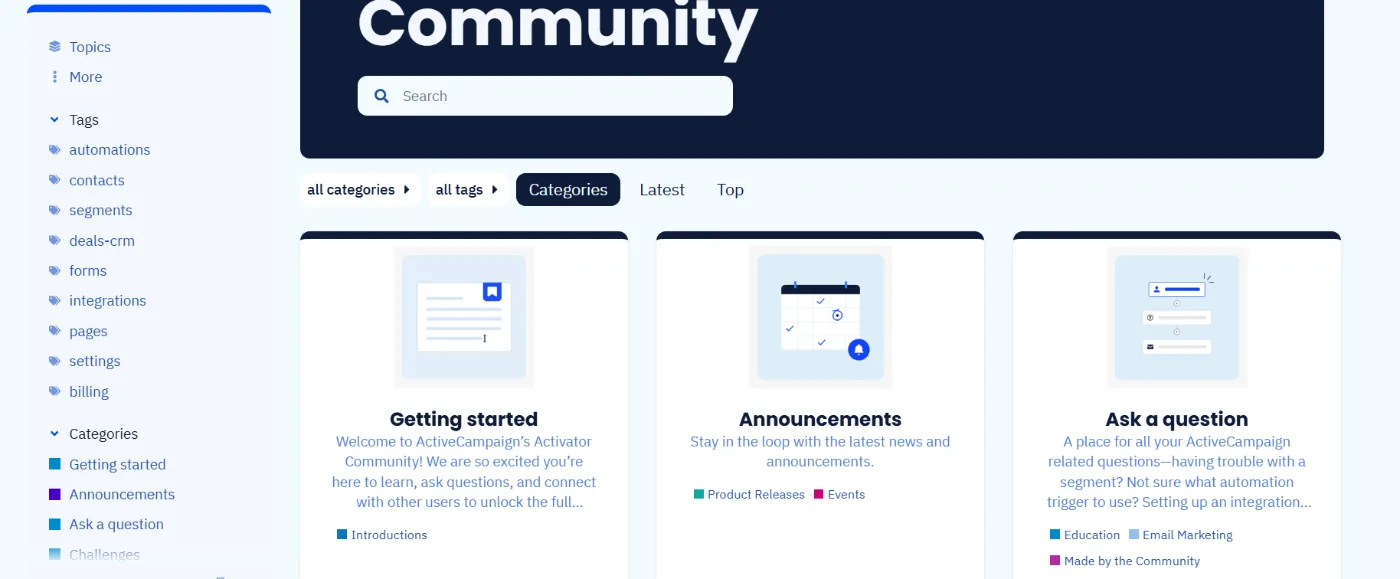
ActiveCampaign provides live chat and email support across all plans, with phone support available on higher tiers. Their support team responds quickly during business hours, though weekend support is limited. Beyond direct support, they’ve built an extensive knowledge base filled with step-by-step guides and video tutorials.
Training resources include ActiveCampaign University, a comprehensive learning platform that offers certification programs and detailed courses. Their community forum buzzes with users sharing tips and solutions, while their regular webinars cover everything from basic features to advanced strategies.
Klaviyo takes support seriously too, offering chat and email assistance to all users. Their help center stands out for its eCommerce focus, you’ll find specific guides for different types of stores and marketing scenarios. This is especially important for high performing email marketing agencies that need quick and expedited help when they encounter issues.
What’s particularly helpful about Klaviyo’s support is their emphasis on revenue-generating strategies. Their educational content doesn’t just explain how to use features, it shows you how to use them to drive sales.
AI and Innovation
The rise of AI has transformed email marketing, and both platforms are keeping pace.
ActiveCampaign’s AI capabilities center around predictive sending and content recommendations. Their predictive sending feature analyzes each contact’s engagement patterns to determine the optimal time to send emails. The platform can also predict which contacts are most likely to engage with specific content or make a purchase.
Their machine learning algorithms help with lead scoring, automatically identifying the characteristics of your most valuable contacts. The platform can even suggest the next best actions to take with specific contacts based on their behavior patterns.
Klaviyo’s AI focuses squarely on eCommerce optimization. Their predictive analytics can forecast customer lifetime value, churn risk, and next order dates. The platform uses these predictions to help you time your marketing messages perfectly.
A standout feature is Klaviyo’s product recommendations engine. It analyzes purchase patterns across your customer base to suggest products that individual customers are most likely to buy. The platform can automatically include these recommendations in your emails, personalizing content for each recipient.
Use Cases and Industry Applications
Understanding where each platform works best helps clarify your choice.
ActiveCampaign dominates in service-based industries like consulting, real estate, and professional services. Its CRM capabilities make it perfect for businesses with longer sales cycles that need to nurture leads over time. B2B companies love how it handles complex sales processes and tracks deals through multiple stages.
Small agencies find ActiveCampaign’s white-label features particularly valuable, they can manage multiple clients under one account while maintaining separate branding. Educational institutions use it to manage student communications and automate their enrollment processes.
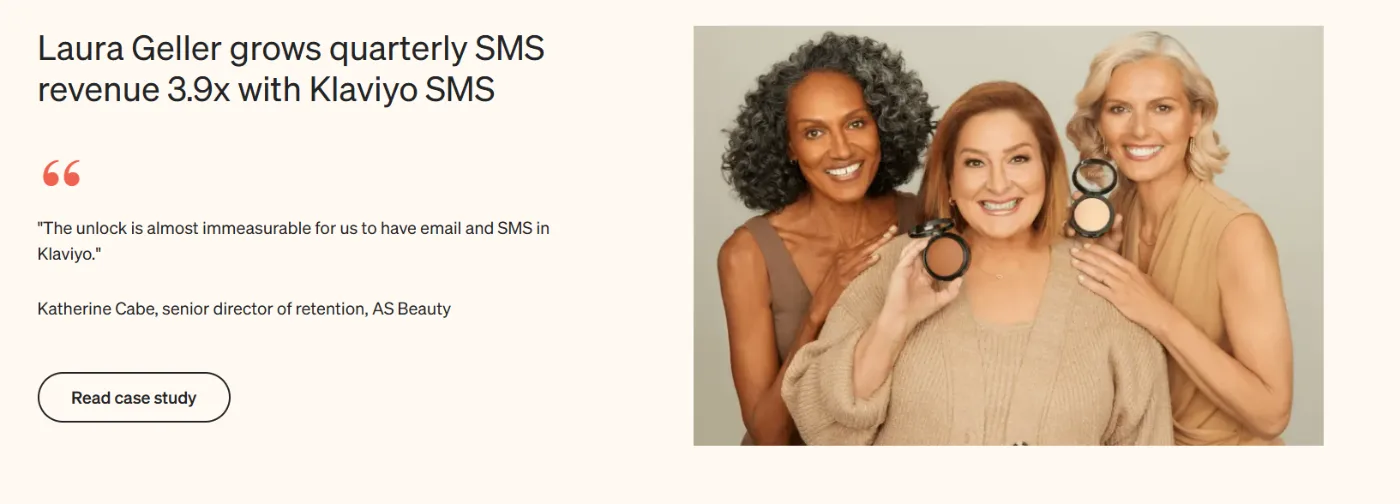
Klaviyo shines brightest in the eCommerce space. Fashion brands use it to segment customers based on style preferences and past purchases. Food and beverage companies leverage its predictive analytics to time reorder reminders perfectly. Beauty brands rely on its product recommendation engine to increase average order value.
In fact, Klaviyo has numerous ecommerce email marketing case studies in fashion, food and beverage, cosmetics, and many other niches.
Direct-to-consumer (DTC) brands particularly love Klaviyo’s ability to create highly targeted segments based on customer behavior. Subscription businesses use it to manage their recurring revenue streams and predict churn.
Pros and Cons Summary
ActiveCampaign’s greatest strengths include:
- Comprehensive automation capabilities with multiple triggers
- Strong CRM features for sales teams
- Extensive integration options
- Flexible contact management
- Competitive pricing for smaller lists
Its weaknesses:
- Steeper learning curve for beginners
- Limited eCommerce-specific features
- Can feel overwhelming with too many options
- Basic email templates compared to specialized platforms
Klaviyo excels with:
- Deep eCommerce integration and understanding
- Revenue-focused analytics and reporting
- Powerful segmentation based on shopping behavior
- Dynamic product recommendations
- Predictive analytics for customer behavior
But falls short with:
- Higher pricing for larger lists
- Limited features outside eCommerce
- Fewer automation triggers
- Basic CRM capabilities

Final Thoughts
Your choice between ActiveCampaign vs Klaviyo really comes down to your business model and goals.
Pick ActiveCampaign if you’re running a service-based business, need strong CRM features, or want comprehensive automation capabilities that extend beyond email marketing. It’s also the more budget-friendly choice for businesses with smaller contact lists who need advanced features.
Go with Klaviyo if you’re selling products online and want deep eCommerce integration, powerful segmentation based on shopping behavior, and revenue-focused analytics. While it might cost more, the platform’s ability to drive sales through sophisticated eCommerce marketing often justifies the investment.
Remember, the best platform isn’t necessarily the one with the most features, but the one that aligns with your specific needs and helps you achieve your business goals most effectively. Take advantage of both platforms’ free trials before making your final decision, and consider how each tool will scale with your business growth.
For eCommerce businesses, Klaviyo’s specialized features and deep integration with online stores make it hard to beat. For everyone else, ActiveCampaign’s versatility and broader feature set likely provide better value.
Maybe for you, it’s less about the platform you’re using and more about the campaigns you’re running. If you need help with your email marketing campaigns, consider working with In-box.
We combine email marketing and SMS to create strategies that generate results. Enquire here!