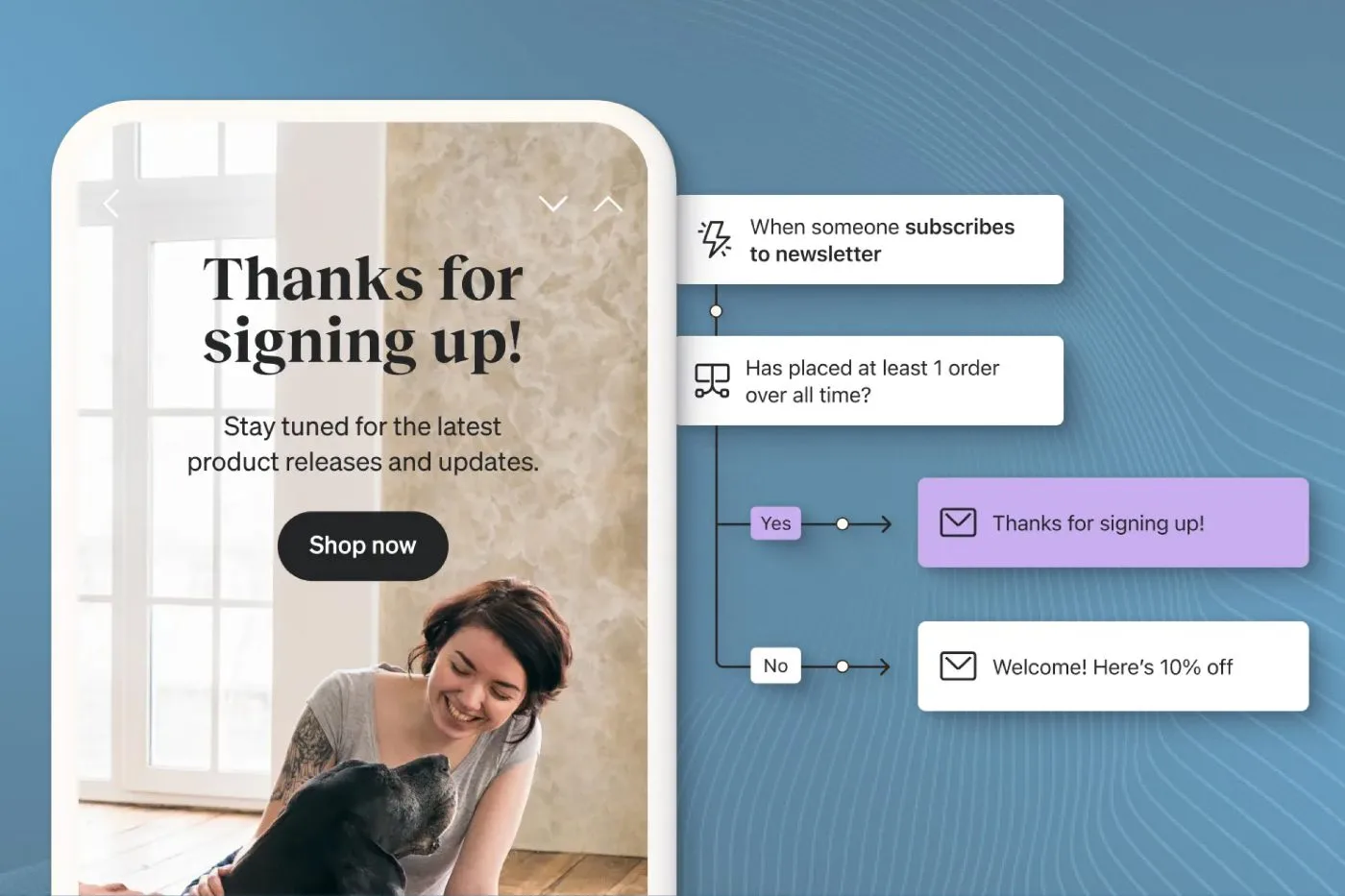
What is a Welcome Series Email Flow?
A welcome email series is a sequence of automated emails sent to new subscribers after they join your list. Unlike one-off welcome messages, a series lets you methodically introduce your brand, showcase your value, and guide subscribers toward becoming customers.
To learn how to build a truly effective onboarding flow, check this e-commerce welcome email series guide from In-Box.
These aren’t just any old emails, they’re your chance to make new subscribers feel appreciated while subtly moving them through your sales funnel. A good welcome series email flow educates readers about your products or services, establishes your expertise, and encourages engagement.
The magic of the welcome series lies in their automation. Once you set them up, they work around the clock to nurture new subscribers, freeing you up to focus on other aspects of your business. They’re essentially your always-on marketing team member.
The Benefits of Welcome Journey Email Marketing
Let’s talk about real results. Companies that implement welcome email series see some impressive numbers.
ROI and Increased Revenue
Welcome emails make money, it’s that simple. With an average revenue of $2.54 per recipient, they pack a serious punch for your bottom line. That might not sound like much at first glance, but multiply it across thousands of subscribers and you’re looking at significant returns.
Research shows welcome emails generate 320% more revenue per email than other promotional emails. They arrive when subscriber interest peaks, making them perfect for early conversion opportunities.
Companies using automated welcome series see conversion rates up to 2.5x higher than those sending single welcome emails. The sequence allows for multiple touchpoints, increasing the chances of turning subscribers into customers.
Better Engagement Metrics
The numbers don’t lie, welcome emails see engagement rates that marketing teams dream about. Average open rates hit 55.61%, dwarfing the typical 15-25% for standard marketing emails.
Click-through rates tell an equally impressive story. Welcome emails average 14.4% CTR, while regular promotional emails often struggle to reach 2-3%. These higher engagement rates mean more eyes on your content and more opportunities to connect.
First impressions stick. Subscribers who engage with your welcome series are 33% more likely to remain engaged with future emails. They’re also more likely to open, click, and convert down the line.
Long-Term Customer Relationships
Welcome series lay groundwork for lasting customer relationships. They set expectations early, helping subscribers understand your brand’s value from day one.
The data shows subscribers who receive welcome series stick around longer. They’re 12% less likely to unsubscribe from future emails compared to those who receive single welcome messages.
These early interactions shape how customers view your brand long-term. A well-crafted welcome series creates brand advocates who not only buy but recommend your products to others.
Brand Building Opportunities
Your welcome series gives you dedicated space to tell your brand story. It’s your chance to stand out in a crowded market and show what makes you different.
Use this opportunity to share your company values, mission, and personality. Subscribers who connect with your brand story spend 33% more on average than those who don’t.
Brand consistency matters here. Companies that maintain consistent brand messaging throughout their welcome series email flow see 23% higher revenue compared to those with disconnected messaging.
Reduced Marketing Costs
Welcome series email automation saves time and resources. Once set up, they run automatically, freeing your team to focus on other marketing initiatives.
The targeting precision of welcome emails means better use of your marketing budget. They reach people at their highest interest level, resulting in lower cost per conversion compared to other channels.
Email automation reduces manual work by 80% for most marketing teams. That time savings translates directly to reduced operational costs.
Anatomy of an Effective Welcome Series
Key Elements Every Welcome Email Should Include
There are some non-negotiable items that go into every email flow. Let’s break it down.
Crafting Clear and Compelling Subject Lines
Your subject line serves as the doorway to your email. Research shows 47% of subscribers decide to open an email based solely on the subject line. A welcome email subject line needs to be clear, direct, and set the right expectations.
For your welcome series, keep subject lines under 50 characters. Use the subscriber’s name when possible, this personal touch increases open rates. Stay away from spammy words or excessive punctuation that could trigger filters.
Some effective welcome email subject line examples:
- “Welcome to, Here’s Your Next Steps”
- “, Thanks for Joining Us”
- “Your is Inside”
- “Getting Started with ”
Personalization That Goes Beyond First Names
Personalization isn’t just about dropping someone’s name into an email. Today’s subscribers expect deeper personalization based on their interests and behaviors.
Start with basic personalization fields like first name and location. Then layer in more sophisticated elements based on how they found you, what products they’ve viewed, or which lead magnet they downloaded.
Smart personalization means tailoring content blocks based on subscriber data. If someone signed up through a specific product page, feature that product family in their welcome sequence. If they came through a blog post, share related content.
Keep in mind the importance of a clean email list here as well. Make sure to regularly scrub your list to ensure you have active subscribers and the emails are being delivered.
Developing Your Brand Voice and Tone
Your welcome series sets expectations for all future communications. The tone you use here becomes the voice subscribers associate with your brand.
Write like you’re talking to one person, not broadcasting to a list. Use contractions, keep sentences varied in length, and don’t be afraid to show personality where appropriate.
Your brand voice should match across all channels. If you’re casual and friendly on social media, maintain that in your emails. If you’re professional and authoritative on your website, keep that tone in your welcome series.
Creating Strong Calls to Action
All of the best email marketing strategies need a clear next step. Your CTAs guide subscribers toward meaningful engagement with your brand.
Make your primary CTA stand out visually. Use action-oriented language that creates urgency without being pushy. “Start Your Free Trial” works better than “Click Here.”
Limit each email to one main CTA with maybe one or two secondary options. Too many choices lead to decision paralysis and lower click-through rates.
Building Trust Through Social Proof
Social proof validates your subscriber’s decision to join your list. It shows they’re not alone in trusting your brand.
Mix different types of social proof throughout your welcome series:
- Customer testimonials
- User statistics
- Industry awards
- Media mentions
- Expert endorsements
- Social media highlights
Real stories from real customers resonate more than polished marketing copy. Include specific results or outcomes when possible.
Making Unsubscribe Options Clear and Accessible
While it might seem counterintuitive, making it easy to unsubscribe actually builds trust. It shows confidence in your content and respect for subscriber preferences.
Place your unsubscribe link where it’s easy to find, usually in the footer. Make the process one-click simple. Consider adding preference options so subscribers can adjust frequency instead of leaving entirely.
Remember, clear unsubscribe options aren’t just good practice, they’re legally required in most countries.
Requesting Safe Sender Status
Getting added to a subscriber’s safe sender list improves your long-term deliverability. It helps ensure your future emails make it to the inbox instead of spam folders.
Include clear instructions for adding your sending address to their contacts. Place this request early in your welcome series when engagement is highest.
Consider adding a visual element showing how to whitelist your address in popular email clients. Make it as easy as possible for subscribers to take this action.
Length and Timing
Most effective welcome series include 4-6 emails spread over 1-2 weeks. This gives you enough touchpoints to build relationships without overwhelming subscribers.
Timing matters more than you might think. Send your first email immediately after signup, waiting even a day can tank engagement. After that, space emails 1-3 days apart based on your goals and content.
Test different sending schedules with your audience. Some might engage better with daily emails, while others prefer more space between messages. Watch your metrics and adjust accordingly.
Need help choosing an email marketing platform? We reviewed Mailchimp vs Klaviyo here in our expert guide!
Building Your Welcome Series: Email by Email
Email #1: The Initial Welcome
Your first email sets the tone for everything that follows. Send it right away while you’re fresh in the subscriber’s mind.
Thank them for subscribing and introduce your brand briefly. If you offered a lead magnet or signup incentive, deliver it here. Keep the focus on the subscriber, what’s in it for them?
A good first email:
- Delivers any promised signup bonuses
- Sets expectations for future emails
- Includes one clear call-to-action
- Keeps the tone warm and personal
Email #2: Value Proposition & Education
Now that you’ve made introductions, show subscribers why they made the right choice. Focus on your unique value proposition and what makes you different.
Share your best educational content here. This could be how-to guides, industry insights, or product tutorials. Position yourself as a helpful expert, not just another company trying to make a sale.
Use customer stories to illustrate your points. Real examples help subscribers see themselves succeeding with your product or service.
Email #3: Social Proof & Trust Building
Third time’s the charm for building credibility. Show subscribers they’re in good company by sharing testimonials, reviews, and case studies.
Mix different types of social proof:
- Customer success stories
- Industry awards or recognition
- Media mentions
- User statistics
- Expert endorsements
Keep it authentic, real testimonials beat polished marketing speak every time.
Email #4: Offer & Incentive
By email four, subscribers know who you are and what you offer. Now’s the time to encourage action with a compelling offer.
This might be a discount code, free trial, or exclusive content. Create urgency with a time limit, but keep it reasonable, 48-72 hours usually works well.
Make redeeming the offer dead simple. Clear instructions, prominent buttons, and minimal friction points increase conversion rates.
Email #5: Engagement & Next Steps
Your final email should tie everything together and point toward long-term engagement.
Highlight different ways to connect with your brand, social media, blog, community forums, etc. Remind subscribers about key features or benefits they might have missed.
Include a strong call-to-action that aligns with your main conversion goal, whether that’s making a purchase, starting a trial, or booking a demo.
Advanced Welcome Series Strategies
Segmentation and Personalization
Basic welcome series work, but segmented ones work better. Use signup form data and subscriber behavior to customize your approach.
Segment based on:
- How they found you
- What content they’re interested in
- Their industry or role
- Previous interactions with your brand
Then adjust your messaging accordingly. Someone who found you through a product review needs different content than someone who downloaded your industry report.
Automation Best Practices
Pick an email platform that makes automation easy but gives you room to grow. You’ll want features like:
- Visual workflow builders
- Behavioral triggers
- A/B testing tools
- Detailed analytics
- Integration capabilities
If you’re new to automation and want to understand how flows fit into your email strategy, read more about email flow with real-life examples.
Set up tracking from day one. Monitor both email metrics and website behavior to understand how subscribers engage with your content.
Related Reading: Top Email Marketing Agencies
Measuring Success
Key Metrics to Track
Numbers tell the story of your welcome series effectiveness:
Open rates show if your subject lines work. Aim for 50%+ on welcome emails, they should outperform your regular campaigns.
Click-through rates reveal engagement levels. Track which links get clicked to understand what interests your subscribers most.
Conversion rates are the bottom line. Define what counts as a conversion for your business and optimize toward that goal.
Revenue per subscriber helps justify your email marketing investment. Track both immediate and long-term revenue impact.
Optimization Techniques
Never settle for “good enough” with your welcome series. Test everything:
- Subject lines
- Send times
- Email length
- Content types
- Offer timing
- Call-to-action placement
Start with big changes that could drive major improvements. Once you find what works, fine-tune the details.
Use A/B testing systematically. Test one element at a time and give each test enough volume for statistical significance.
Real-World Examples
Let’s look at some companies doing welcome series right:
Starbucks keeps it simple but effective. Their welcome series focuses on their rewards program, teaching new subscribers how to earn and use points. Each email highlights a different benefit with clear visuals and minimal text.
Typeform takes an educational approach. They guide new users through creating their first form, sharing tips and best practices along the way. Their series feels more like a helpful friend than a marketing campaign.
DFS Furniture personalizes based on customer interests. If someone shows interest in bedroom furniture, they get relevant guides and product recommendations. This targeted approach led to a 4% revenue increase from their welcome series.
BrewDog segments subscribers from the start. They adjust subject lines and content based on how people join their list, leading to a 14% revenue boost.
Common Mistakes to Avoid
Don’t overwhelm new subscribers with too many emails too fast. Space out your messages logically.
Avoid the hard sell too early. Build trust first, then present offers when subscribers are ready to buy.
Keep mobile users in mind. Most people read emails on phones now, if your emails don’t look good on mobile, they won’t perform well.
Don’t forget to test your automation. Nothing kills credibility faster than broken links or personalization tags that don’t work.
Best Practices Checklist
Before launching your welcome series, here are some boxes you’ll want to check.
Planning Your Email Sequence
Before writing a single word, map out your entire welcome series flow. Think about the journey you want subscribers to take. Start with your end goal, whether that’s making a sale, activating a free trial, or building engagement.
Draw out your sequence on paper or in your favorite planning tool. Note what each email should achieve and how they connect. Pay special attention to timing between messages and how subscriber actions might trigger different paths.
Consider your audience segments early. Different subscriber types might need different paths through your welcome sequence. A returning customer needs different messaging than someone brand new to your company.
Writing and Designing Your Emails
Start with your writing. Draft all email copy at once to maintain consistent voice and flow throughout the series. Keep your brand guidelines handy and reference them often.
Design follows content. Create templates that work across all major email clients. Remember that simple designs often perform better than complex ones. Leave plenty of white space and make your CTAs stand out.
Consider these elements for each email:
- Subject line and preview text
- Header image or logo placement
- Body content formatting
- CTA button design and placement
- Footer information and legal requirements
Setting Up Tracking Systems
Proper tracking tells you what works and what doesn’t. Set up tracking for every important metric:
- Open rates
- Click rates
- Conversion rates
- Revenue per email
- Unsubscribe rates
- Bounce rates
Make sure your tracking codes work properly across all links. Set up goal tracking in your analytics platform to measure complete subscriber journeys, not just email interactions.
Cross-Device Testing
Your emails need to look good and work well everywhere. Test every email on:
- Desktop email clients (Outlook, Apple Mail)
- Web-based email (Gmail, Yahoo)
- Mobile devices (iOS, Android)
- Different screen sizes
- Dark mode settings
Pay special attention to how images render and how easy links are to click on mobile devices. Remember that over 60% of emails get opened on phones first.
Verifying Automation Triggers
Your automation needs to work flawlessly. Test every trigger event:
- List signup
- Form completion
- Purchase confirmation
- Abandoned cart
- Website behavior triggers
Send test emails through your entire sequence. Time each step and make sure delays work as planned. Check that conditional logic routes subscribers correctly based on their actions.
Developing Your Testing Strategy
Plan how you’ll optimize your welcome series over time. Create a testing calendar that covers:
- Subject line variations
- Send time testing
- Content format testing
- CTA placement and design
- Offer testing
- Sequence length testing
Start with big tests that could dramatically improve performance. Save fine-tuning for after you’ve found your winning combinations.
Review and update your series regularly. Customer needs change, and your welcome sequence should evolve too.
Future Trends in Welcome Email Series
Looking ahead, welcome series email flows are getting smarter. AI helps personalize content and timing at scale. Interactive elements like polls and quizzes boost engagement.
Mobile optimization becomes more critical each year. Design for phones first, desktop second.
Video content in emails is growing. Short, attention-grabbing clips can increase click-through rates significantly.
Ready to Transform Your Welcome Series?
Creating an effective welcome email series takes time, expertise, and constant optimization. While this guide gives you the foundation, implementing these strategies requires dedicated resources and know-how.
At In-box, we specialize in crafting high-performing welcome series that convert subscribers into loyal customers.
Our results speak for themselves, with open rates of 44.3% (compared to the industry average of 39.7%) and click rates of 3.01% (doubling the industry average of 1.47%).
Let us handle your welcome series while you focus on growing your business. Our team of email marketing experts will:
- Design a customized welcome sequence for your brand
- Write engaging, conversion-focused copy
- Set up proper tracking and automation
- Continuously test and optimize performance
- Ensure deliverability and compliance
Don’t leave your first impression to chance. Get in touch with us today for a free consultation and learn how we can help you nurture your new subscribers from day one.