What is an Email Flow?
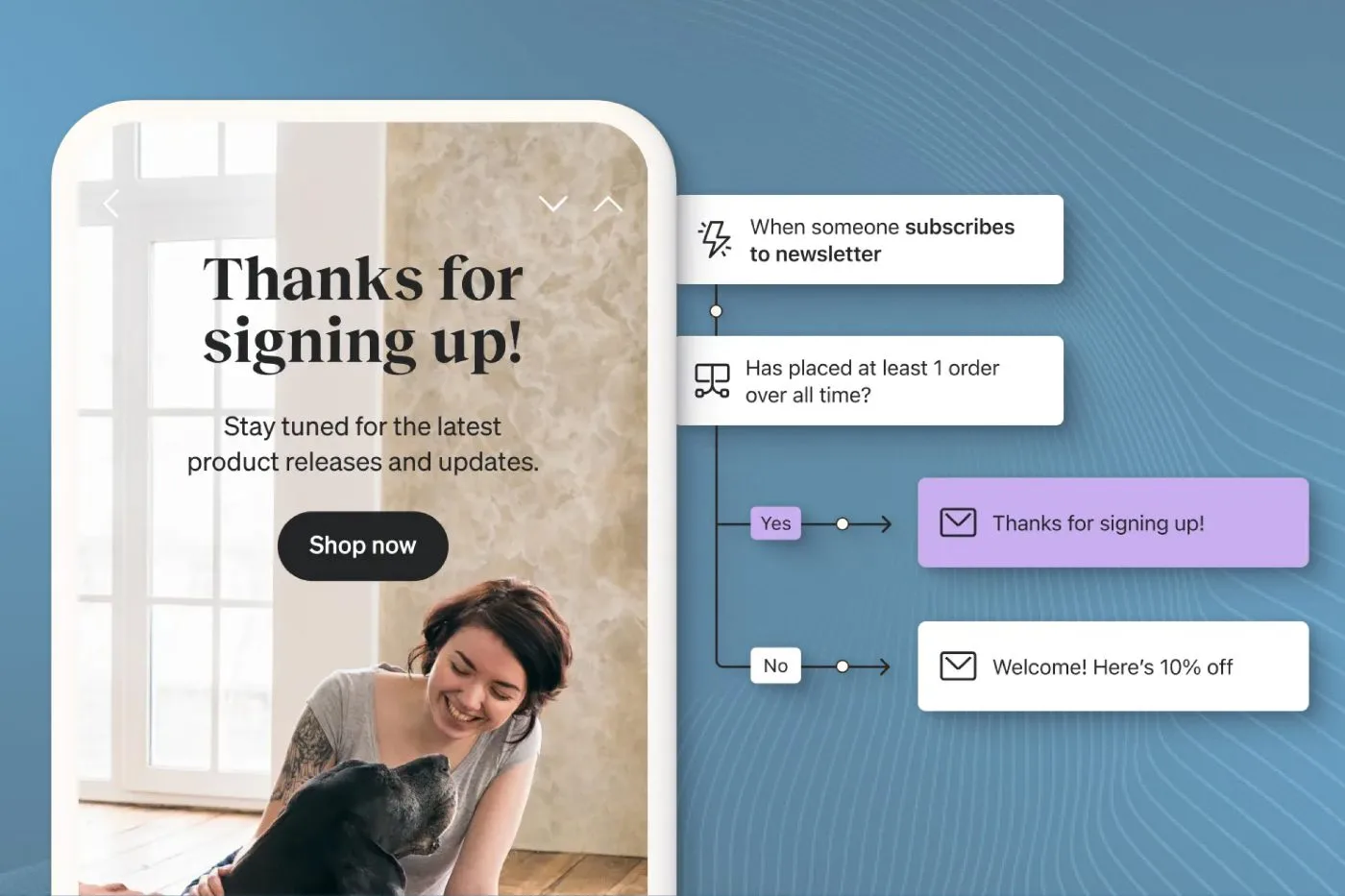
An email flow is a series of automated emails triggered by specific customer actions or behaviors. Think of it as a pre-planned conversation with your customers that adapts based on how they interact with your brand. When someone signs up for your newsletter or leaves items in their cart, your email flow automatically sends them relevant messages at the perfect time.
Unlike one-off email campaigns, email flows work continuously in the background, nurturing customer relationships and driving sales while you focus on other aspects of your business. They’re the foundation of a strong email marketing strategy, working 24/7 to keep your brand connected with your audience.
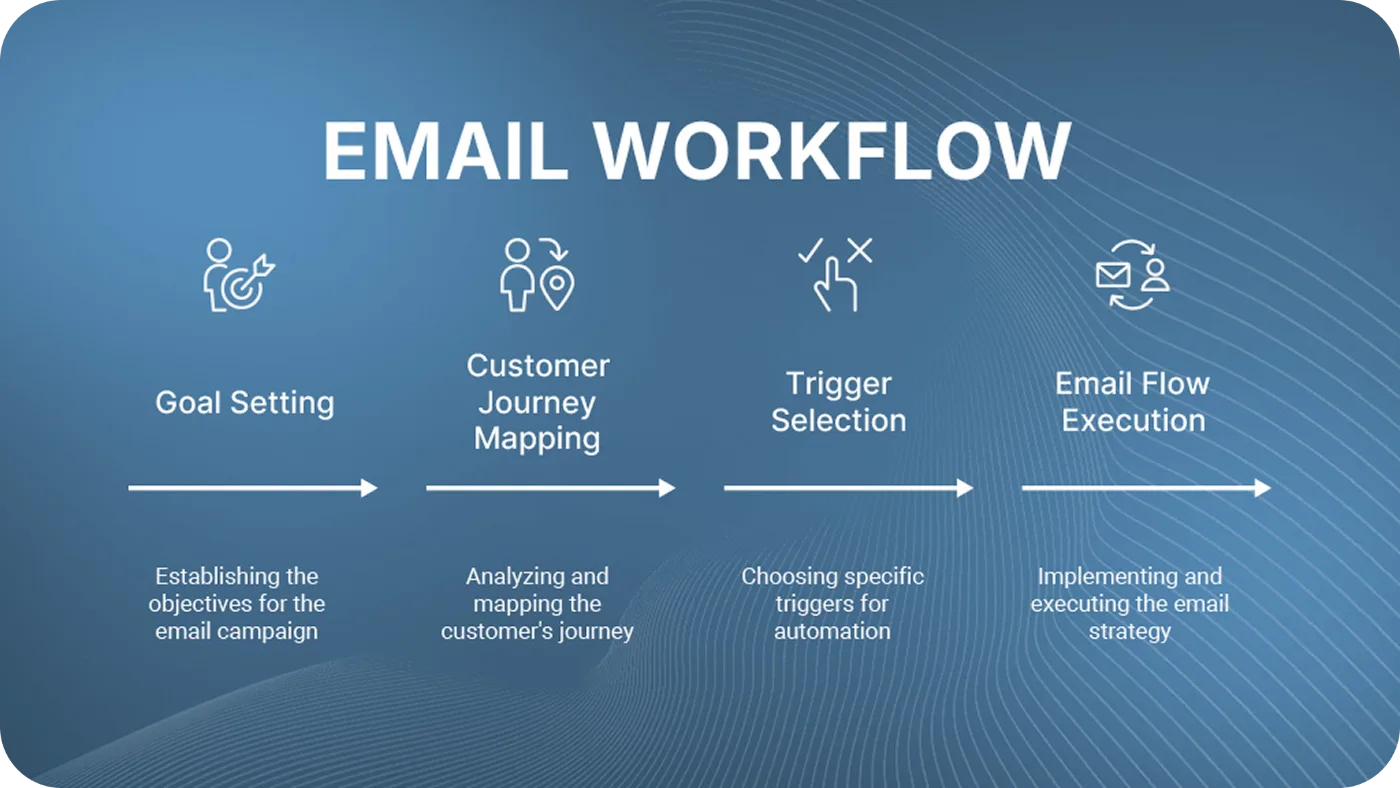
The Anatomy of an Email Flow
Every email flow consists of three core elements:
- Triggers: The specific actions or conditions that initiate the flow. These could be customer behaviors (like abandoning a cart), time-based events (like birthdays), or other criteria you define. Within Klaviyo, based on the integration you are using, there are a bunch of variables that you can trigger flows off of and if you want to get really technical, you can trigger the flows off of custom triggers as well.
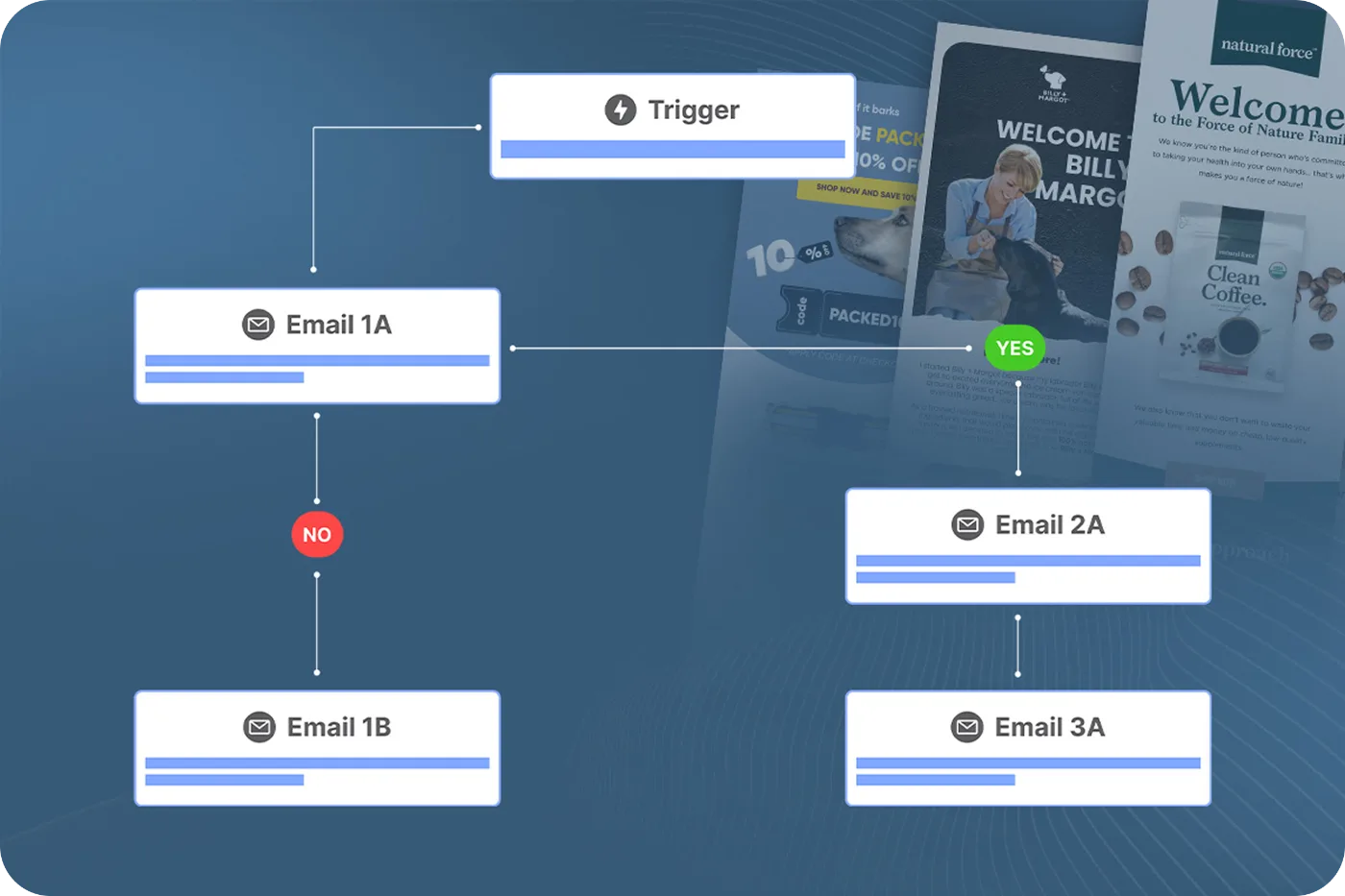
- Conditions/filters: The rules that determine which subscribers receive which emails. These might include purchase history, engagement level, or demographic information. These are typically set at the start of the flow as a ‘flow filter’ (in Klaviyo) if you want the filters to be set before each every email is sent, or as a conditional split if you want the condition to be added before a particular email or time delay.
- Content: The actual emails that subscribers receive, including subject lines, body copy, images, and calls to action. Here are some examples of an email flow that your readers can receive (we designed these): click here for templates
When to Use Email Flows
Email flows shine in numerous scenarios throughout the customer journey. The variations are endless but the most common email automations are the following:
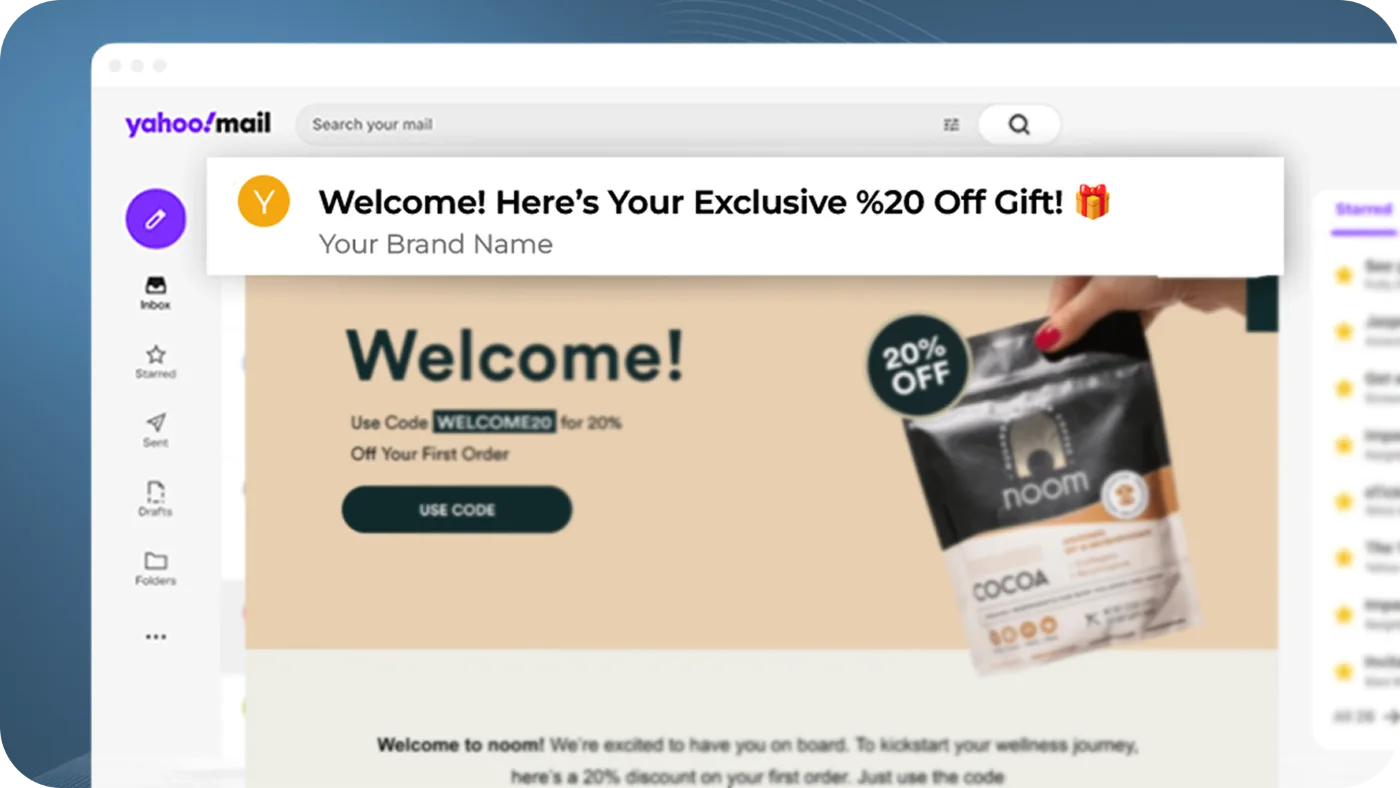
- Welcome Email Series Flow, Typically sent to a subscriber once they subscribe to a newsletter and designer to get that first purchaser across the line, assuming you are in e-commerce. Alternative, they can be used to simply educate about your brand and introduce both readers and customers to your brand. Note, you should also have a post-purchase flow set-up which can also do the education. Just make sure, if you have this post-purchase thank you flow, you do not double up on the messaging between these two flows. You can prevent this double-up by adding the filter ‘place order zero times’ at the top of your welcome series flows
- Post Purchase Thank You, This is triggered after a subscriber makes a purchase. Personally, I like to structure these in a way that existing customers and first-time customers go down different paths within this automation.
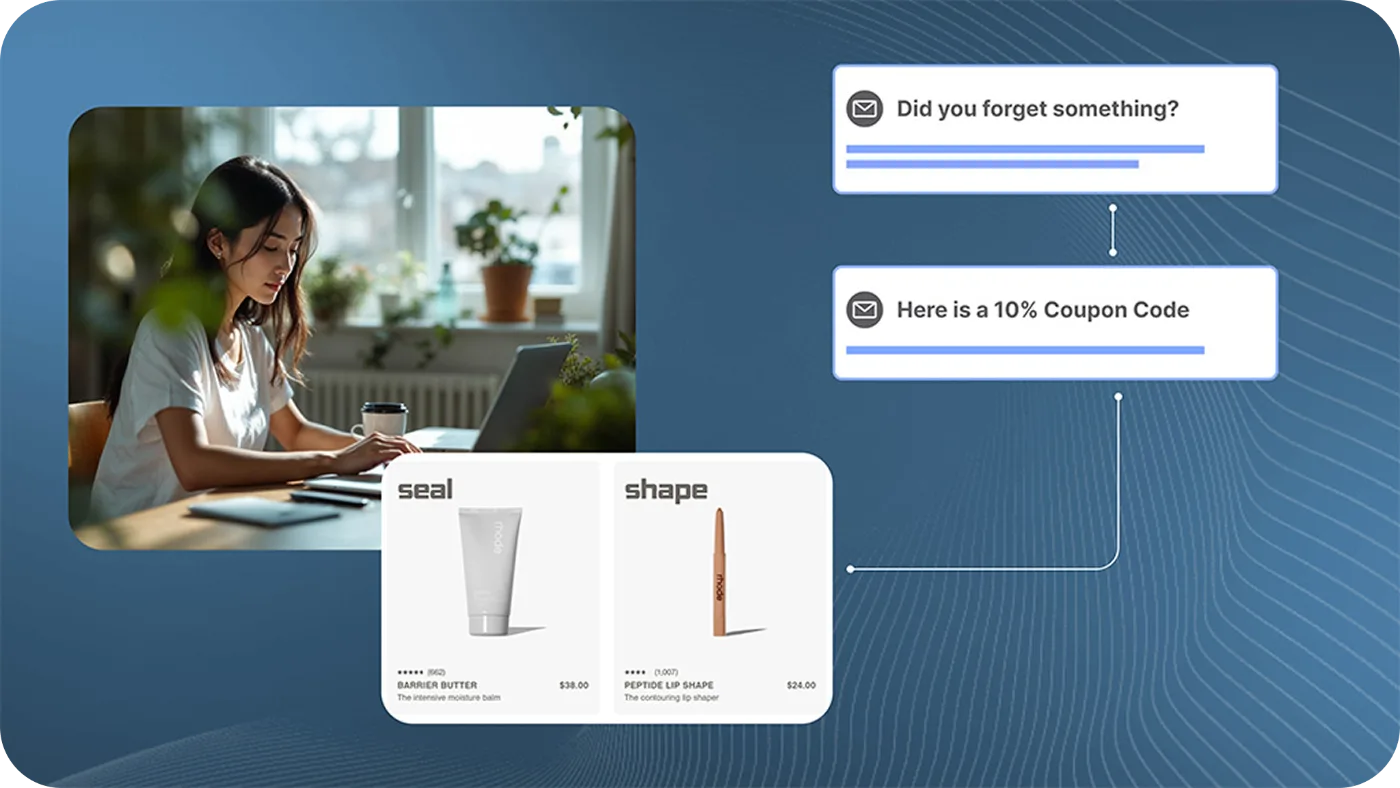
- Abandon Cart, When shopping carts are abandoned. This is designed to recover lost carts, note, this is different from an Abandon Checkout (see below). The abandoned cart flow typically tries to recover lost carts by reminding readers of the cart (dynamically) and providing readers with incentives to make a purchase.
- Abandon Check Out, This is very similar to the above flow, only the trigger is… triggered… off of someone starting checkout (note this is after they add to cart). We set this flow up as well as the above as the two flows talk to people at different stages (yet very similar) in the abandonment process.
- Browse abandon, Once again, very similar to the above, expect this is triggered off of someone viewing and item and should filter people out of the flow if they add an item to their cart or start checkout to prevent doubling up of messaging from the above flows.
- Sunset, This is a flow designed to re-engage unengaged readers. You would need to trigger this flow off of someone joining a segment that comprises unengaged readers. We define this as anyone who has not opened an email in the last 90 days but has received at least 10 emails and is subscribed to email marketing
- Win Back Flow, This flow should be structured to win existing customers back, to make another purchase. I set this as flow to be triggered off of someone making a purchase and filter people out if they make another purchase while being in the flow (set this condition as a flow filter at the top). Typically, this flow should start sending message just after the time in which someone would typically make a second purchase passes (check the time between first and second orders to find this out).
Each of these moments presents an opportunity to deepen your relationship with customers through targeted, relevant communication and most importantly increase your total sales and repeat order rate.
The Benefits of an Email Marketing Flow
Modern email marketing demands sophistication, personalization, and perfect timing. Email flows deliver on all these fronts while providing several key advantages for your business.
Saves Time Through Automation
Gone are the days of manually sending individual emails to customers based on their actions. Email flows transform your marketing from a time-consuming daily task into a streamlined, automated system. Here’s what automation can do:
- Handle routine communications automatically, from welcome emails to order confirmations
- Scale your email marketing efforts without increasing the workload on a day-to-day basis
- Maintain consistent communication even during off-hours or holidays
- Free up your team to focus on strategy and creative tasks
Consider this: If you have 100 new subscribers per day and spend just 5 minutes crafting a personalized welcome email for each. Automating a flow like this allows the work to be handled in seconds by software as opposed to yourself.
Increases Customer Engagement
Email flows create meaningful connections with your audience through timely, relevant communications. They keep your customers engaged by:
- Delivering content based on specific customer actions and interests
- Maintaining consistent touchpoints throughout the customer journey
- Creating personalized experiences that resonate with individual subscribers
- Building trust through predictable, valuable communications
For example, when a customer browses your website but doesn’t purchase, a well-timed browse abandonment email showing related products can reignite their interest and bring them back to your site.
Boosts Conversion Rates
Well-crafted email flows can significantly improve your conversion rates. They work by:
- Targeting customers at key decision-making moments
- Providing relevant information when it’s most needed
- Removing barriers to purchase through strategic content
- Building trust through consistent, valuable communication
Our clients typically see conversion rates increase by 25-30% after implementing strategic email flows, particularly for abandoned cart and browse abandonment sequences.
Provides Valuable Customer Insights
Every email flow generates data that helps you understand your customers better. This information helps you:
- Track customer behavior patterns across different segments
- Identify which products generate the most interest
- Understand when customers are most likely to engage
- Optimize your marketing strategy based on real data
These insights allow you to refine your approach continuously, creating increasingly effective marketing campaigns. The great thing about automations, is that you can set-up split tests and simply let them run for a month. After that month is up, circle back, pick a winning variation and begin implementing a new test. This enables a constant state of improvement within your business.
Maintains Consistent Brand Communication
Email flows ensure your brand voice remains consistent across all customer interactions. This consistency:
- Builds brand recognition and trust
- Creates a professional image
- Delivers a unified customer experience
- Strengthens your brand identity
When customers receive consistent messaging, they’re more likely to remember and engage with your brand.
How Do I Create an Email Workflow?
Creating the perfect email flow requires the right amount of planning. Here are some easy-to-chew-on steps:
1. Define Your Goal
Start by identifying exactly what you want to achieve with your email flow. Your goal should be:
- Specific and measurable
- Aligned with your overall marketing strategy
- Focused on clear customer actions
- Realistic and achievable
For example, instead of a vague goal like “increase sales,” aim for something specific like “recover 15% of abandoned carts within 48 hours of abandonment.”
2. Map Out Your Customer Journey
Understanding your customer’s path to purchase is crucial for creating effective flows. This involves:
- Identifying key touchpoints where customers interact with your brand
- Understanding common questions or concerns at each stage
- Recognizing potential drop-off points
- Planning interventions at critical moments
Create a visual map of this journey, noting where email communications can add value or remove barriers to purchase. We like to use Miro for this type of journey mapping.
3. Set The Right Triggers
Triggers are the events that initiate your email sequence. Common triggers include:
Behavioral Triggers:
- Website visits
- Product page views
- Cart abandonment
- Purchase completion
Data-Based Triggers:
- Customer segment changes
- Purchase history milestones
- Engagement level shifts
All of these should be within your ESP and should be being fed to that ESP by the platform in which you integrate it to, think Shopify + Klaviyo.
4. Plan Your Content
Your email content should guide customers toward your goal while providing value. Consider:
Email Structure:
- Clear, compelling subject lines
- Engaging preview text
- Scannable body content
- Strong calls-to-action
Content Types:
- Educational materials
- Product recommendations
- Social proof
- Special offers
- Support resources
5. Understand the Importance of Timing
Timing can make or break your email flow’s success. Consider:
Frequency Factors:
- Industry standards
- Customer preferences
- Message urgency
- Previous engagement patterns
Spacing Guidelines:
- Allow enough time between emails
- Account for different time zones
- Consider optimal sending times
- Plan for seasonal variations
6. Test and Optimize
Creating a flow isn’t a “set it and forget it” task. Continuous improvement requires:
Testing Elements:
- Subject lines
- Email content
- Send times
- Offer types
- Call-to-action placement
Optimization Metrics:
- Open rates
- Click-through rates
- Conversion rates
- Revenue per email
- Unsubscribe rates
7. Implement Based on the Data
As you build your flows, keep these best practices in mind:
Technical Considerations:
- Mobile responsiveness
- Loading speed
- Image optimization
- Link tracking
- Spam score monitoring
Quality Assurance:
- Test all links and buttons
- Preview on multiple devices
- Check personalization tags
- Verify trigger conditions
- Monitor deliverability
Remember, successful email flows are built on a foundation of understanding your customers’ needs and behaviors. Start with your most important flow (often the welcome or abandoned cart sequence) and expand from there based on results and resources.
Types of Email Flows
Different email flows serve different purposes in your marketing strategy. Each type has its own unique characteristics and best practices. Let’s explore the most common and effective flows and how to implement them for maximum impact.
Welcome Flow
Your welcome series email flow serves as your brand’s digital handshake. It’s your opportunity to make a strong first impression and set the foundation for a lasting customer relationship. The best welcome flows don’t just say “hello”, they start a conversation that guides new subscribers toward becoming loyal customers.
The first email in your welcome sequence should deliver any promised incentives and express genuine appreciation for the subscription for example, if you gave someone 15% in exchange for their email subscription, make that incentive clear in your first email. Ensure that all links in that email auto-apply the discount to their cart after they click the specific link.
Follow this with an introduction to your brand story and values, but keep it focused on how these benefit the customer. The next emails in the sequence might showcase your most popular products or provide valuable content that helps subscribers understand what makes your brand unique.
Timing is crucial in welcome flows. Send your initial welcome email immediately after signup when engagement is highest. Space subsequent emails a few days apart to maintain interest without overwhelming new subscribers. Most effective welcome sequences include 3-5 emails over the course of 7-14 days.
Abandoned Cart Flow
The abandoned cart email strategy is often your highest-performing flow in terms of revenue recovery. These emails remind customers about products they’ve shown interest in and help overcome any obstacles to purchase. The key is to strike a balance between being helpful and being pushy.
Start with a gentle reminder about an hour after abandonment.
- This first email should simply ask if there were any technical issues and show the items left behind.
- The second email sent about 24 hours later, might include social proof like reviews or testimonials about the abandoned products.
- If needed, a final email can include a special offer or discount, but use this sparingly to avoid training customers to abandon carts deliberately.
Remember to show the actual products left in the cart and make it extremely easy to return to checkout. A single click should take customers right back to their loaded cart, ready for purchase.
Post Purchase Flow
After implementing ecommerce email automation, the post-purchase flow becomes your tool for turning one-time buyers into loyal customers. This sequence begins with order confirmation but extends well beyond delivery to build lasting relationships.
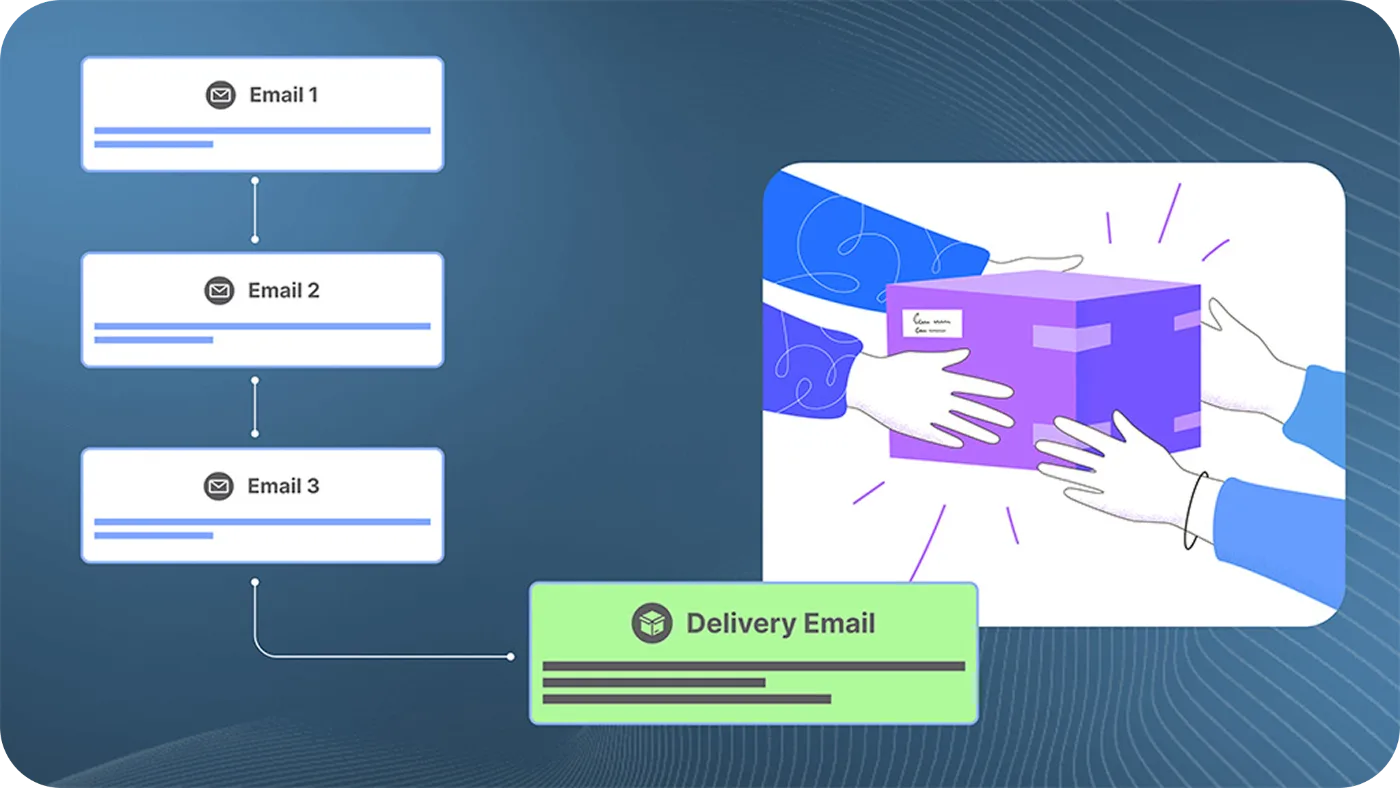
Start with a clear order confirmation that includes all relevant purchase details. Follow up with shipping updates and tracking information.
Once the product arrives, send usage tips or care instructions to help customers get the most value from their purchase. After they’ve had time to use the product, request a review and consider offering a loyalty reward or referral incentive.
The post-purchase flow also presents prime opportunities for cross-selling related products. Use customer purchase data to recommend complementary items that enhance their original purchase.
Browse Abandonment Flow
When shoppers view a product but don’t add them to their cart, your browse abandonment flow can reignite them and bring their attention back.
These nurture campaign examples show how to maintain interest without being too pushy. The key is to add value instead of just reminding them.
Send your first browse abandonment email within the first 24 hours, focusing on the specific products viewed. Include additional product information, answers to common questions, and ideas of how they can use the product.
If the products are high-value items, consider following up with comparison guides or buyer’s guides that help inform the purchase decision.
Upsell Flow
Upsell flows focus on increasing customer lifetime value by encouraging them to purchase items that compliment what they’ve already bought. This sequence works best when it’s highly personalized based on previous purchase behavior and browsing history.
Start by identifying the right upgrades within your product range. For example, if someone buys a basic version of your product, introduce them to the premium features they’re missing. You can create splits within your automation based on people’s purchase history to allow for the correct cross-selling of different products based on people’s purchase history.
Time these suggestions carefully, wait until customers have had enough time to experience value from their initial purchase before suggesting upgrades.
Win Back Flow
Win-back flows target customers who have purchased once but haven’t done so in a while. The goal is to re-establish the connection and remind them why they chose your brand initially. This sequence requires a delicate touch to avoid seeming desperate while still creating urgency.
Begin with a friendly check-in email that acknowledges the fact that you haven’t heard from them in a while. Share what’s new with your brand or products since their last purchase.
If they don’t engage, follow up with a special “we miss you” offer. The final email in this sequence might request feedback about why they stopped engaging, this provides valuable insights for improving your customer experience.
Transform Your Email Marketing with In-box
Ready to take your email marketing to the next level? At in-box, we specialize in creating high-performing email flows that drive real results. Our clients see remarkable improvements in their email marketing metrics, with:
- 44.3% open rates (versus the industry average of 39.7%)
- 3.01% click rates (compared to 1.47% industry standard)
- $0.75 revenue per recipient (exceeding the typical $0.11)
Let’s create email flows that work harder for your business. Contact us today for a free consultation and discover how we can help you achieve similar results.