Step 1: Start With the Right Automation
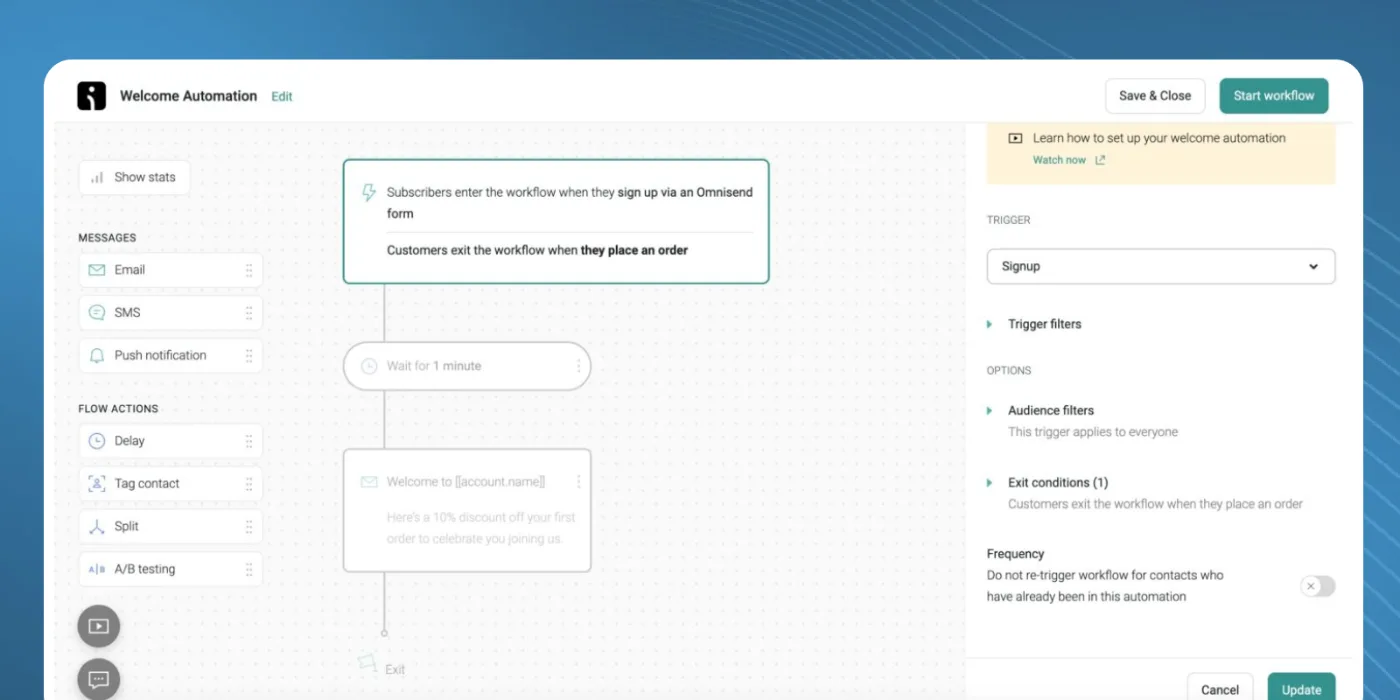
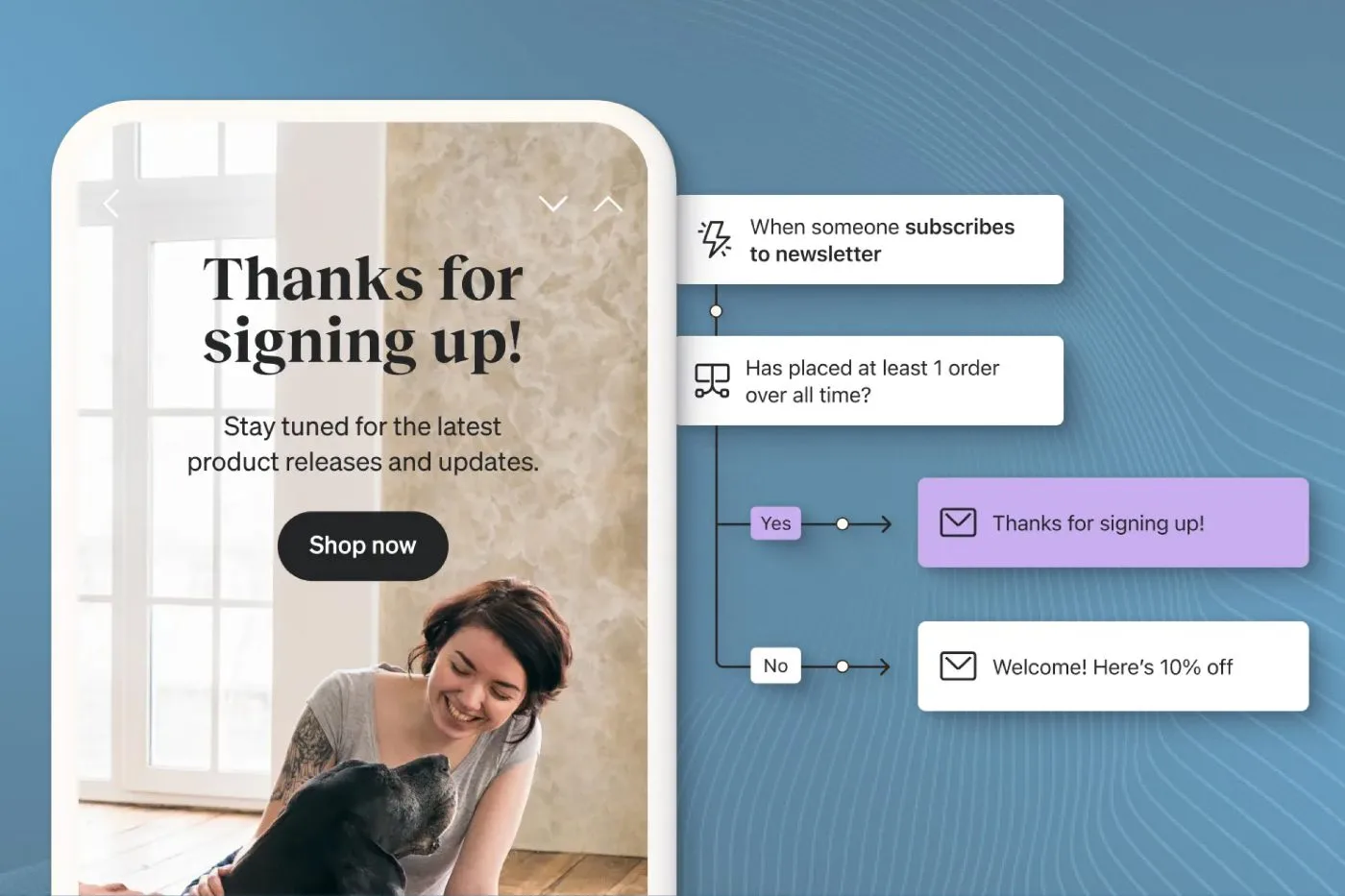
Inside Omnisend, head to Automations and create a new workflow.
You’ll see a bunch of pre-built templates, and while those can be useful, we don’t recommend using them as-is. They’re generic and don’t maximize conversion potential.
Instead, start from scratch.
The trigger you want is “Subscribed to marketing.”
This means anyone who opts into your list, regardless of how or where they signed up, will enter this flow.
If you’re running multiple forms or entry points, you can segment by source, but for most brands, it’s better to treat all new subscribers the same.
Step 2: Set Your Exit Conditions (This Matters a Ton)
Your welcome flow should end when someone places an order.
That’s the main exit condition.
Why? Because once someone buys, they should move into your post-purchase or customer flow instead of continuing to receive intro-level emails.
You can also add an optional exit condition for “message delivery failed.” This removes people who entered a fake or invalid email address. It’s not required, but it helps keep your list clean.
Step 3: Email #1, Deliver the Incentive Immediately
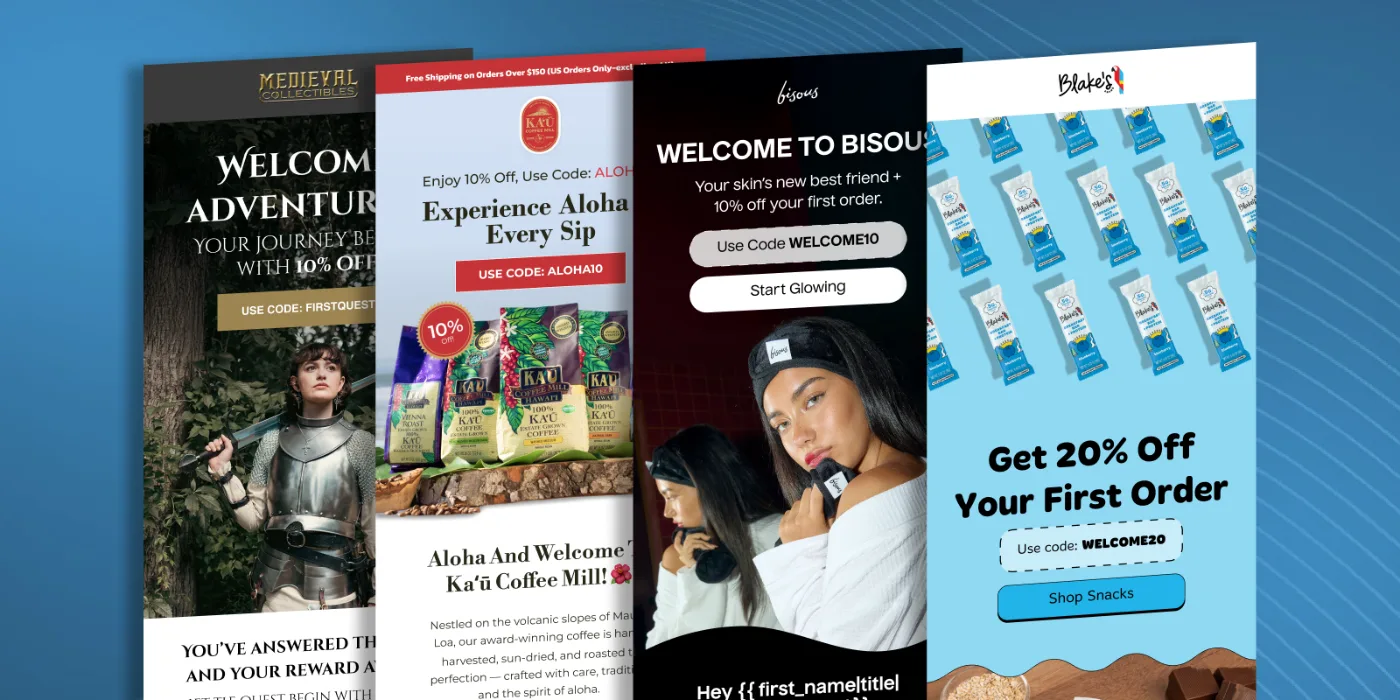
Your first email should do one thing and one thing only: Deliver what you promised.
If you offered:
- 10% off
- Free shipping
- A bonus gift
- Early access
This email delivers it.
Key rules for Email #1:
- Subject line should include the offer (numbers perform best)
- Keep the message simple and direct
- Make the code or reward extremely obvious
- Send it immediately after signup
Example subject: “10% off your first order”
The sender name should feel human. Instead of your brand name, use something like: “Gavin from ”
People respond better to people than logos.
Step 4: Wait 12 Hours, Then Remind Them
After the first email, add a 12-hour delay.
This second email is a reminder that the offer exists. That’s it.
Most people don’t convert on the first touch, even if they’re interested. They get distracted. They open the email while busy. They tell themselves they’ll come back later.
This email pulls them back.
Subject ideas:
- “Still thinking it over?”
- “Your 10% is still waiting”
- “Don’t forget your code”
At this stage, don’t over-explain. Just re-surface the offer.
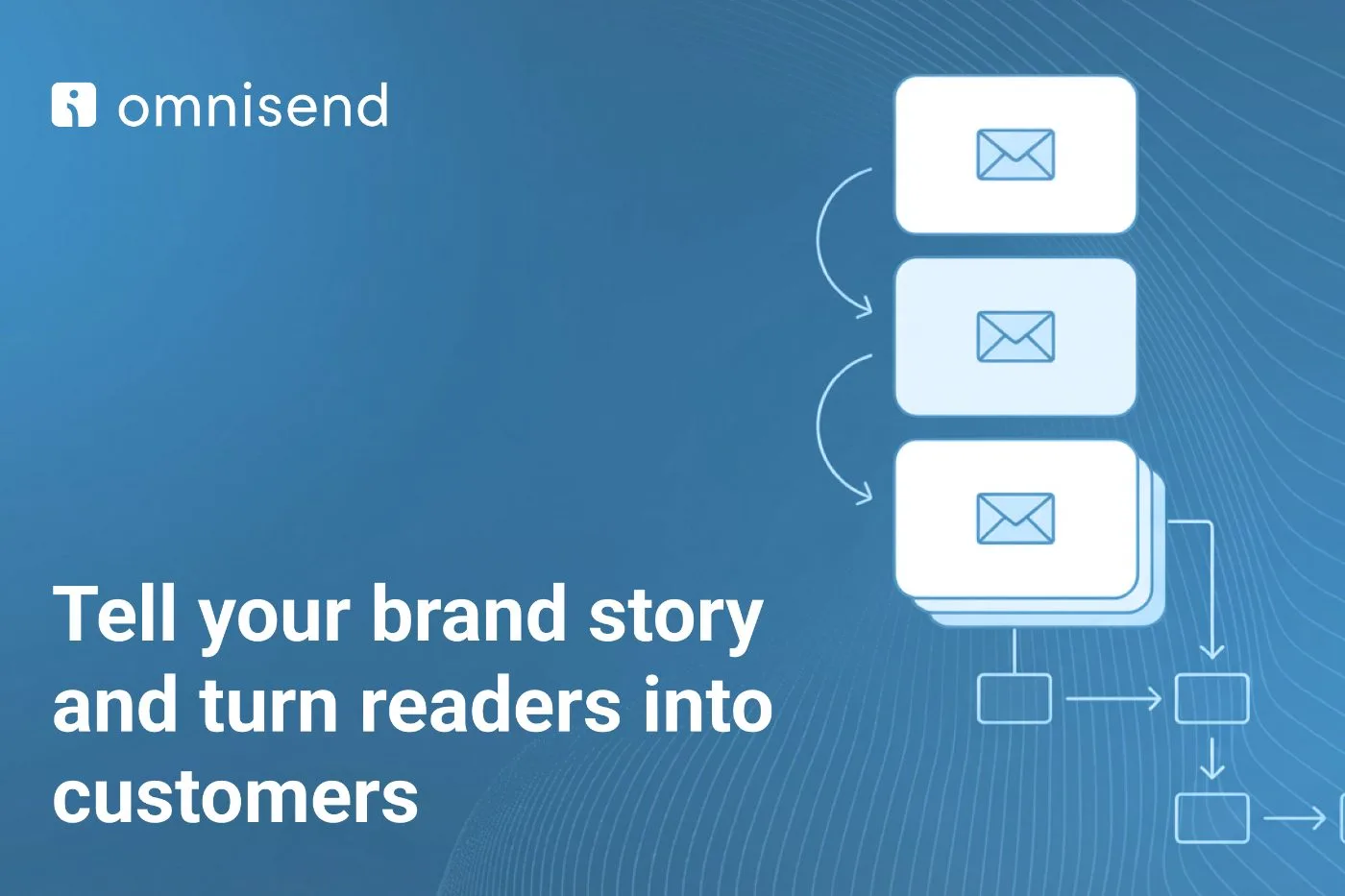
Step 5: Introduce Your Brand Story (24 Hours Later)
After another 24 hours, it’s time to shift slightly.
You’re still reminding them of the offer, but now you’re layering in why your brand exists.
This is where you speak as the founder.
Explain:
- Why you started the brand
- What problem you wanted to solve
- What makes your product different
Keep it personal. Write like a human, not a company.
You’re building trust here, not pitching.
Step 6: Add Social Proof
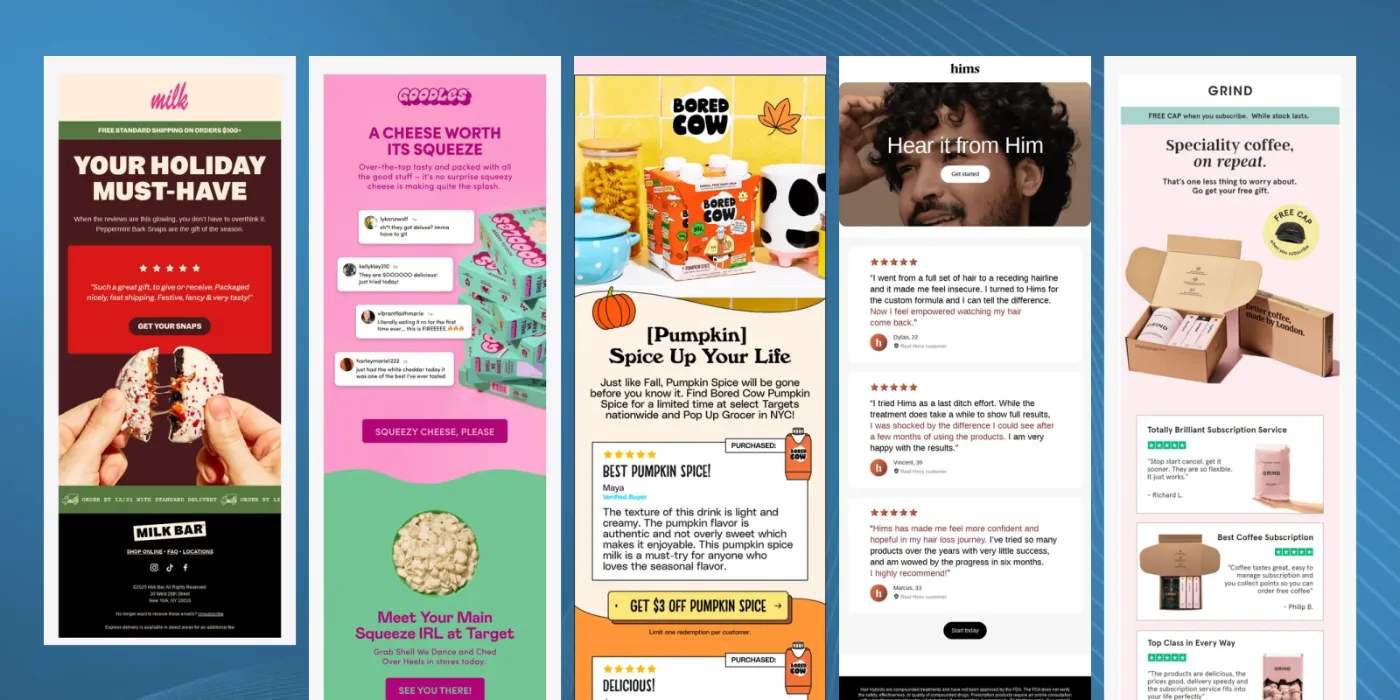
After another day, introduce social proof.
This can be:
- Customer reviews
- Testimonials
- Short quotes
- Before/after results
- “Thousands of customers trust us” messaging
Pair this with a reminder of the incentive.
At this point, you’re reinforcing three things:
- Other people like this
- It works
The offer is still active
Step 7: Highlight Products or Best Sellers
Now you’re about 60, 72 hours in.
This is where you showcase your strongest products or collections. Focus on:
- Best sellers
- Most reviewed items
- Products people usually buy first
You’re no longer selling just the discount, you’re selling confidence.
Step 8: Extend the Flow With Proven Content
Once the core sequence is built, you can expand it.
Look at your past campaigns and find:
- Emails with high open rates
- Emails with strong click-throughs
- Educational or storytelling emails that performed well
Add those into your welcome flow as later touchpoints.
This turns your welcome sequence into a long-term conversion engine built from your best-performing content.
Final Thoughts
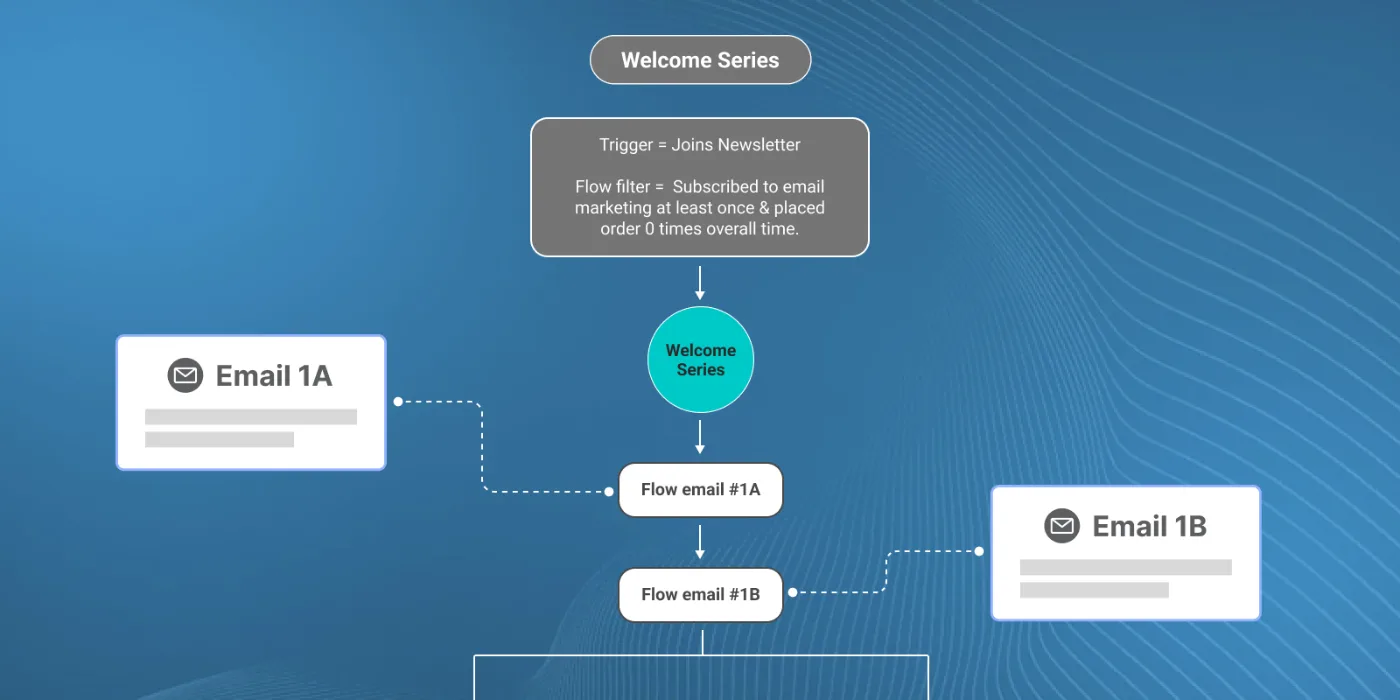
A high-performing welcome flow does three things:
- Delivers value fast
- Builds trust through repetition and clarity
- Repeats the offer enough times to convert
Most brands under-send. They worry about annoying people. In reality, the first 72 hours are where almost all the revenue happens.
Use that window.
If you want to take this further, you can layer in segmentation, dynamic content, and behavior-based logic. But this structure alone will outperform most default setups.
If you found this article helpful, consider checking out omnisend for your business.
I’ve left an affiliate link (transparency!) below for you to get started [Click here].