Personalised Email Automations at Scale, Without the Burnout
Personalisation isn’t optional anymore, it’s expected.
But building it usually means bloated Klaviyo flows, endless splits, and more maintenance than most teams can reasonably keep up with.
We’ve been testing a tool called Revamp that offers a different approach. Instead of branching your flows into dozens of versions, it uses AI to personalise each message at the copy level, drawing on product data, reviews, preferences, and even location.
Here’s how it works, why we’re exploring it, and where it might fit into a leaner, more scalable automation strategy.
The Problem with Personalisation (The Traditional Way)
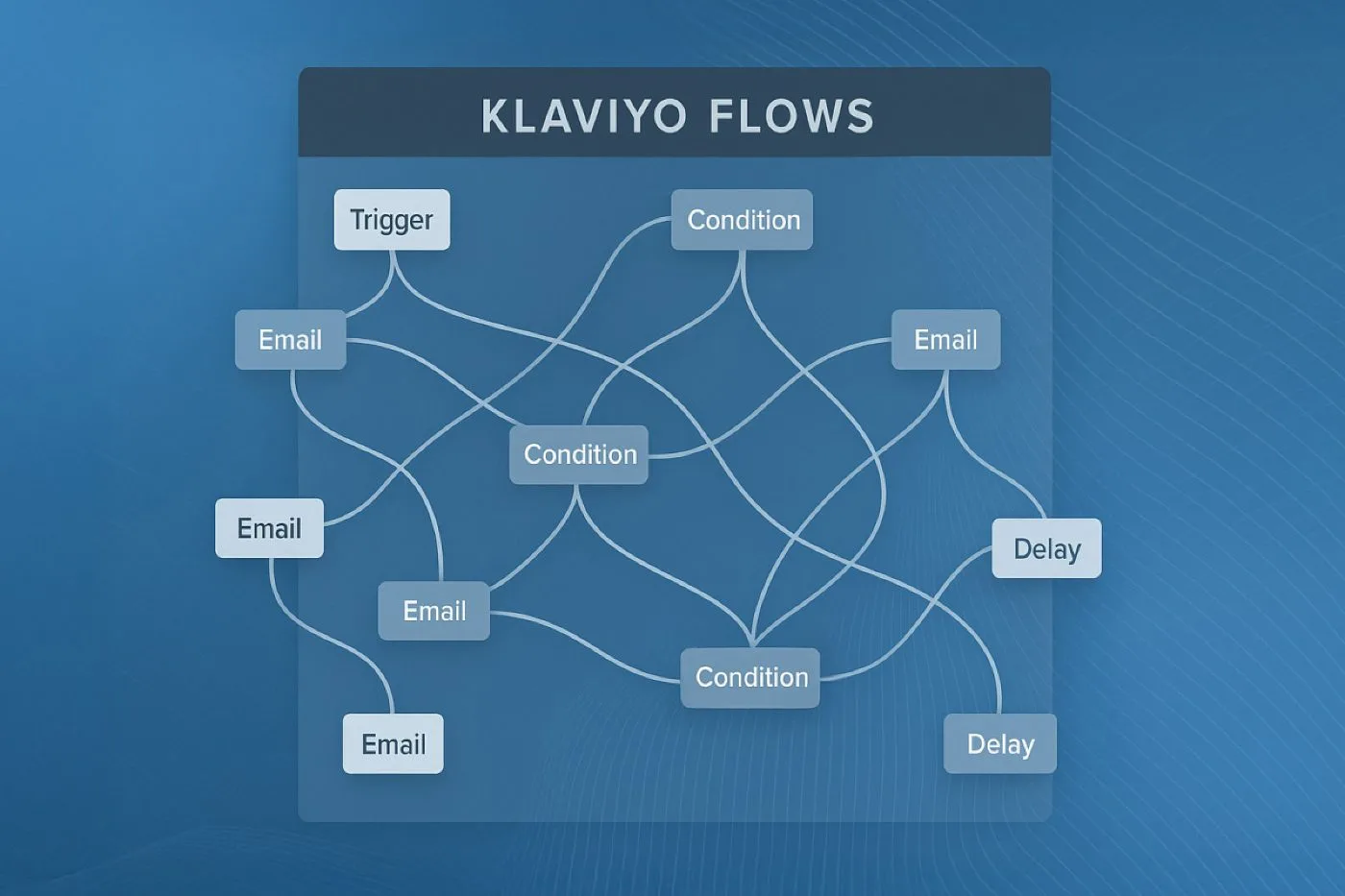
In most Klaviyo flows, personalisation starts with splits. You ask a question during signup (e.g. “What’s your style?”), then send different emails based on the answer.
That’s smart, until it scales.
- One welcome flow turns into five
- One abandoned cart email becomes twelve
- One product reminder becomes a tangled mess of branches
And each new product, offer, or customer type only adds more complexity. Eventually, your flows become too fragile to edit confidently, and even small updates require hours of version control.
If you’re a small team, this slows you down. If you’re a growing team, it limits how fast you can experiment.
How Revamp Works (And What Makes It Different)
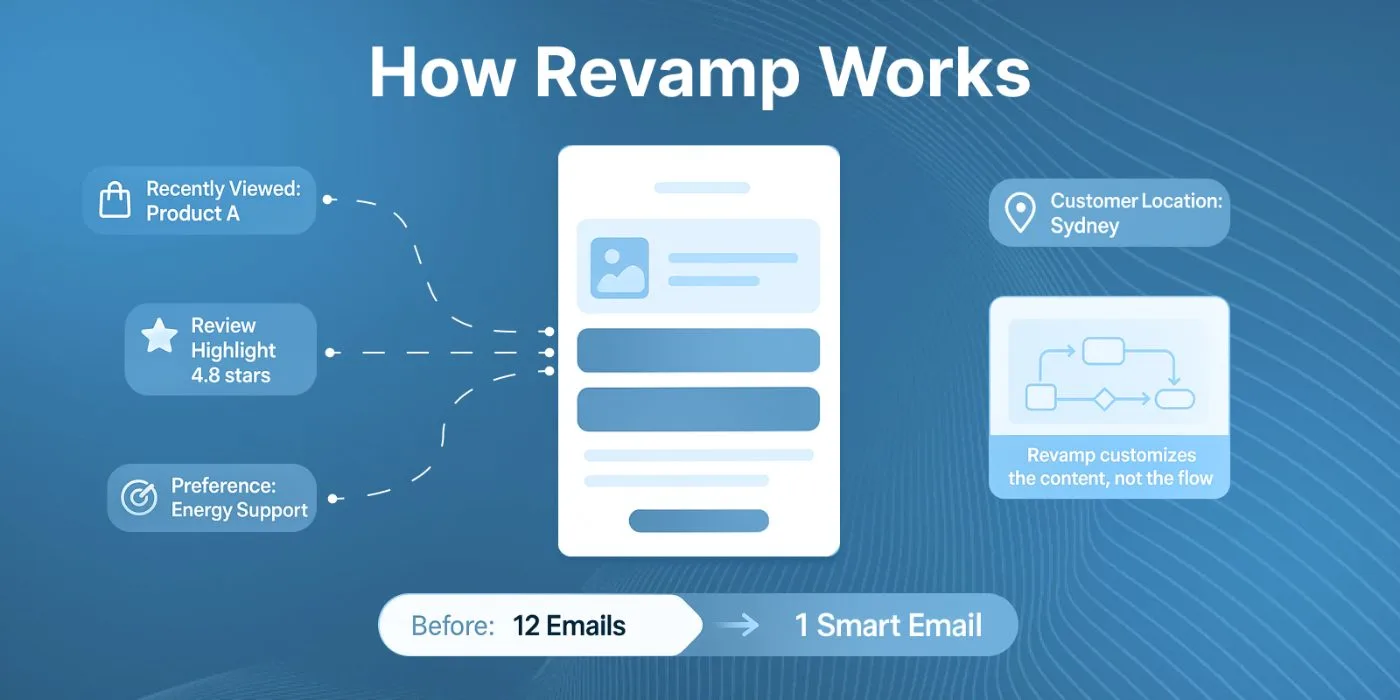
Rather than creating multiple emails, Revamp inserts dynamic content blocks into a single message. These blocks adapt automatically using AI, pulling from subscriber data, product attributes, and customer location.
That means a single email can:
- Reference a product the customer viewed or added to cart.
- Include relevant reviews or standout features.
- Adapt language based on the subscriber’s preferences or geography.
You’re not replacing your Klaviyo flows, you’re enhancing them.
This setup is ideal for brands with large catalogs, seasonal products, or overlapping audiences, where “one-size-fits-all” just doesn’t work.
Brands that do personalisation well rarely do it alone. Here’s a look at top email agencies helping teams scale, often with tools like this in the mix.
Inside the Dashboard: What Setup Looks Like
Revamp isn’t just a plug-in, it’s set up with your brand voice and structure in mind.
Here’s how onboarding works:
- Brand voice is programmed in
You can guide tone, highlight themes to include, and flag anything to avoid (e.g. “don’t say this,” “focus on innovation,” etc.). - Your Klaviyo flows are mirrored
Revamp recreates your core Klaviyo flow structure on their end, so personalisation slots in without changing how your flows function. - Data pulls are mapped
You choose which fields to use, past orders, zero-party data, location, reviews, even weather.
Klaviyo still runs your flows, Revamp simply makes the content inside them smarter.
Zero-Party Data = Better Context, Stronger Messaging
We often hear about first-party and behavioural data, but zero-party data is just as important. It’s the information people willingly give you: what they want, why they’re here, what they’re looking for.
It’s also some of the most underused data in ecommerce.
When someone shares a goal or preference at signup, that’s a signal they want relevance. And Revamp can reflect that in the copy automatically, without you building a separate segment or flow for each outcome.
For example, someone who ticks “I’m shopping for energy support” might see:
“Formulated to support steady energy, ideal when you’re after a natural lift.”
That kind of line only lands if it’s backed by context. And at scale, it only works if your tools can pull that context into the message intelligently.
Curious how we use zero-party data in live automations? Here’s how we build smart email flows at In-box, and where tools like Revamp can help take them further.
Test First, Then Decide
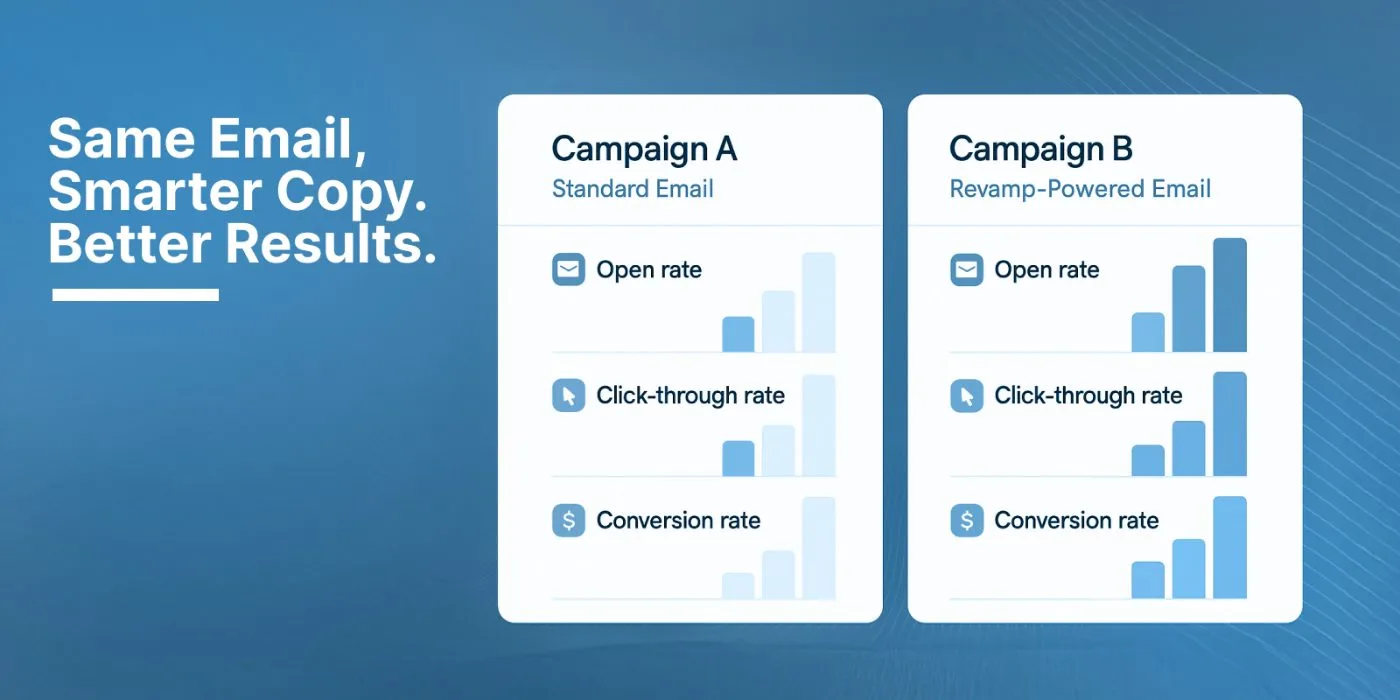
Because Revamp offers a 30-day trial, you can test how well it’ll work for your brand before you fully commit.
Here’s one approach:
- Send your usual version of a campaign or flow
- Send the same version with Revamp’s content block
- Compare open rates, clicks, and conversions
You’ll quickly see whether the dynamic copy performs better, and whether it justifies the investment.
Even if it doesn’t replace your current structure, it might complement it, especially in flows like abandoned cart, post-purchase, or product reminders where personalisation drives conversion.
Final Thoughts: Smarter Automation Doesn’t Have to Be Complicated
Most brands aren’t struggling because their strategy is wrong. They’re struggling because their systems are too heavy to adapt.
If your flows are already showing signs of bloat, or if you’re avoiding deeper personalisation because it feels like too much work, Revamp is worth exploring.
It’s not a silver bullet. But Revamp is a tool that reduces effort and improves relevance, and that’s a rare combination.
Curious how smarter automation really drives results? Here’s how we build custom flows that use data, personalisation, and, when it fits, tools like Revamp to turn browsers into repeat buyers.
Disclosure: This post was written in collaboration with Revamp. Opinions, recommendations, and strategies are entirely from the In-box team.