Step 1: Start with a Clean, Segmented List
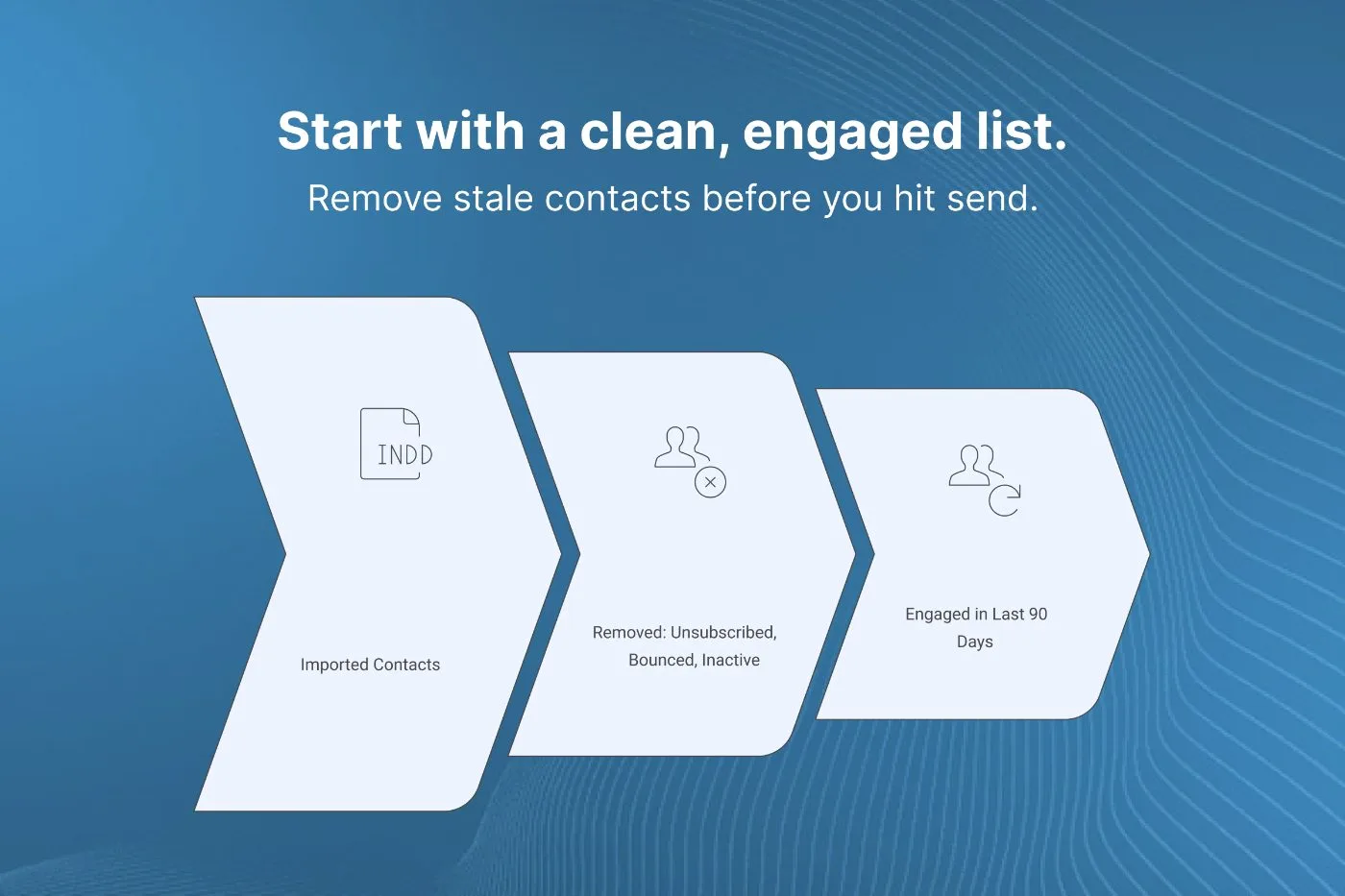
Before sending anything, clean your list. Remove:
- Invalid or outdated addresses
- Contacts who haven’t opened in over a year
- Unsubscribed or bounced contacts
Then, create a segment of recently engaged users, meaning people who opened or clicked an email in the past 90 days. This group is most likely to interact again and helps you build early traction and trust with inbox providers.
If you’re importing from another platform, break your list into smaller segments based on last engagement. Prioritize your warmest leads first.
For a deeper look at how to automate key segments like engaged, dormant, or new subscribers, this guide to email automation breaks it down by lifecycle stage.
Step 2: Send a Plain-Text Re-Engagement Email
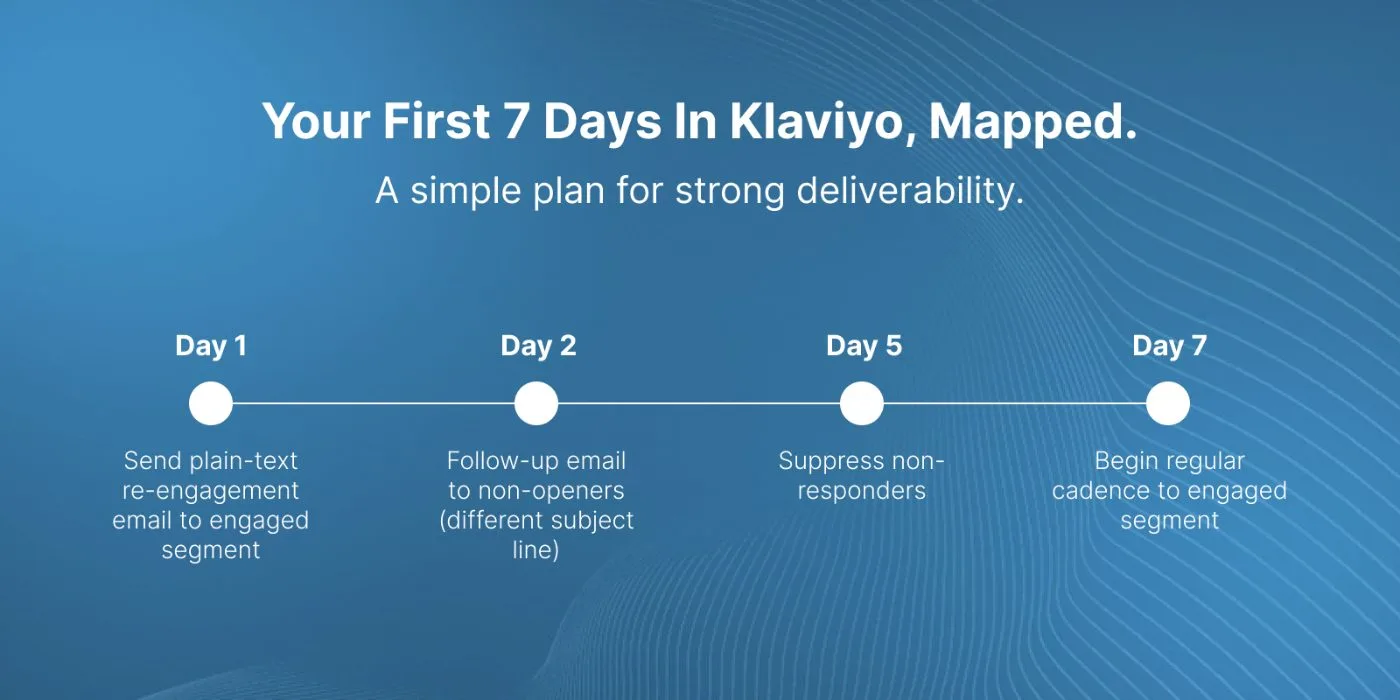
Your first campaign should look and feel like a personal message. Skip the branded header, design blocks, and image grids. Go with plain text. Keep it simple, human, and direct. For example:
Subject Line: 20% Off Your Next Order Just for You
Body:
Hi {{ first_name|default:’there’ }},
It’s from . Just wanted to say thanks for being here and offer you 20% off your next order.
Use code WELCOME20 or click here to apply it automatically.
No pressure. No strings. Just a thank you.
,
Set your sender name to a real person, not your brand or a no-reply address. If you want replies to go to a shared inbox or support team, use a separate reply-to address to keep things organized.
Why this works:
- It builds trust
- It encourages opens and replies
- It mimics real human communication, which inbox filters prefer
Step 3: Build Your Engaged Segment
After sending your first email, create a segment for people who opened or clicked. In Klaviyo, use the condition:
“Opened Email at least once in the last 90 days”
This becomes your go-to segment for future campaigns and forms the base of your email deliverability strategy.
Step 4: Send a Follow-Up to the Unengaged
Next, duplicate your first email. Send it only to people who didn’t open the original campaign.
Update the subject line and tweak the copy slightly to keep it fresh:
- New subject line: Still Thinking It Over? Here’s 20% Off
- Try a different tone, add a bit of urgency, or make the message more curious
Be sure to exclude your engaged segment so you avoid sending to the same people twice. This helps maintain a high open rate and avoids unnecessary fatigue.
For content inspiration, this list of 67 newsletter ideas offers plenty of ways to stay fresh, relevant, and engaging.
Step 5: Suppress Anyone Who Still Doesn’t Engage
Once both emails have gone out, give it 48 to 72 hours, then create a new segment of contacts who:
- Didn’t open either email
- Haven’t opened anything in the last 90 days
- Were imported from your previous platform
Then, suppress that group.
Why this step matters:
- It protects your sender reputation
- It improves future deliverability
- It avoids wasting sends and money on inactive contacts
This is especially important when using Klaviyo. A lean, healthy list performs better and costs less to manage.
Curious about what hurts deliverability? This post on email reputation breaks it down clearly.
Step 6: Keep the Momentum Going
Once you’ve identified your engaged segment, keep emailing them on a consistent basis.
What to send next:
- Educational tips
- Seasonal reminders
- New product announcements
- Customer stories
- Occasional discounts
Sending at least once a month keeps your brand visible and helps protect your sender reputation.
From this point on, your warm-up becomes part of your ongoing list management strategy. Every campaign should:
- Focus on engaged recipients
- Offer real value
- Avoid sounding too promotional
As your list grows, use welcome flows and targeted automations to nurture new subscribers from the start.
Final Thoughts
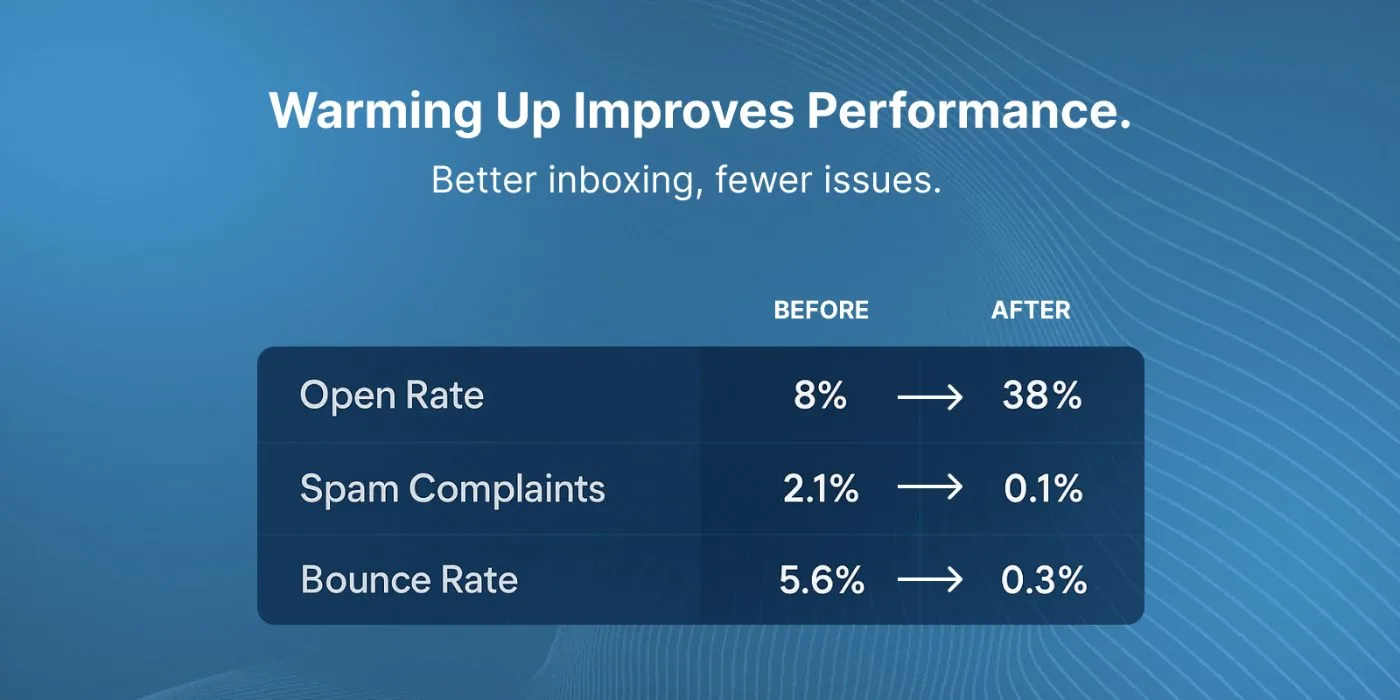
Warming up your Klaviyo account isn’t optional. It’s essential.
Doing it properly means:
- Better open rates
- Fewer spam issues
- Stronger customer relationships
- Lower costs over time
It only takes a few emails to build trust, but skipping this step can set your email program back by months.
Start small. Stay consistent. Suppress cold contacts early. With the right approach, your Klaviyo account will be ready for long-term growth, not just a quick campaign win.