Why Loyalty Program Emails Matter
Email remains the most cost-effective channel for reaching your loyalty program members. You’ll find that emails allow for precise targeting and personalization while providing measurable results that help you refine your approach over time.
The direct nature of email creates an intimate connection with your members. Unlike social media or other marketing channels, emails land directly in your customers’ inboxes, making them perfect for sharing personalized offers, updates, and rewards information.
The data you collect through your loyalty program makes your email flow even more powerful. You can tailor messages based on member behavior, purchase history, and program status.
This level of personalization transforms standard marketing messages into relevant, engaging communications that your members actually want to read.
Key Elements of Successful Loyalty Program Emails
Your loyalty program emails need several core components to perform well. First, you need subject lines that capture attention without being clickbait. Test different approaches, questions, personalization, or benefit statements often work well.
The design of your emails must work flawlessly on mobile devices. Most people check their emails on phones, so your layouts should be simple, clean, and easy to read on smaller screens.
Your brand identity should shine through in every email. Use consistent colors, fonts, and imagery that match your overall marketing materials. This builds recognition and trust with your members.
Calls-to-action need to stand out and clearly tell members what to do next. Whether you want them to redeem points, check their balance, or make a purchase, the next step should be obvious and easy to take.
Personalization goes beyond just using a member’s name. Include relevant rewards information, personalized product recommendations, and content based on their membership tier or shopping history.
Essential Metrics for Loyalty Email Success
Tracking the right metrics and understanding how to figure out email conversion rates will help you determine how well your emails are performing. Your open rates tell you if your subject lines work, aim for rates above industry averages for retail, which typically range from 15-25%.
Click-through rates reveal if your content and offers resonate with members. Pay special attention to your click-to-open rate (CTOR), which shows the percentage of people who clicked after opening. This metric helps you assess the quality of your email content.
Track conversion rates for different types of actions, point redemptions, purchases, or program engagement. These metrics directly tie to your program’s ROI and help justify your email marketing investments.
Need help setting up a loyalty email flow? Learn more about what we do at In-box!
15 Types of Loyalty Program Emails with Examples
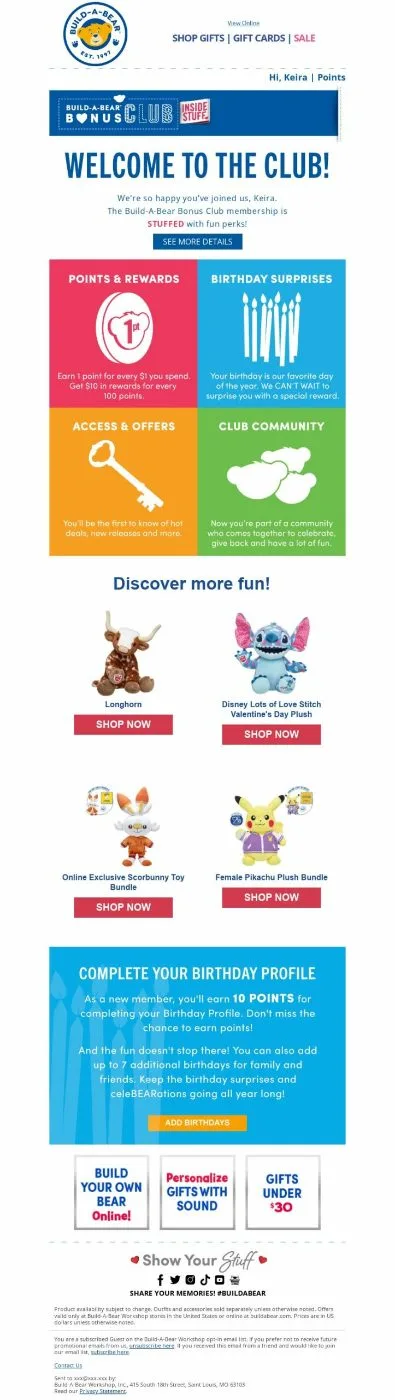
1. Welcome Emails
- Combines personal appreciation with a clear program overview
- Uses simple illustrations to demonstrate the earning/redemption process
- Provides a quick-start guide without information overload
Build-A-Bear Workshop’s Bonus Club welcome email is exactly what we’re looking for when it comes to first impressions.
They thank new members personally, lay out the next steps, and make it crystal clear about what needs to be done to participate. Their email includes simple illustrations showing how to earn and use points, making it easy for new members to get started right away.
The key to a great welcome email lies in balancing information with simplicity. Give new members the essential details they need without overwhelming them. Include a quick-start guide and highlight the most immediate benefits they can access.
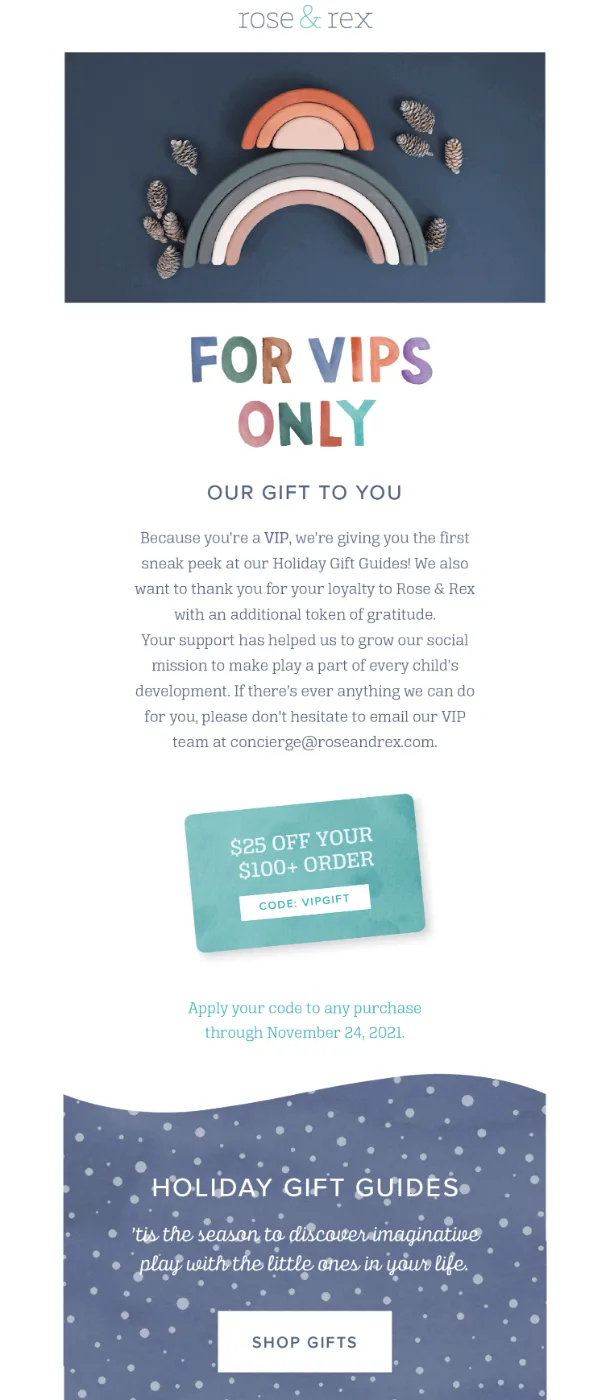
2. VIP Exclusive Rewards
- Mixes exclusive content with monetary rewards for multiple value points
- Uses interactive elements to make reward reveals more engaging
- Creates a sense of exclusivity through early access opportunities
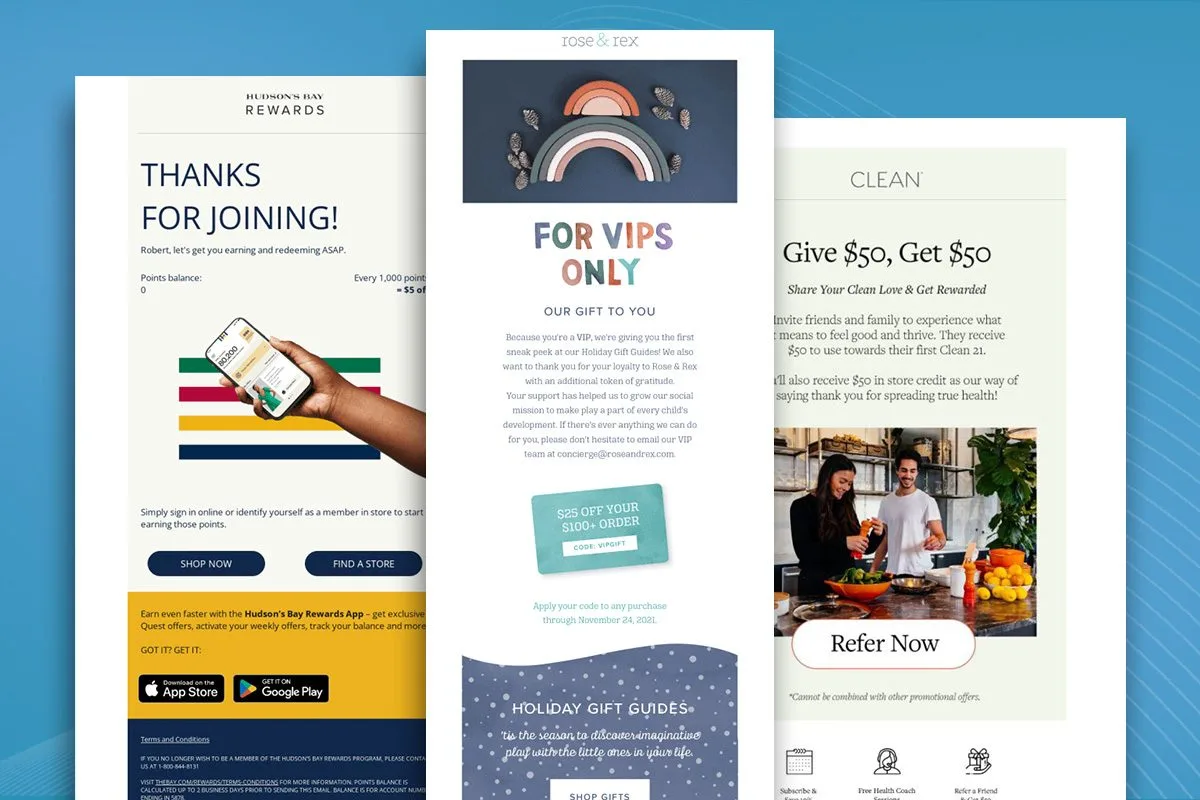
Rose & Rex’s VIP program emails demonstrate how you can make your members feel like the center of your world.
They offer early access to holiday shopping guides alongside monetary rewards like $25 gift cards. This combination of exclusive content and tangible benefits gives members multiple reasons to engage.
Catherines takes a different approach with gamification in their VIP rewards emails. They use interactive elements like card-flipping games to reveal special offers, making the experience more engaging and memorable.
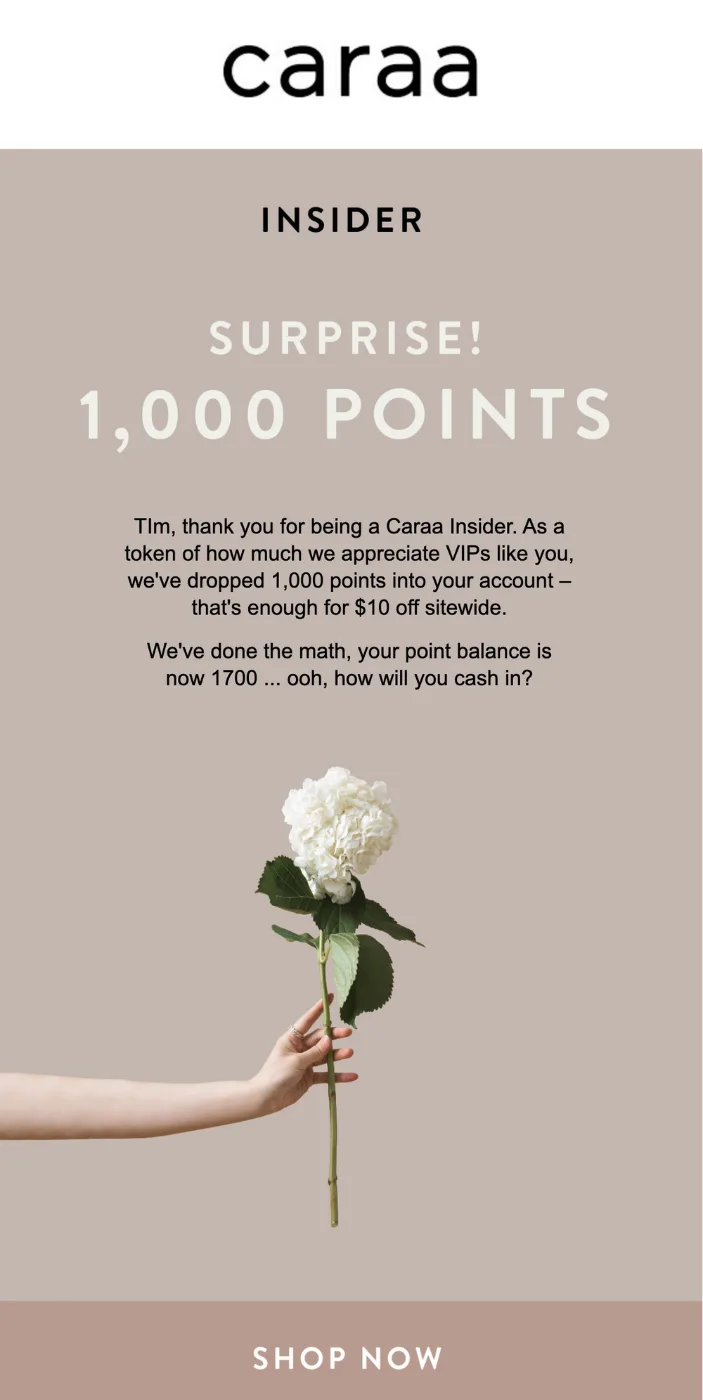
3. Surprise Bonus Points
- Clearly explains point value in monetary terms (1000 points = $10)
- Makes redemption process straightforward and simple
- Creates genuine excitement through unexpected rewards
Caraa’s surprise points emails show how unexpected rewards can delight members. They don’t just give points, they explain the value clearly (1000 points = $10 off) and make redemption simple. The surprise element makes members feel appreciated while encouraging immediate action.
Loyalty’s example adds celebration-themed elements to their surprise point emails, creating a festive atmosphere that makes the unexpected reward feel even more special. The key is making these surprises feel genuine rather than promotional.
4. Program Explainer Emails
- Breaks down complex information into digestible sections
- Highlights multiple earning opportunities in one place
- Uses visual elements to clarify program structure
Nook Vibrant Kitchen takes a straightforward approach to explaining their program structure. Their emails break down earning opportunities, point values, and redemption options in clear sections. They also highlight their bottle return program and referral bonuses, showing members all the ways they can earn rewards.
The best explainer emails use visual aids to make complex information digestible. Use icons, simple graphics, or progress bars to illustrate how your program works. Keep the language simple and focus on answering common member questions.
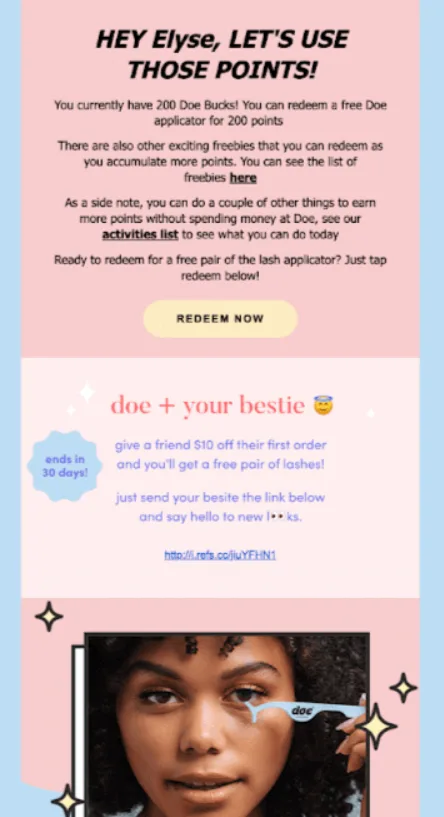
5. Points Redemption Reminders
- Shows personalized point balances with specific reward options
- Includes product images to make rewards more tangible
- Creates desire through “within reach” reward tiers
Doe Lashes sends personalized point balance updates that show exactly what rewards members can get with their current points. They pair this information with product images, making the rewards feel more tangible and desirable.
These emails work best when they create a sense of opportunity rather than urgency. Show members what they can get now, and what they could get with just a few more points. This encourages both immediate redemption and additional purchases.
6. Double Points Campaigns
- Uses bold visual elements to communicate the offer instantly
- Sets clear timeframes for the promotional period
- Balances reminder frequency without overwhelming members
Smash + Tess makes their double points promotions unmissable with bold imagery and clear messaging. Their emails feature campaign-specific visual elements, like someone holding up two fingers, that instantly communicate the offer.
Time-limited double points promotions work well for driving short-term engagement. Make the promotional period clear and remind members a few times throughout the campaign without overwhelming their inbox.
7. VIP Tier Offers
- Segments offers clearly by tier level with specific discounts
- Creates aspiration for higher tiers through better rewards
- Shows clear progress tracking toward next tier
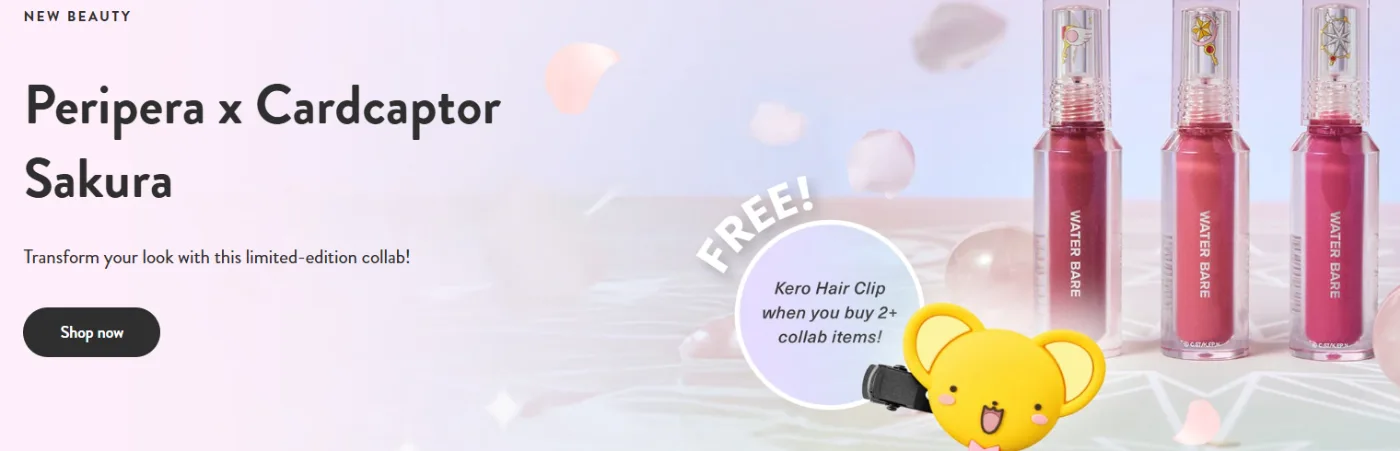
Sukoshi Mart segments their VIP offers by tier level, giving better discounts to higher-tier members. Their emails clearly show the benefits of each tier (Gold VIP, 20% off, Blue VIP, 15% off, Pink VIP, 10% off), encouraging members to strive for higher status.
Effective tier-based emails should make lower-tier members aspire to reach higher levels while making top-tier members feel valued. Include progress updates and show how close members are to reaching the next tier.
8. Embedded Points Reminders
- Integrates rewards information subtly into regular emails
- Maintains program awareness without dedicated emails
- Reduces email fatigue while keeping rewards visible
Ella + Mila cleverly integrates points balances into their regular marketing emails through a subtle header banner. This keeps rewards top-of-mind without sending dedicated points emails too frequently.
This approach works particularly well for maintaining program awareness while avoiding email fatigue. Consider adding point balances to your email templates as a standard feature.
9. Program Sign-up Emails
- Leads with immediate, tangible benefits
- Makes registration process inviting and simple
- Answers value proposition questions upfront
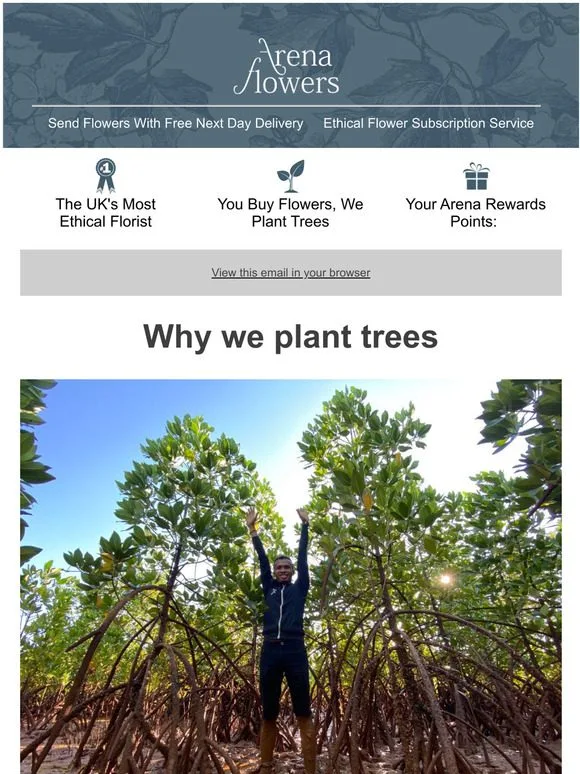
Arena Flowers masters the art of program promotion with emails that spell out clear, immediate benefits. They lead with tangible rewards, showing potential members exactly what they’ll get by joining. The sign-up process feels inviting rather than pushy.
Your sign-up emails need to answer the “what’s in it for me?” question quickly. List specific benefits, show example rewards, and make the registration process simple with a prominent sign-up button.
10. Birthday/Anniversary Rewards
- Personalizes greetings and offers for the occasion
- Provides simple redemption through single-code system
- Times emails strategically before the actual date
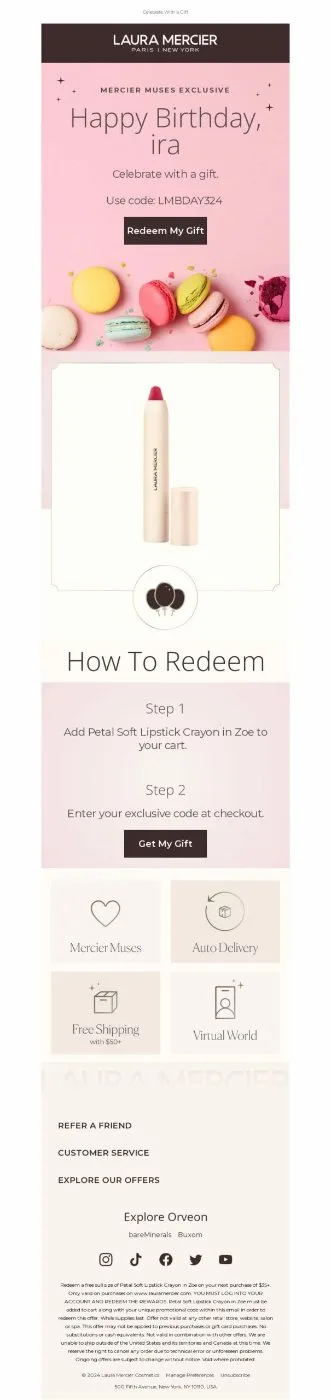
Laura Mercier Cosmetics personalizes their birthday emails down to the smallest detail. They combine a personal greeting with an attractive offer and celebratory design elements. The redemption process stays simple, just one code to unlock the birthday reward.
Birthday emails perform best when sent slightly before the actual date, giving members time to plan their purchase. Include clear expiration dates and redemption instructions to ensure members don’t miss out.
11. Re-engagement Campaigns
- Offers multiple options for continued engagement
- Respects customer preferences
- Provides clear value proposition for returning
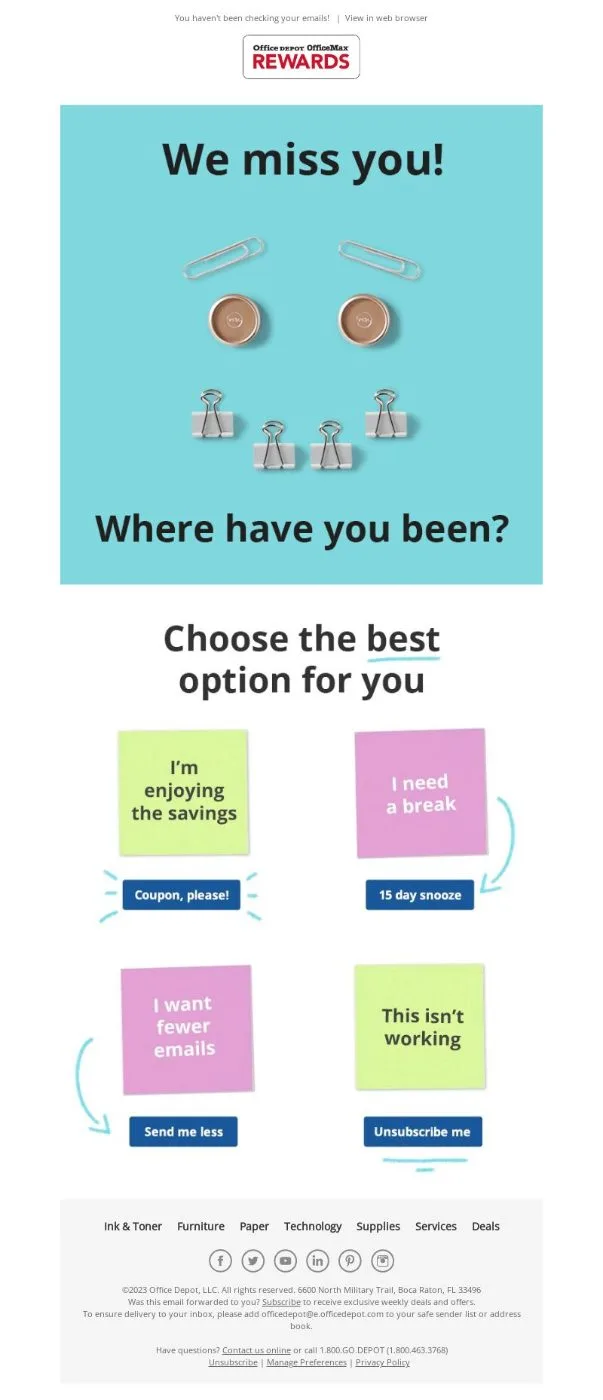
Office Depot’s re-engagement emails offer a nice balance of trying to win your customers back while also respecting their preferences. You get a choice… get the offer, take a break, get less emails, or unsubscribe altogether.
It’s almost like an ultimatum.
But at the same time, it shows customers that you’re clear about the options and you want to make sure if they don’t want anymore of these emails, they don’t have to get them.
Offer a compelling reason to return and make it easy to re-engage with your program.
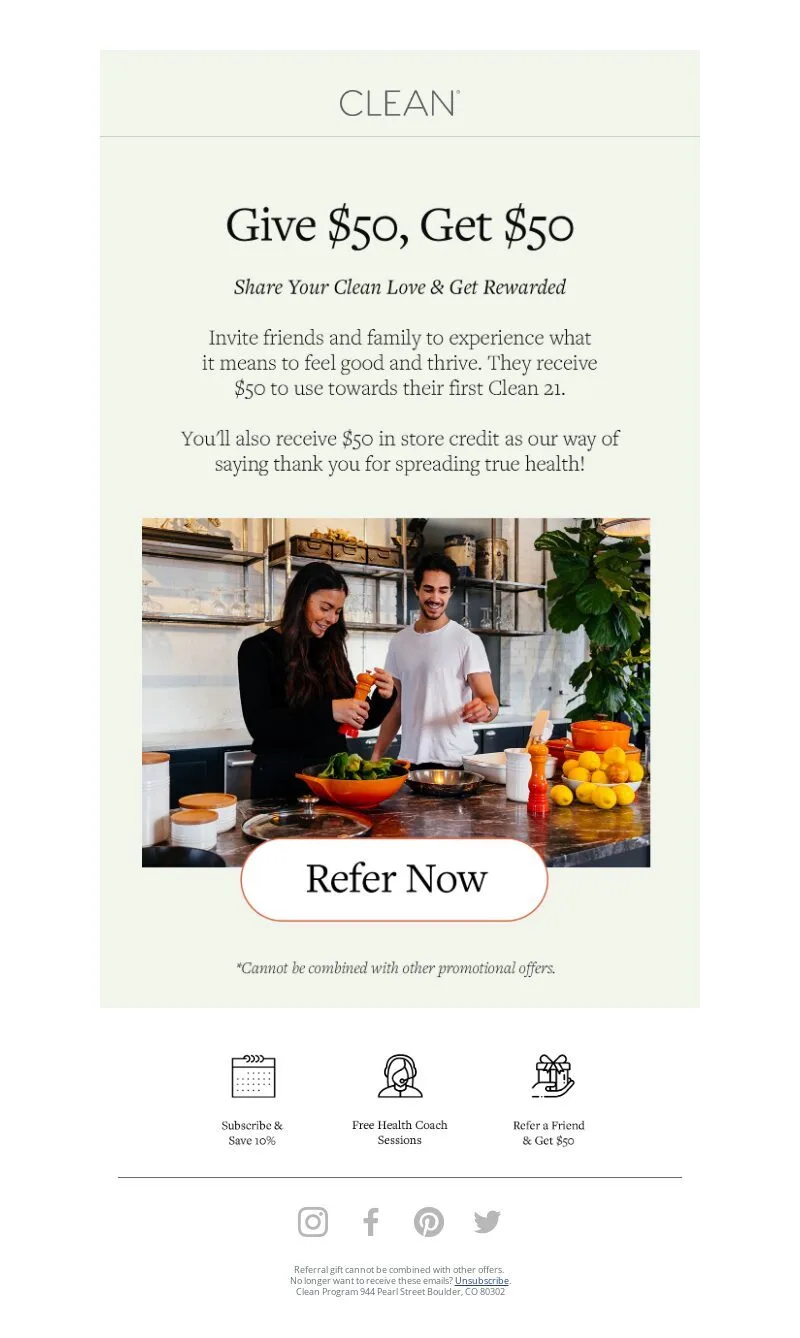
12. Referral Program Emails
- Creates equal value for referrer and referee
- Makes sharing process simple and automatic
- Provides clear tracking of referral status
Clean Program doubles down on referral rewards by offering benefits to both parties. Their “Give $50, Get $50” campaign makes the value proposition crystal clear. They include simple sharing options and track referrals automatically.
Successful referral emails focus on making the sharing process effortless. Include multiple sharing options, pre-written messages, and clear tracking so members can see when their referrals convert.
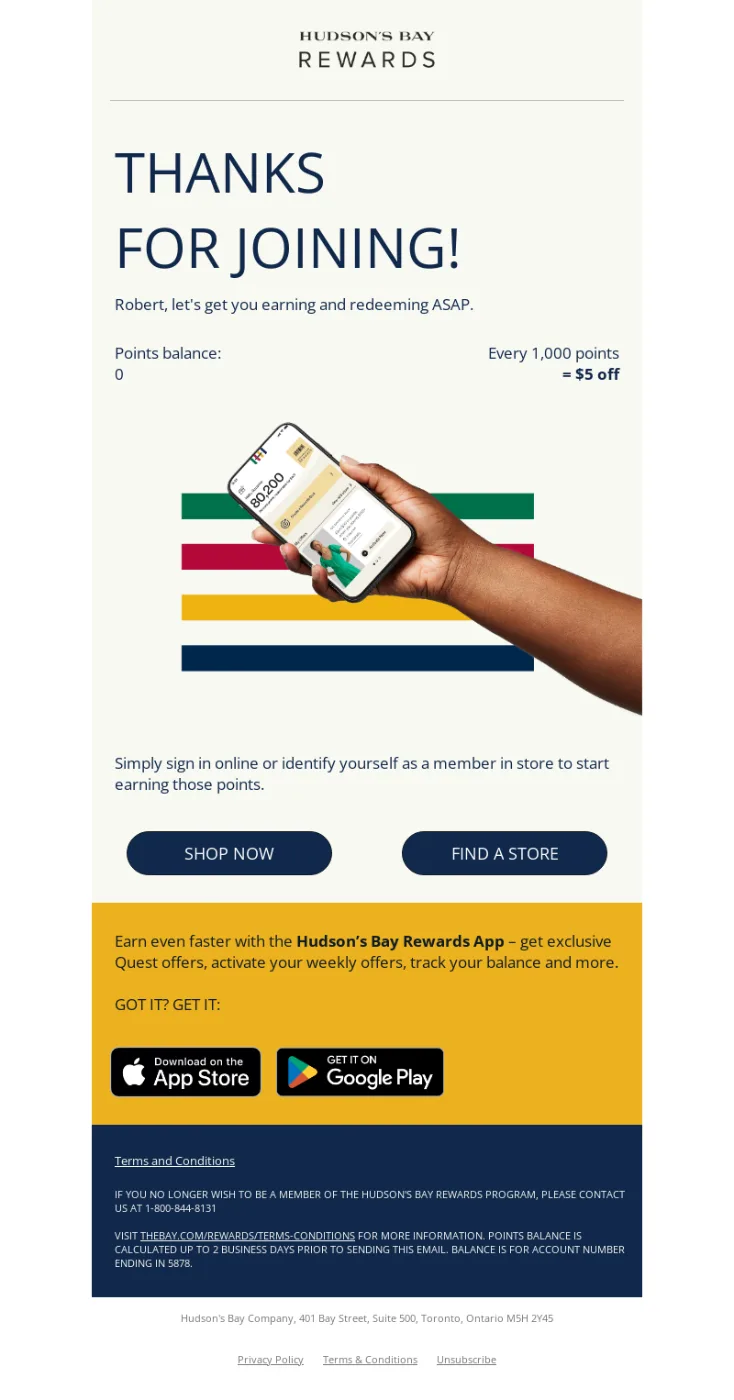
13. Thank You Emails
- Combines appreciation with actionable next steps
- Maintains warm, welcoming tone throughout
- Includes immediate earning opportunities
Hudson’s Bay sends thank you emails that make members feel valued while encouraging next steps. They combine genuine appreciation with useful information about earning opportunities and program benefits. The tone stays warm and welcoming throughout.
Your thank you emails should reinforce the member’s decision to join or engage with your program. Include next steps or quick wins they can achieve to maintain momentum.
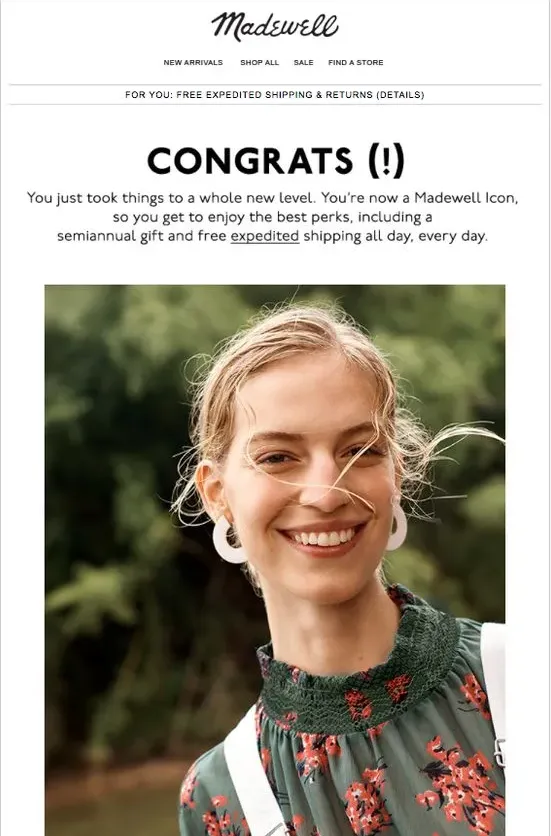
14. New Tier Achievement
- Celebrates member milestones personally
- Outlines new benefits clearly and specifically
- Provides immediate opportunities to use new status
When members reach a new tier, recognition matters. These achievement emails need to celebrate the milestone while introducing new benefits. The best examples show members exactly what they’ve unlocked and how to make the most of their new status.
Your tier achievement emails should congratulate members personally and outline their new benefits clearly. Include specific perks they can use right away to encourage immediate engagement with their new status.
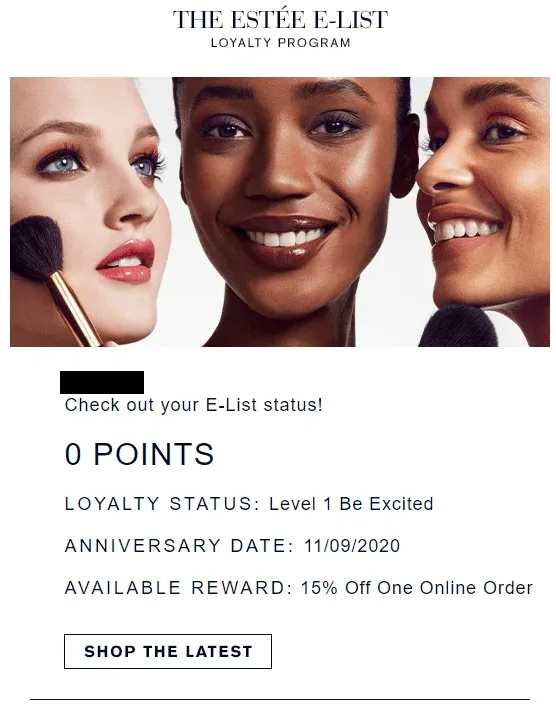
15. Monthly Summary Emails
- Combines progress tracking with available rewards
- Makes information easy to scan and digest
- Shows both achievements and opportunities
Monthly summaries keep members engaged by showing their progress and activity. These emails work best when they combine point balances, recent activity, and available rewards in an easy-to-scan format. Include both achievements and opportunities, what members have earned and what they could earn next.
Best Practices for Implementation
Email Design Best Practices
Your loyalty program emails need to look good and work well on all devices. Keep your layouts simple and scannable. Use headers effectively to break up content, and make sure your CTAs stand out visually.
Mobile responsiveness isn’t just an optional email marketing idea, it’s essential. Test your emails across different devices and email clients. Pay special attention to how images render and how easy it is to click buttons on small screens.
Brand consistency builds recognition and trust. Use your brand colors, fonts, and tone of voice consistently across all loyalty emails. This helps members instantly recognize and engage with your messages.
Content Strategy
Personalization makes your loyalty program emails seem like they were designed specifically for each member of your list. Use member data to customize content, offers, and recommendations. Even small touches like using first names and referencing past purchases can make a big difference. This is one major reason why it’s so important to have a clean email list.
Segment your email lists based on member behavior, tier status, and preferences. This lets you send more targeted messages that resonate with different groups of members.
Plan your email calendar carefully to avoid sending too many emails and forcing people to unsubscribe. Space out different types of emails and coordinate with your overall marketing calendar.
Technical Considerations
Loading speed affects engagement, keep your emails lightweight and optimize images. Test all links and tracking before sending, and make sure your loyalty platform integrates smoothly with your email system.
Database management keeps your program running smoothly. Regularly clean your email lists, update member information, and remove inactive addresses.
Common Challenges and Solutions
Email fatigue affects many loyalty programs. Members tune out when they receive too many messages or irrelevant content. Combat this by setting clear expectations about email frequency and letting members control their preferences.
Low engagement often stems from poor targeting or timing. Use your data to send emails when members are most likely to open them. Test different send times and monitor which perform best for different segments.
Technical issues can damage member trust. Set up proper testing procedures and have backup plans for when things go wrong. Always test emails across different platforms and devices before sending to your full list.
Privacy concerns continue to grow. Be transparent about how you use member data and make sure your emails comply with privacy regulations. Give members control over their data and make it easy to update their preferences.
Competition in the inbox gets fiercer every day. Stand out by providing real value in every email. Make sure each message serves a clear purpose and benefits the member.
Future Trends in Loyalty Program Emails
AI and machine learning will transform how we personalize loyalty emails. These tools will help predict what offers members want and when they’re most likely to engage.
Interactive elements will become more common as email technology advances. Members will be able to check balances, redeem points, and even make purchases directly within emails.
Integration between channels will deepen. Your loyalty emails will work seamlessly with your app, website, and in-store experience to create a unified member experience.
Conclusion
Your loyalty program emails connect you directly with your members. They drive engagement, encourage redemption, and build lasting relationships, when done right.
Focus on creating value for your members with every email you send. Use the examples and strategies we’ve covered to craft messages that members want to receive and act on.
Remember that successful loyalty emails evolve with your members’ needs. Keep testing new approaches, measuring results, and refining your strategy. Your members will tell you what works through their engagement, listen to that feedback and adjust accordingly.
Start by implementing these strategies one at a time. Test different approaches with small segments of your audience. Pay attention to what drives engagement and builds stronger relationships with your members. Your loyalty email program will grow stronger with each improvement you make.
If you’re looking for help building a loyalty program email strategy, enquire now to learn more about In-box and the services we provide!