Why Email Marketing Is Essential For Shopify Success
Email marketing has one of the highest returns on investment in ecommerce. On average, brands earn $36 for every $1 spent, making it the highest ROI channel for e-commerce businesses. This makes email one of the most cost-efficient marketing channels available to Shopify merchants.
Email works well in ecommerce because it provides direct access to customers. A subscriber list allows brands to send messages without relying on third-party platforms. This helps ensure that promotions, product launches, and updates are seen by a brand’s audience.
Email marketing also supports retention. Automated flows like post-purchase follow-ups and back-in-stock alerts help brands maintain engagement with existing customers. Automated email workflows produce 37% of email-driven revenue while making up only 2% of total send volume, demonstrating their exceptional efficiency. These efforts complement acquisition strategies and improve customer lifetime value.
- Direct customer connection: Email creates a direct line between your brand and customers without platform intermediaries
- Higher conversion rates: Shopify reports email marketing generates a 4.29% conversion rate, outperforming other digital channels
- Owned audience: Unlike social media followers, your email list belongs to you and isn’t subject to platform changes
Email marketing also supports retention. Automated flows like post-purchase follow-ups and back-in-stock alerts help brands maintain engagement with existing customers. These efforts complement acquisition strategies and improve customer lifetime value.
Building A High-Quality Shopify Email List
A large email list isn’t always better than a smaller, more engaged one. List quality refers to how likely people on your list are to open, click, and act on your emails. High-quality lists include subscribers who have opted in clearly and who interact with your brand regularly.
Shopify includes built-in tools that help collect emails across the customer journey. These tools include email signup forms, checkout opt-ins, and integrations with apps that capture emails in-store or online. These can be managed directly from the Shopify admin without custom development.
Privacy laws such as GDPR and CAN-SPAM require businesses to collect, store, and use emails in specific ways. These laws apply to how emails are gathered and how people can unsubscribe.
1. Incentivize Signups With Clear Offers
Offering a clear incentive encourages people to join an email list. Shopify stores often use discount codes (e.g., 10% off), free shipping for first orders, or access to exclusive content as signup offers.
Effective signup forms are short and placed where users will notice them. Common placements include pop-ups triggered by exit intent, footer sections, or embedded forms on product pages. Forms should state the incentive clearly and include information about how the email will be used.
2. Use Double Opt-In To Maintain Trust
Double opt-in is a two-step process that confirms a subscriber’s interest. After entering an email address, the person receives a confirmation email and must click a link to be added to the list.
This process confirms that the email address is valid and that the person wants to receive messages. It also reduces the chance of fake or mistyped addresses, which can harm deliverability. Shopify Email and most email platforms include double opt-in options in their settings.
Crafting Engaging And On-Brand Emails
Brand consistency between email campaigns and the Shopify storefront helps subscribers recognize the business. Using the same design elements across channels reinforces familiarity and supports a clear customer experience. Mismatched or off-brand emails can create confusion and reduce trust.
An email campaign includes more than just text. It includes design, layout, tone, and structure. Each part can either support or distract from the brand message.
1. Use No-Code Templates For Quick Launch
Shopify Email and other platforms provide pre-built templates that don’t require coding knowledge. These templates can be used to create emails for new product announcements, promotions, or newsletters.
Templates can be customized to match the business’s font, colors, and logo. Layout elements such as image blocks, buttons, and text sections can be rearranged or edited using drag-and-drop tools. Most platforms also allow merchants to save branded templates for future emails.
2. Optimize For Mobile And Accessibility
Most emails are opened on mobile devices, so layouts need to be responsive. A responsive email adjusts its content based on screen size. This includes resizing images, adjusting font sizes, and spacing buttons for touchscreens.
Accessibility features include using alt text on all images, maintaining good text-to-background contrast, and avoiding image-only content for key information. These practices help make emails readable by assistive technology and more usable across devices.
Automated Workflows That Increase Revenue
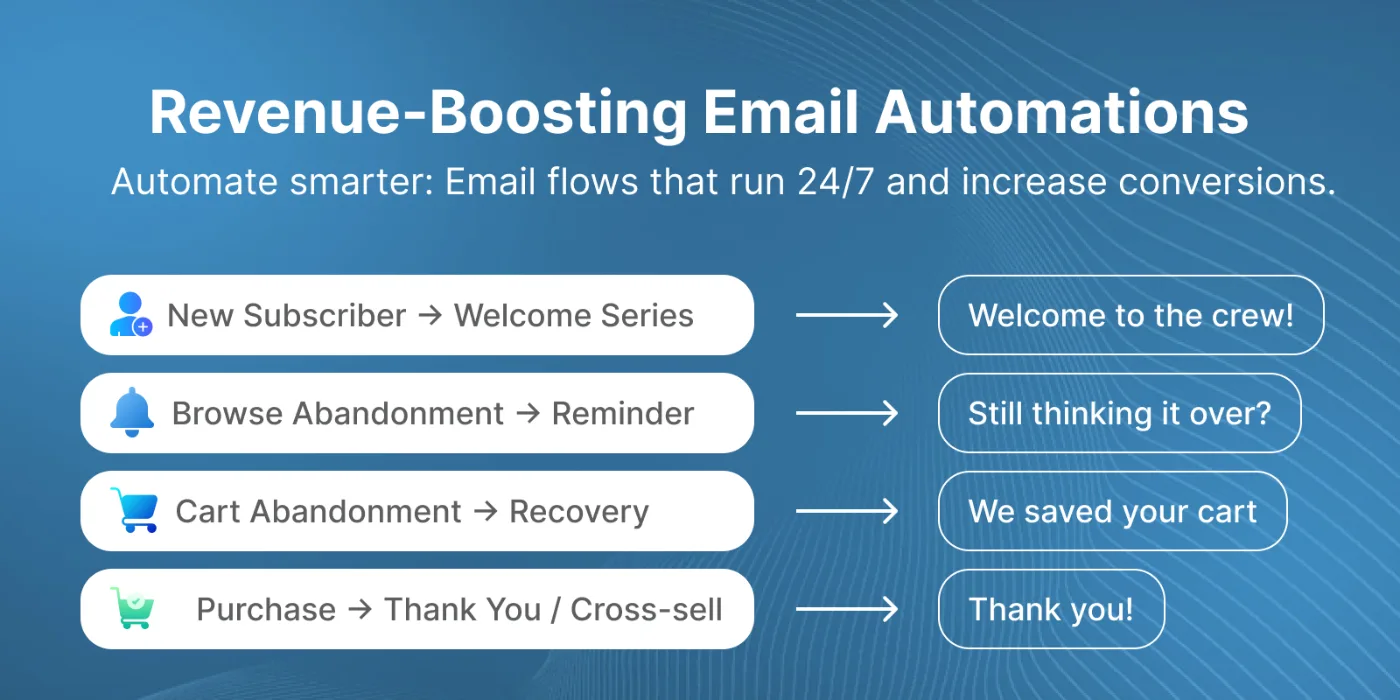
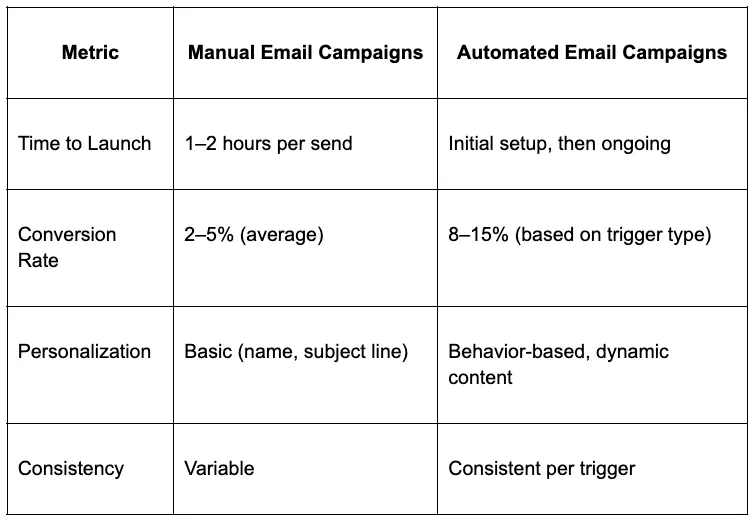
A welcome series is a set of emails sent after someone subscribes to a list. This series introduces the brand, sets expectations, and guides the new subscriber toward their first purchase. Welcome emails generate 320% more revenue per send than standard promotional emails and improve long-term subscriber engagement by 33%.
Automated campaigns often perform better than manual sends because they’re triggered by real-time events, such as a new signup or an abandoned cart. They also reduce the workload involved in managing large contact lists.
1. Welcome Series To Convert New Subscribers
A welcome series is a set of emails sent after someone subscribes to a list. This series introduces the brand, sets expectations, and guides the new subscriber toward their first purchase.
A standard welcome sequence includes:
- First email: Thank you message with a brief introduction and any promised signup incentive
- Second email: Best-selling products or categories with a clear call-to-action
- Third email: Brand story, values, or customer reviews to build trust
Each message in the sequence builds on the last, moving the subscriber from awareness to potential purchase.
2. Abandoned Cart Recovery To Recapture Lost Sales
Abandoned cart emails are sent when a customer adds items to their cart but doesn’t complete checkout. Shopify allows merchants to set up these emails using built-in or integrated tools.
An effective sequence includes:
- First reminder (1 hour after): Gentle reminder with cart contents and checkout link
- Second reminder (24 hours later): Create urgency or highlight limited availability
- Final reminder (72 hours later): Optional discount or incentive to complete the purchase
Each email should include product images, a summary of the cart contents, and one clear button to return to checkout. These abandoned cart emails are among the highest-performing automations in ecommerce.
Personalizing Each Customer Touchpoint
Personalization in email marketing means tailoring content based on what you know about the recipient. It includes more than using a customer’s first name. Personalization uses data like purchase behavior, product preferences, and order history to adjust email content for each subscriber.
Emails that reflect what a customer has bought or browsed often result in higher engagement. This includes more opens, clicks, and purchases.
1. Segment Audiences By Purchase History
Segmentation involves dividing an email list into smaller groups based on shared traits or behaviors. One effective way to segment is by analyzing purchase history.
- Purchase frequency: Separate one-time buyers from repeat customers. One-time buyers might receive emails focused on a second purchase, while repeat buyers might get early access to new products.
- Product categories: Group customers by the types of products they buy. Someone who purchased skincare products might receive emails about related items in that category.
- Average order value: Customers who spend more per order might receive emails about premium products or bundles, while others might see budget-friendly options.
These segments can be created using Shopify’s built-in customer data or connected email marketing tools.
2. Insert Dynamic Content For Greater Relevance
Dynamic content refers to parts of an email that change based on the recipient’s data. This means one email can show different products, messages, or images depending on who receives it.
Dynamic blocks can include product recommendations based on past purchases, location-based messages, or tailored offers. For example, a product recommendation block might show items related to a customer’s last purchase.
Shopify email tools and third-party platforms allow merchants to insert dynamic content using simple settings. These changes happen automatically and don’t require separate emails for each segment.
Tracking Metrics And Refining Your Strategy
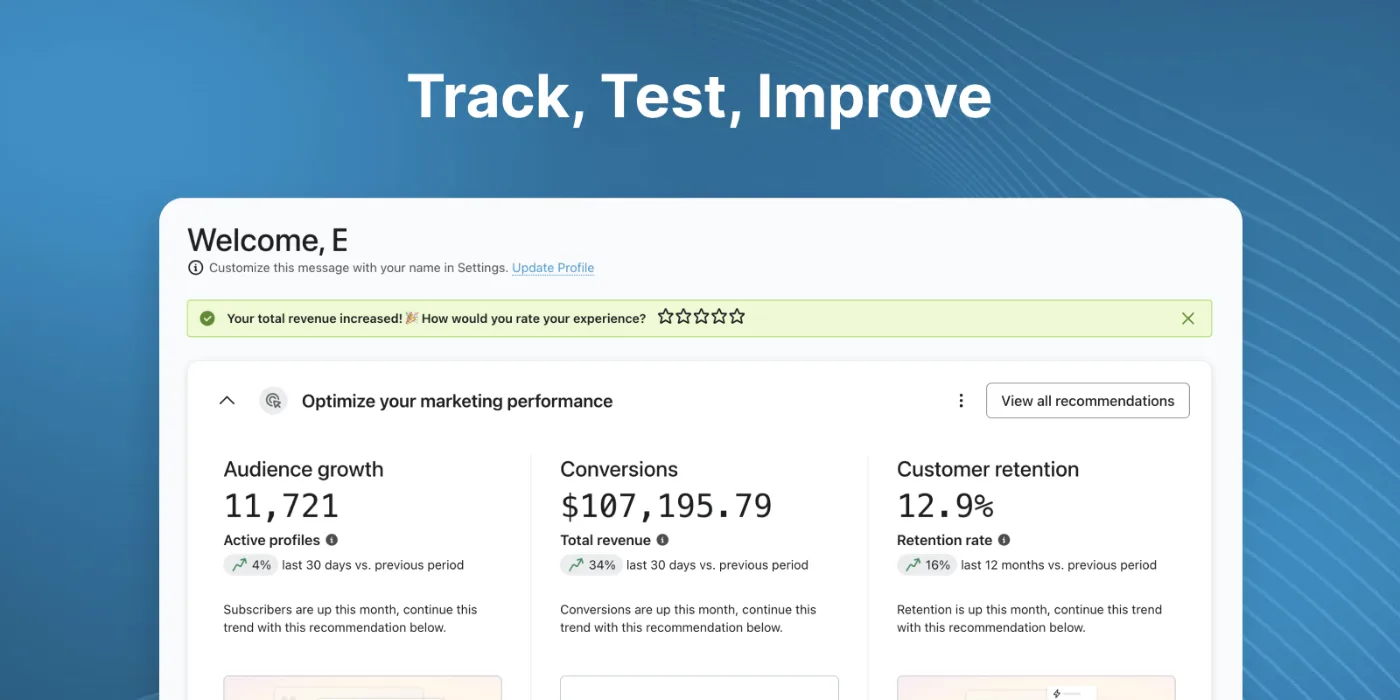
An email marketing strategy uses data to guide decisions about what to send, when to send it, and who receives it. Tracking performance helps identify which campaigns are effective and which require changes.
Shopify merchants can use built-in analytics or third-party tools to monitor how emails perform. These tools collect data such as open rates, click-through rates, and revenue generated from emails.
1. Key KPIs For Shopify Email Success
- Open rate: The percentage of recipients who open the email. For Shopify stores, open rates usually range from 20% to 30%. A low open rate may indicate issues with subject lines or send timing.
- Click-through rate (CTR): How many people clicked on a link inside the email. CTR is usually between 2% and 5% for ecommerce. A high CTR means the content was relevant and clear.
- Conversion rate: How many recipients completed a purchase after clicking through the email. Shopify Analytics can connect email links to orders.
- Revenue per email: Total revenue generated divided by the number of emails sent. This metric helps compare different campaigns.
2. Run A/B Tests For Continuous Improvement
A/B testing compares two versions of the same email by changing one element at a time. Each version is sent to a different group of subscribers, and the results are measured to see which performs better.
Common A/B test elements include:
- Subject lines: Testing different approaches like questions vs. statements
- Send times: Comparing open rates at different times of day
- Email design: Testing different layouts or image styles
- Call-to-action text: Comparing different button text or placement
Running A/B tests regularly helps refine email marketing based on actual customer behavior. Results can be reviewed after each send and used to guide future decisions.
Driving Sustainable Growth With Strategic Email Marketing
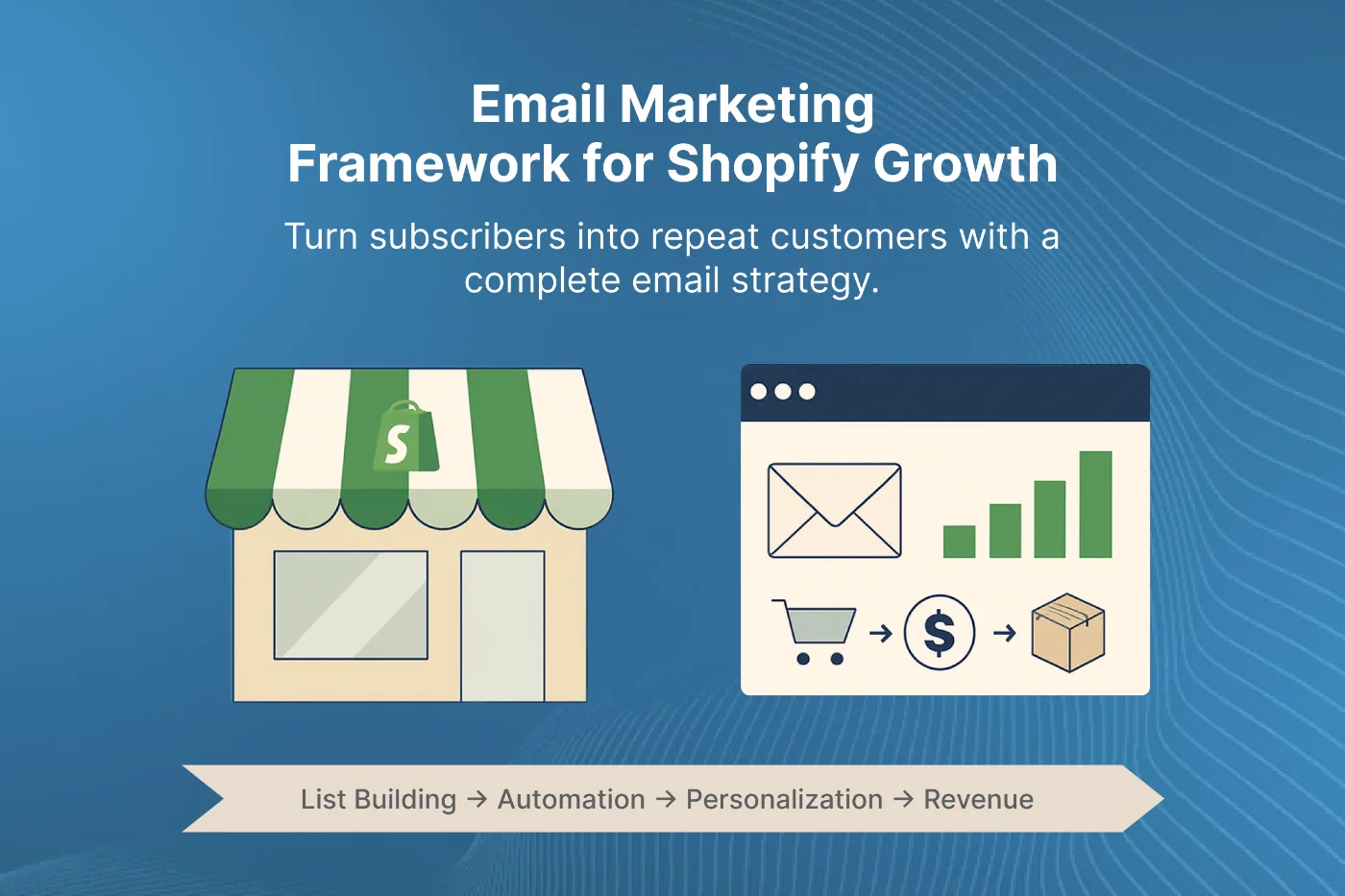
A sustainable email marketing strategy combines several key elements: building a clean email list, sending on-brand messages, using automation for efficiency, personalizing content, and tracking performance to make improvements.
Each part of this framework works with the others. A healthy list supports better automation. Branded emails increase recognition. Personalized content improves engagement. Regular testing guides improvements over time.
Platter’s customizable theme and app allow merchants to connect the storefront experience with marketing campaigns. This improves consistency between what customers see on the site and in their inbox, making it easier to optimize the full journey, from browsing to checkout to post-purchase follow-up.
Book a demo to explore how Platter can optimize your Shopify storefront.
FAQs About Driving Shopify Sales With Email
How do I combine email marketing with my Shopify store’s conversion tools?
Email marketing connects with on-site tools like pop-ups and product recommendations by using customer behavior to trigger targeted messages and collect email signups. These tools work together to guide visitors from browsing to purchase through coordinated messaging.
What design skills are required to create professional Shopify email campaigns?
Modern email platforms offer pre-designed templates and drag-and-drop editors, so creating and sending branded emails doesn’t require advanced design skills. Users can customize layouts, colors, and images without writing code.
Which email metrics should new Shopify merchants focus on tracking?
New merchants can focus on open rate to measure interest, click-through rate to track engagement, and conversion rate to understand how emails lead to sales. These three metrics give a basic overview of email performance.