Mailchimp’s Paywall vs. Omnisend’s Flexibility
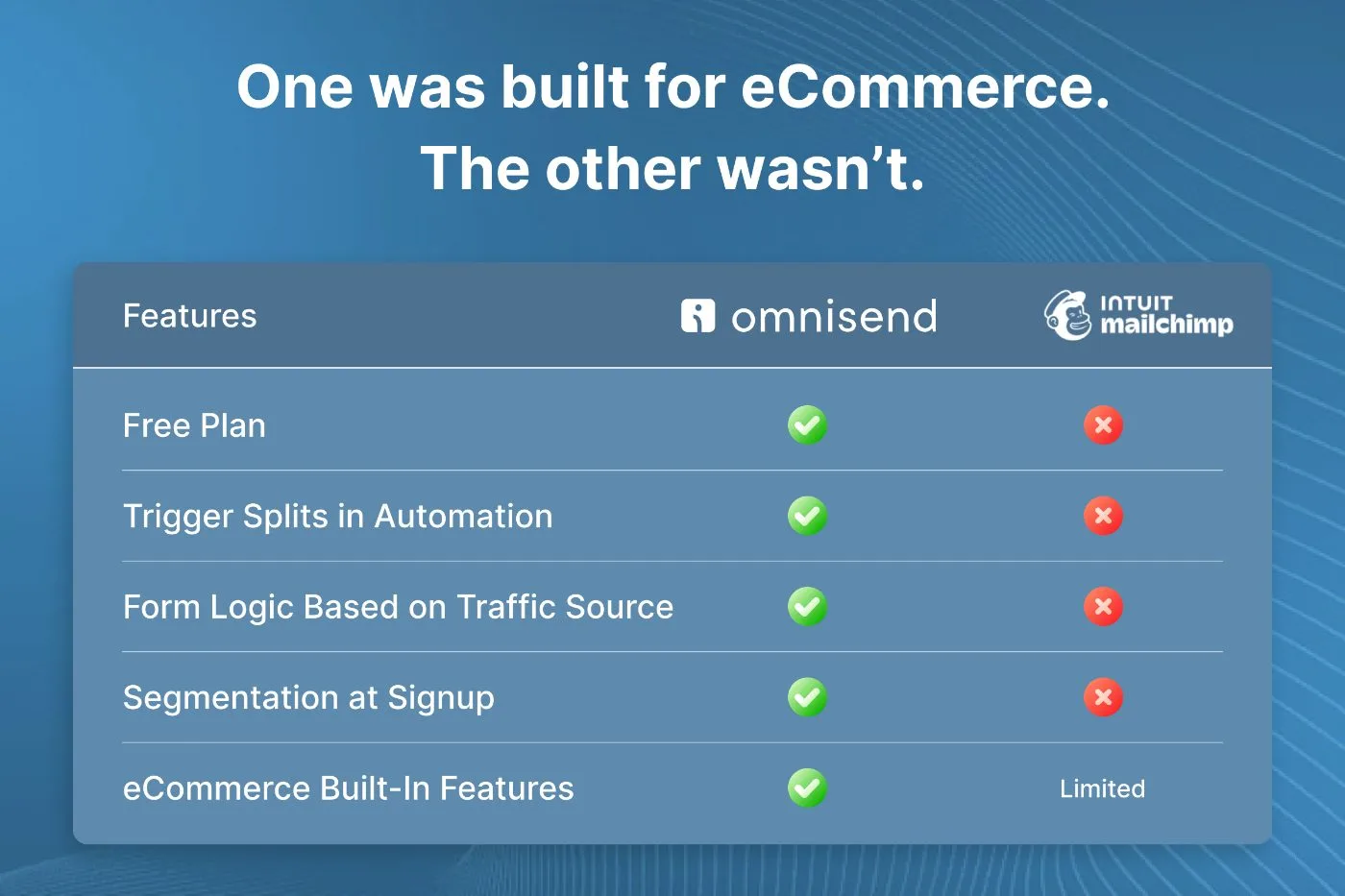
Testing Mailchimp now requires a credit card. A $1 trial kicks in, then auto-renews at $21 per month, even for a dummy account. That’s not a huge issue for big companies, but if you’re just trying to get familiar with the tool, it’s an unnecessary barrier.
Omnisend offers a real free plan, no payment required. You can send up to 500 emails and build your automations without pressure. That’s a big win for teams still learning or deciding which platform to commit to. It’s a platform that doesn’t put testing behind a paywall. And for brands building their first flows or scaling their lifecycle strategy, that flexibility matters.
Signup Forms: One Platform Is Built to Convert. The Other Isn’t.
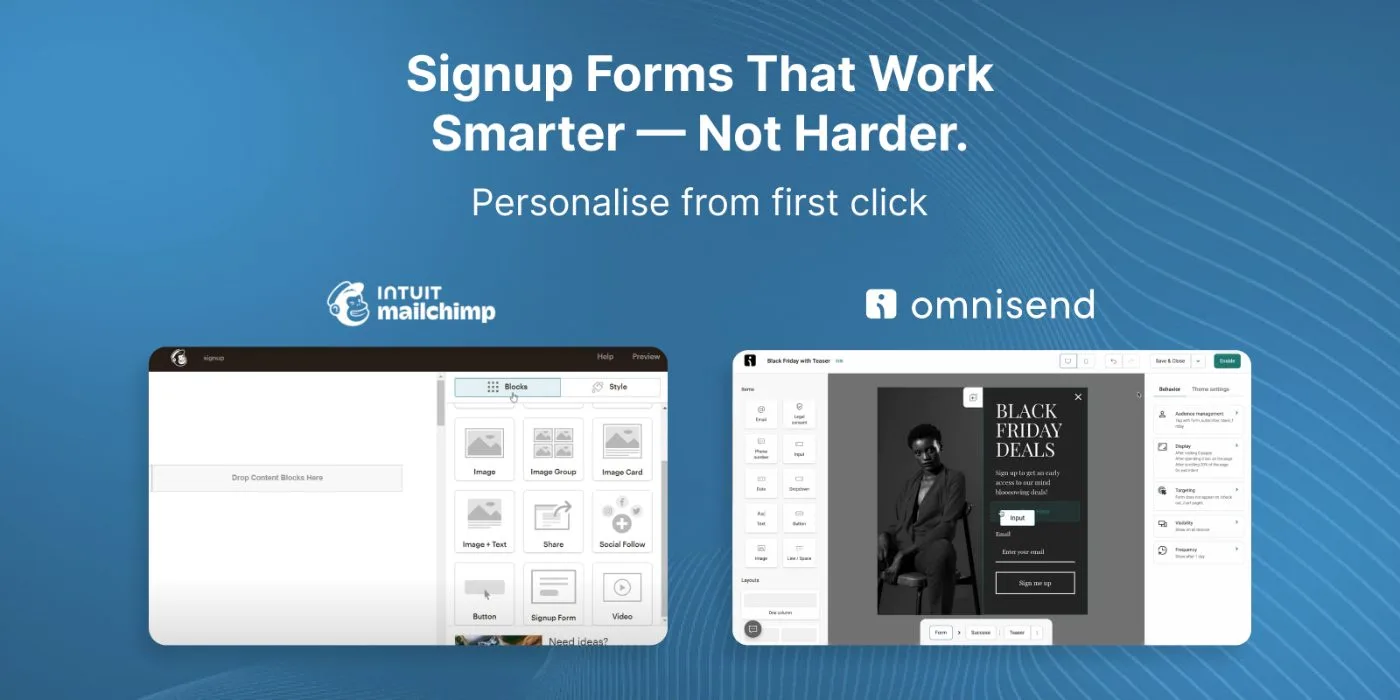
Mailchimp’s form builder feels outdated. The UX is clunky, even for experienced users. You can’t tag contacts based on their form responses, which makes it hard to collect and act on zero-party data. And the interface itself is confusing. Editing, rearranging, and previewing steps is frustrating at best.
Omnisend‘s form builder is the opposite, clean, intuitive, and built for conversion:
- Step-based flow that’s easy to edit
- Countdown timers and input fields that convert
- Form targeting based on page URL, referral source, or contact segment
- Easy segmentation at the point of signup
At In‑box, we’ve seen how strong signup forms shape the performance of an entire automation system. In fact, we consider them one of the biggest needle-movers in any lifecycle strategy.
You can serve different forms depending on where someone came from: Instagram, paid search, or an email click. That level of logic makes it easier to personalise early, when it matters most.
Strong forms lead to smarter flows, and it’s built into how we approach every automation.
Automation: Trigger Splits Make All the Difference
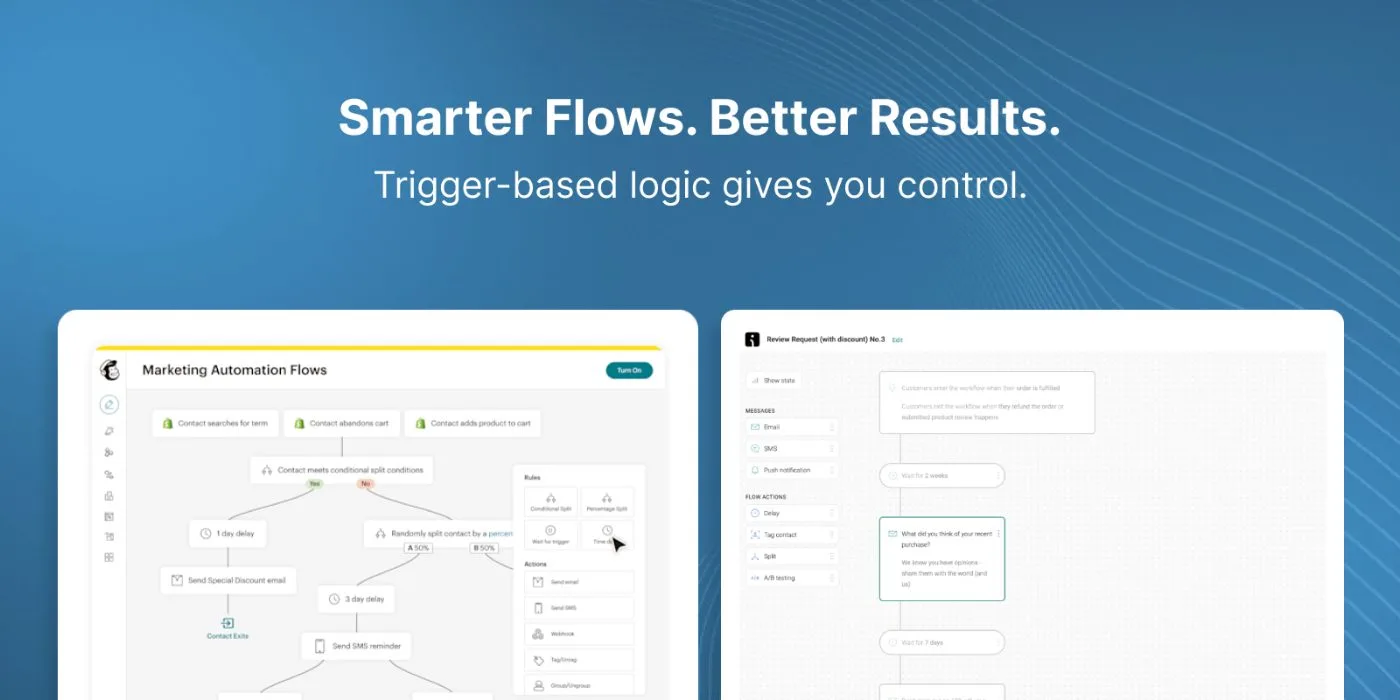
This is where Omnisend pulls ahead, and where Mailchimp falls short.
Omnisend lets you build flows using trigger-based splits. That means you can branch your flow based on what triggered it, like what item someone added to their cart, or what page they signed up from. It also supports contact properties and engagement filters, giving you three core options to build with.
Mailchimp doesn’t offer trigger splits at all. You’re limited to conditional splits based on historical contact data. That’s fine for basic newsletter targeting, but not enough for post-purchase flows, cross-sells, or dynamic abandon cart sequences.
If your strategy involves treating buyers differently based on what they bought, or where they came from, you need access to trigger-based logic. Omnisend gives you that. Mailchimp doesn’t. This is one of the biggest limitations we see teams run into when trying to scale intelligently.
The Bigger Picture: Built for eCommerce vs Stuck in the Past
Mailchimp had the first-mover advantage. For years, it was the platform for bloggers, influencers, and creators who needed a simple way to send email. But the platform hasn’t kept pace with what modern eCommerce brands need, and it shows.
Omnisend, by contrast, was built from the start with product-based businesses in mind. It supports teams who want:
- Automation logic that reflects the buyer journey
- Signup forms that capture useful data
- UX that actually makes sense
- Flexible plans that don’t block testing or growth
That’s the gap. Omnisend keeps improving where it counts, while Mailchimp is stuck trying to retrofit a system that wasn’t built for ecommerce in the first place.
If you’re still working around your ESP instead of working with it, you’re not alone. We’ve helped dozens of brands migrate. See how we work.
Why It Aligns With How We Work at In-Box
At In‑box, we specialise in email and SMS strategies that evolve with your business, not hold you back. We work with brands that want to scale email and SMS without wasting time in platforms that fight them back.
Omnisend supports that by:
- Giving teams access to real segmentation and automation logic
- Making form building fast and intuitive
- Offering flexible plans for teams at different stages
- Keeping things simple where it counts and powerful where it matters
We work across platforms, but we pay attention to what delivers results. And not all ESPs are built equal. Our done‑for‑you email marketing service includes everything from high-converting signup forms to deeply segmented automations and optimised campaigns.
Thinking About Switching ESPs?
Omnisend isn’t the only modern option out there. But if you’ve outgrown Mailchimp, or you’re starting fresh and want a tool that actually supports how eCommerce works, it’s worth exploring. Choosing the right platform early saves hours of backtracking later. Especially once you’ve invested in flows, forms, segmentation logic, and campaign strategy.
Need a second opinion or help getting set up? That’s what we’re here for. Book a time to chat.