Stop Asking for SMS Too Early
If you collect both email and SMS on your signup, you’re probably losing leads.
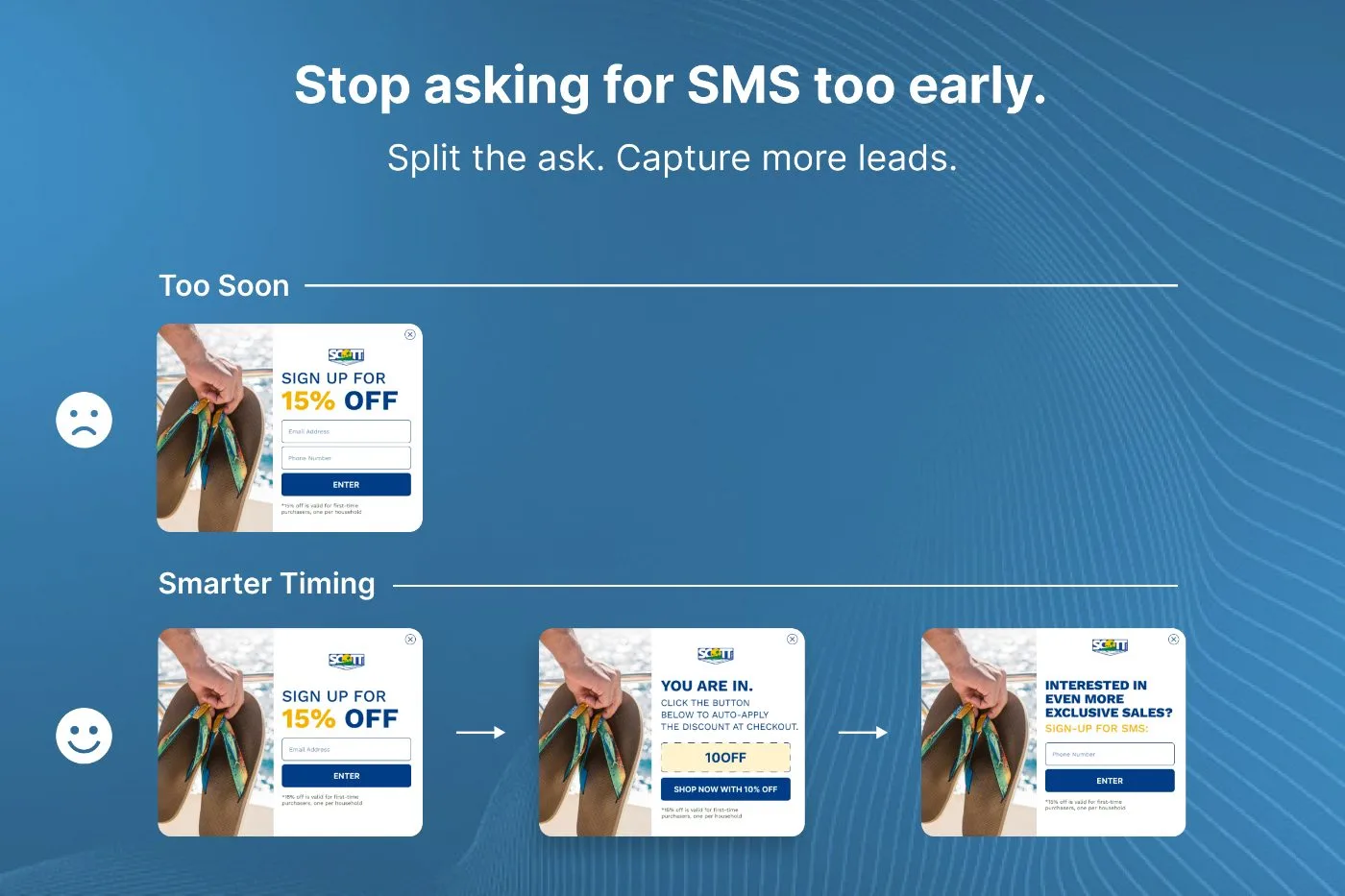
Asking for a phone number too early adds friction. Tests have shown that adding an SMS field to a first-step popup can cut email signups by up to 50%. Why? People hesitate to give their number right away… and they bounce.
Here’s what not to do:
- Don’t ask for SMS on the first step of a popup
- Don’t ask for it on the second step either (right after email)
- Don’t gate your discount behind SMS
That last one’s key: if someone doesn’t complete the form, they won’t see your discount code. That hurts your onsite conversion rate and your bottom line.
If SMS signup kills email capture, you’re losing both.
The Better Way to Capture SMS
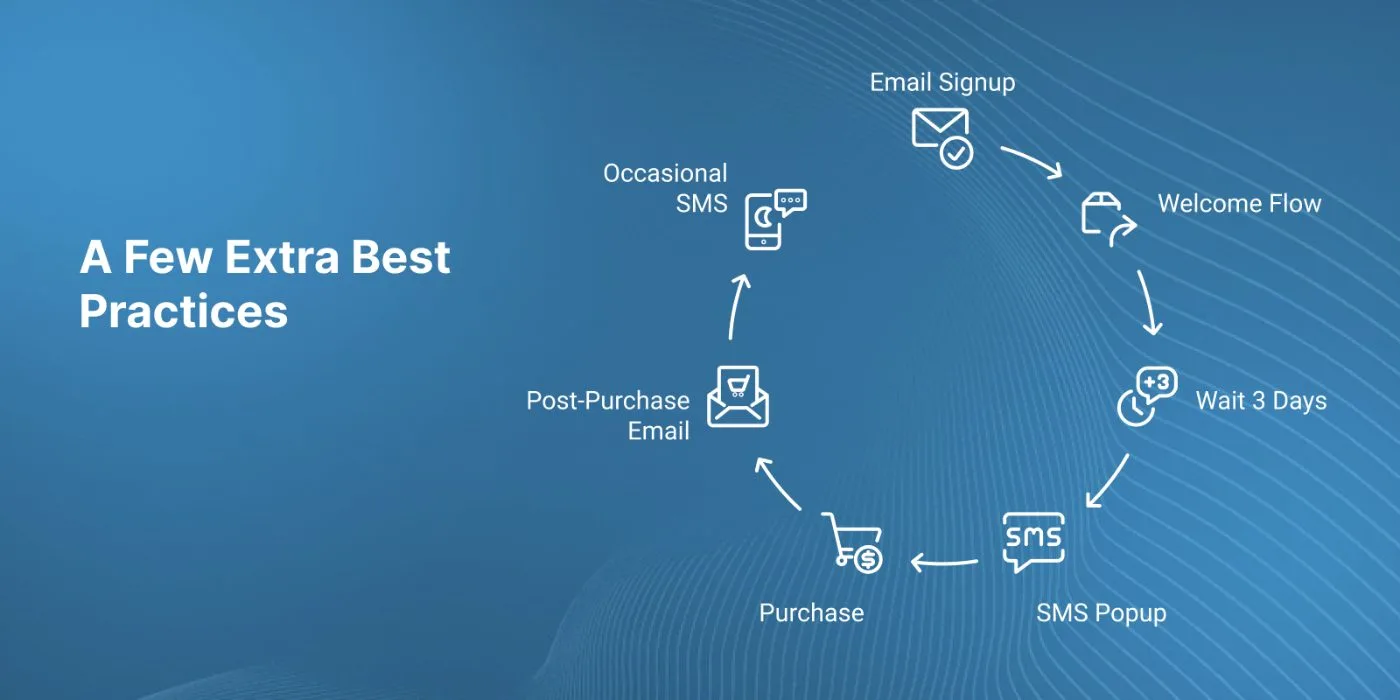
Instead of crowding your email form, create a separate SMS popup that only appears for people who’ve already signed up for email but haven’t opted into SMS yet.
Here’s how to do it well:
- Create a segment of subscribers who’ve joined your list but haven’t given SMS consent
- Delay the popup by at least three days. Don’t show it immediately after email signup
- Keep the message simple and focused: early access, restock alerts, or VIP-only drops tend to perform best
You can also collect SMS:
- At checkout (especially for shipping updates or order tracking)
- As a follow-up email CTA that links to a landing page
- Inside your welcome flow, as a low-pressure second ask
If you’re still deciding which SMS platform to use, this comparison between Klaviyo and SMSBump breaks down the tradeoffs, from pricing to usability and multi-channel support.
When to Actually Send an SMS
Unlike email, SMS isn’t free, especially in Australia, New Zealand, and the UK, where Klaviyo SMS costs can stack up fast. That’s why your SMS strategy needs to be tight and intentional.
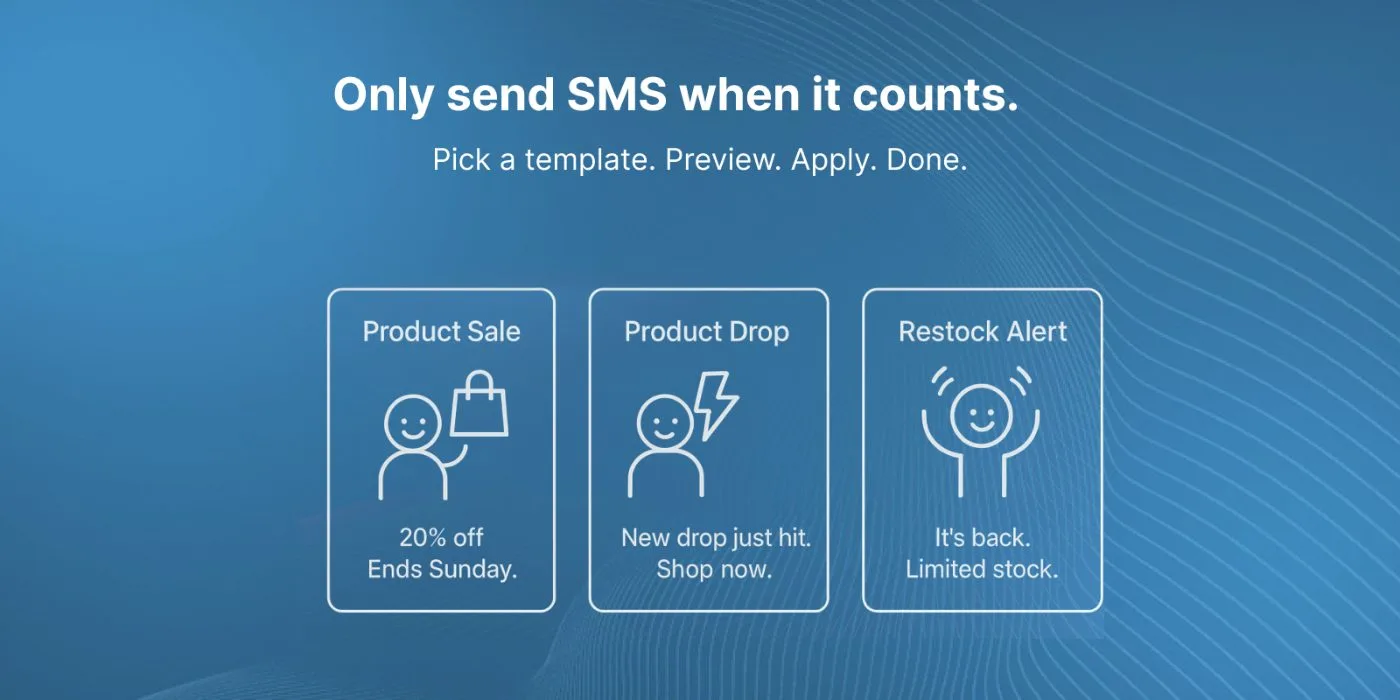
There are only three types of SMS messages most brands should be sending:
1. Product Sales
Short and to the point. “Take 20% off this weekend only” works better over text than a full campaign. These are high-impact messages meant to drive urgency and action.
2. Product Releases
New arrivals or limited drops are a perfect fit. These are time-sensitive and drive immediate action from customers who’ve shown interest before.
3. Restocks
If someone missed out the first time, a quick “it’s back” text can convert faster than any email reminder, especially if they browsed or abandoned that product previously.
Keep messages under 160 characters. You’re not here to educate; you’re here to nudge. And that’s what SMS does best.
A Few Extra Best Practices
- Don’t blast your entire list. Segment your SMS sends based on interest, engagement, or buying behaviour. Not everyone should get every text.
- Match timing to behaviour. If someone just purchased, wait before texting them again. If they browsed but didn’t buy, a quick follow-up might be just right.
- Give SMS a job. It should support your broader lifecycle strategy, not compete with your emails or overwhelm your subscribers.
SMS doesn’t exist in a vacuum. To get the most from it, you need it to work alongside segmentation and flows. This strategy guide explains how SMS works with email flows and segmentation, especially for ecommerce brands just getting started.
Final Thoughts
SMS can boost revenue. Or it can hurt your list health, depending on how you use it.
Get it right, and your best offers reach your most engaged audience faster. Get it wrong, and you risk derailing your entire conversion funnel.
In short:
- Don’t ask for too much, too soon
- Keep messages brief, relevant, and timed to matter
- Build SMS around intent, not noise
If you want to scale without burning your audience, start treating SMS as a sharp tool, not a blunt one. Set it up strategically, send less often, and focus only on what drives action.
SMS isn’t immune to list fatigue either. Just like email, poor engagement can hurt your deliverability and ROI. This email list-cleaning guide covers principles that apply to SMS too, especially around segmentation and re-engagement.