Who This Strategy Is For
This method only works if you’ve already been sending campaigns.
If you have no historical data, there’s nothing to analyze. The goal here is to refine and improve an existing campaign strategy, not build one from scratch.
If you’ve sent campaigns for at least several months, you already have the data you need.
We have more articles that’ll help you get your feet off the ground. They go over which platform to use and other best practices. Some of these can be found below.
- Shopify Email Marketing vs Klaviyo
- Email Flows For Ecommerce: The Complete Guide to Automated Engagement
- The Ultimate Guide to Email Design: Best Practices, Examples & Strategic Tips
If you’ve sent campaigns for at least several months, you already have the data you need.
Step 1: Pull a Full Year of Campaign Data
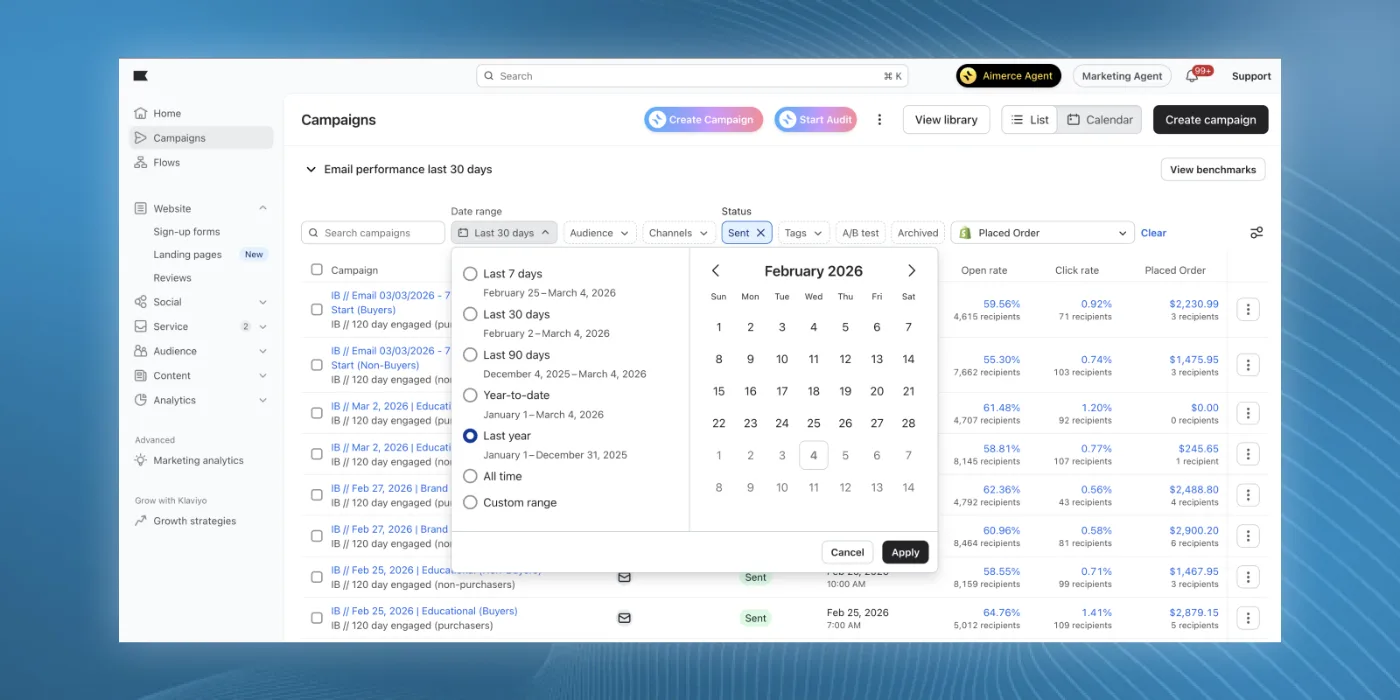
Inside Klaviyo, go to Campaigns and adjust your date range.
You can select:
- Year to date
- Last 12 months
- Or a custom one-year range
The objective is to see all campaigns from a meaningful timeframe so you can establish real benchmarks.
Once applied, your dashboard should display every campaign sent during that period.
Step 2: Establish Your Benchmarks
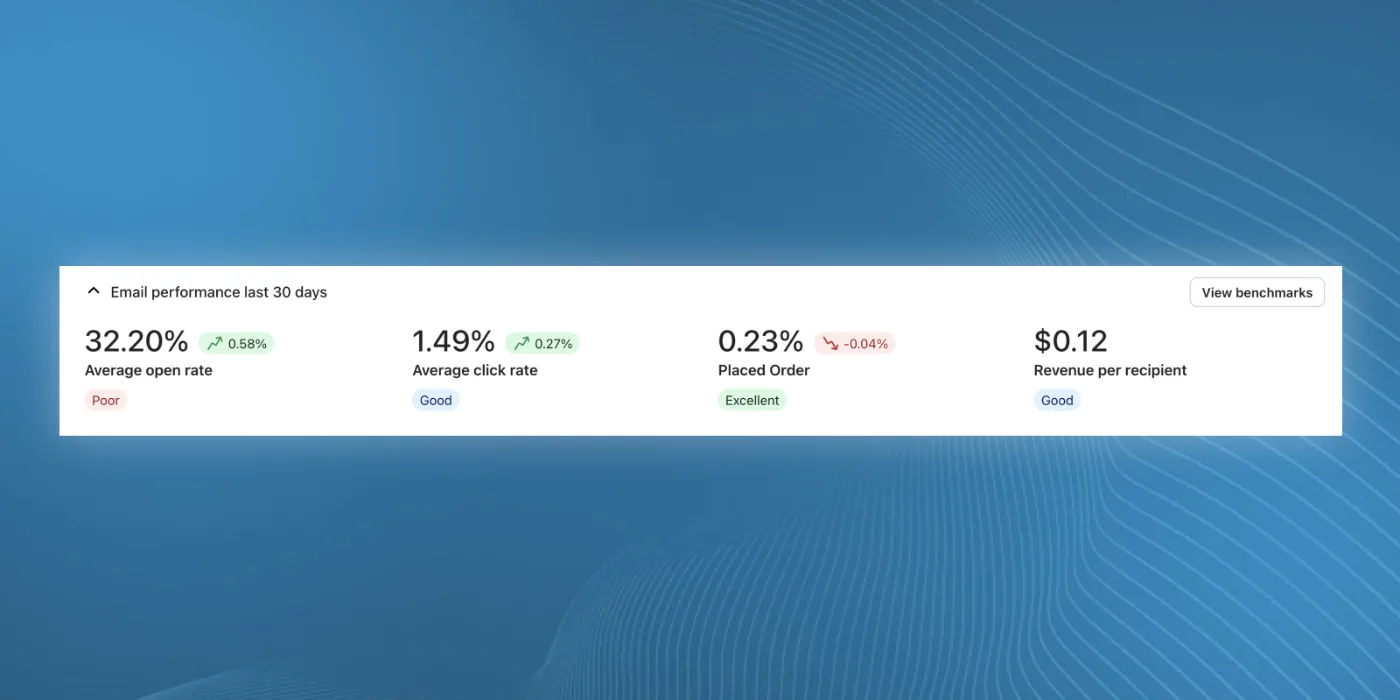
Before looking for winners, define what “above average” means.
Review your overall 12-month averages for:
- Open rate
- Click rate
- Placed order rate
- Revenue
For example:
- If your 12-month average open rate is 48%
- And your average click rate is 3%
Then anything above those numbers becomes a candidate for deeper analysis.
Without benchmarks, you’re just guessing.
Step 3: Filter Out the Obvious Performers
Most of your highest-performing emails will be:
- Black Friday campaigns
- Major sales
- Product launches
- Restocks
Those are important, but they don’t give you reusable evergreen ideas. Their performance is largely driven by urgency or discounts.
The goal is to find campaigns that performed above average and were:
- Not sale-driven
- Not launch-driven
- Not restock-driven
- Not purely product-focused
You’re looking for content that succeeded because of its concept, not its discount.
Step 4: Identify Evergreen Campaign Themes
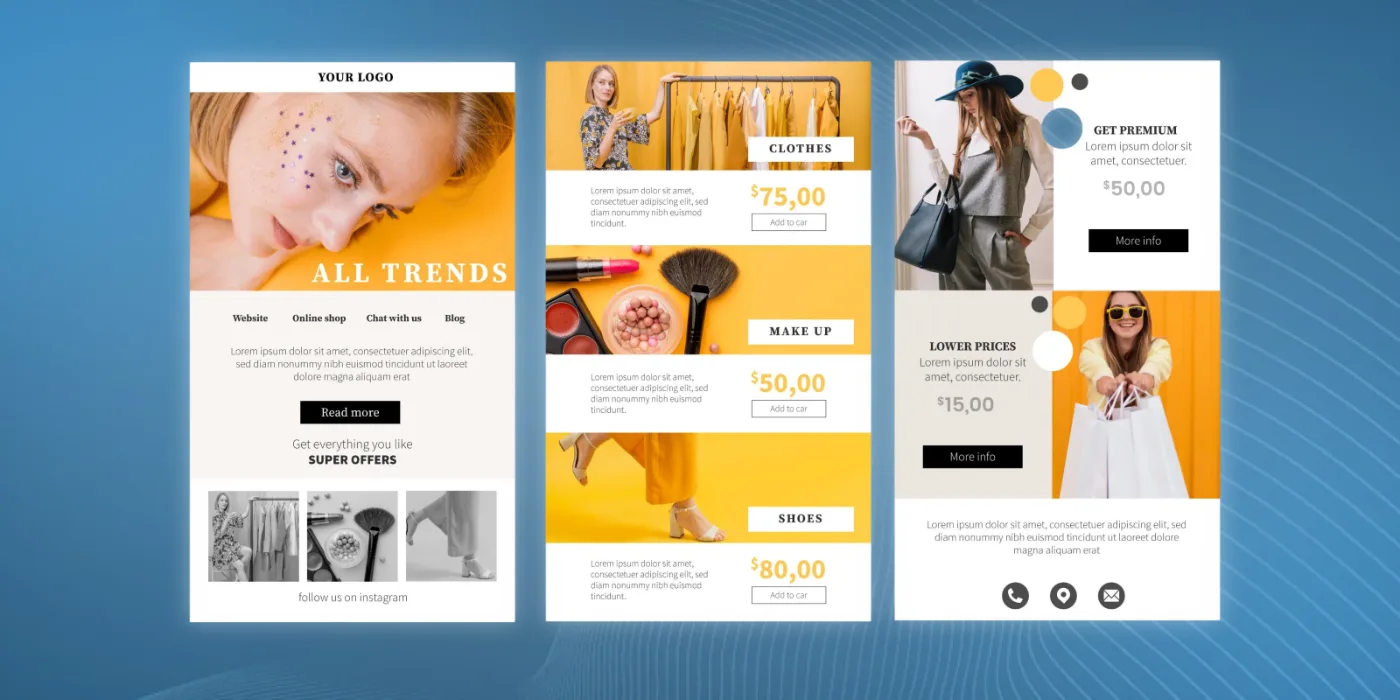
Once sale campaigns are filtered out, look for:
- Educational emails
- Blog-style guides
- Collection highlights
- Social proof campaigns
- Community spotlights
- Value-driven content
These are evergreen formats you can reuse and refine.
For example, if a blog guide campaign performed above average in open rate, click rate, and revenue, that signals the audience responds to educational content. That idea becomes something to iterate on.
If a “Collection Highlight” consistently performs well, that format deserves more space in your calendar.
If social proof campaigns outperform other non-sale emails, that’s another signal.
The objective isn’t to copy the exact email. It’s to extract the theme and build new variations.
Step 5: Validate Engagement and Revenue Together
When evaluating candidates, avoid common traps.
Do not rely solely on:
- Extremely high open rates sent to tiny segments
- Revenue from campaigns sent to very small audiences
Look for campaigns that:
- Were sent to meaningful segments
- Performed above average in engagement
- Generated strong placed order rates
High engagement combined with meaningful reach is what makes an idea scalable.
Step 6: Turn Winning Themes Into Repeatable Formats
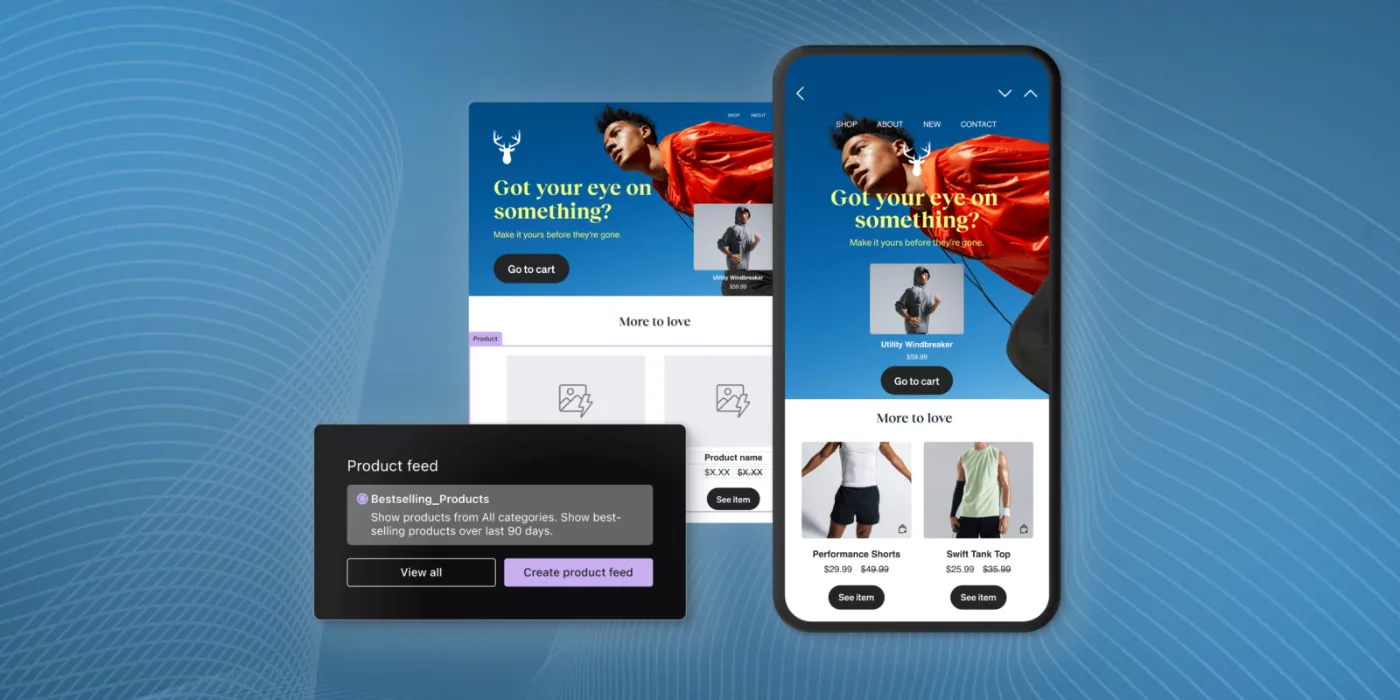
Once you identify strong evergreen ideas, your job is to systematize them.
For example:
If blog guides performed well:
- Build a recurring educational series
If collection highlights outperform:
- Schedule monthly or biweekly collection features
If social proof converts:
- Create rotating testimonial spotlights
This is how a campaign calendar enters a constant state of improvement. Each iteration builds on proven performance rather than random creativity.
What to Do If You Find Nothing
In some accounts, you may discover that almost all above-average campaigns were sales or launches.
That’s still useful insight.
It means:
- Your current strategy relies too heavily on promotions
- You haven’t yet built high-performing evergreen formats
In that case, start testing educational, collection, and social proof campaigns deliberately. Then revisit this analysis after several months.
You can’t optimize what you haven’t tested.
How This Improves Over Time
This process isn’t a one-time exercise. It’s something you repeat quarterly or biannually.
Each time you review historical performance, you refine:
- What formats deserve more attention
- What underperformed and should be removed
- Where engagement trends are shifting
Over time, your content schedule evolves from reactive promotion to a structured, data-backed system.
Final Thoughts
Winning campaign ideas aren’t found in inspiration. They’re found in your own reporting dashboard.
By reviewing historical performance, filtering out sales-driven spikes, and identifying evergreen formats that outperform your averages, you create a repeatable system for growth.
That’s how a campaign calendar moves from random execution to continuous improvement.