Why Email Marketing Matters for Furniture Retailers
You might be wondering if email marketing is still relevant with all the social media platforms and advertising options available today, and the answer is yes. Email marketing isn’t just surviving, it’s thriving, especially for furniture businesses.
Related: Best Industries For Email Marketing
ROI and Statistics
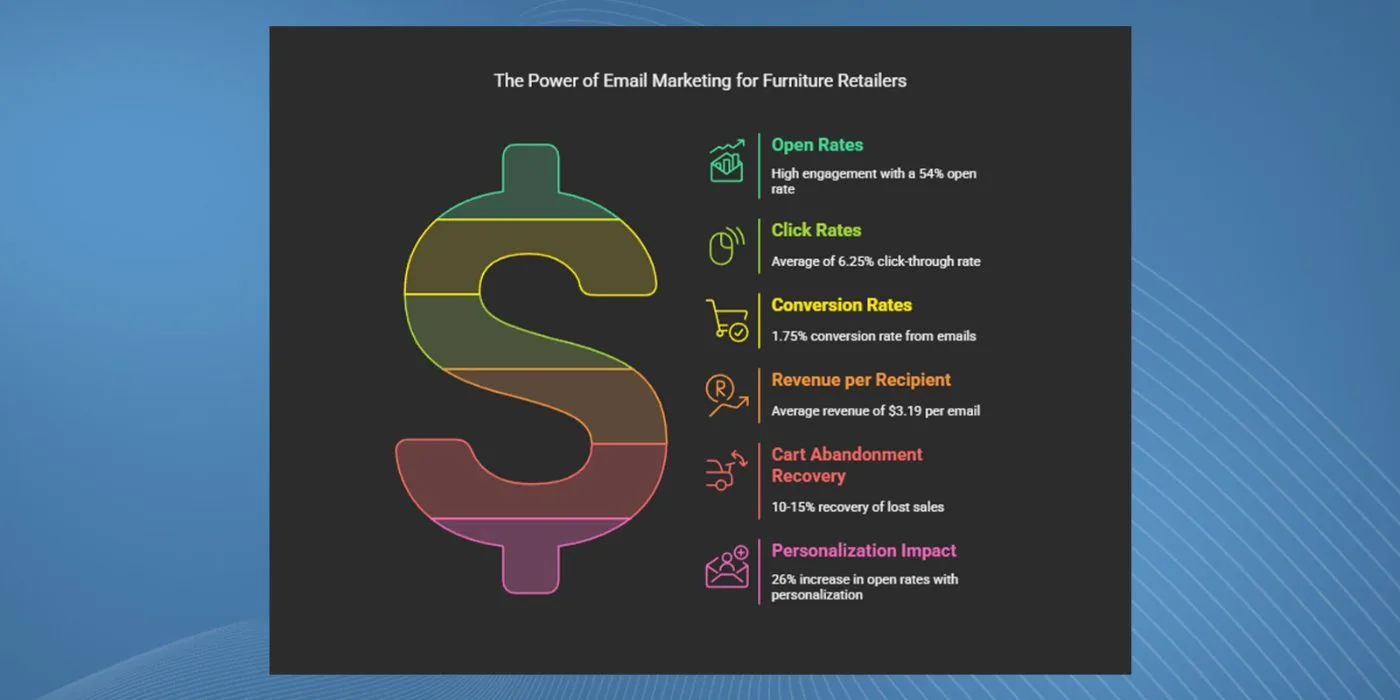
The statistics on email for furniture retailers is surprisingly impressive:
- The average open rate for home furnishings industry emails is 54%
- Email click rates in the furniture sector average 6.25%
- Conversion rates for furniture email campaigns hover around 1.75%
- Revenue per recipient averages $3.19
- Cart abandonment emails can recover up to 10-15% of otherwise lost sales
- Personalized subject lines can increase open rates by 26%
These numbers tell an important story, your customers are checking their emails, engaging with content, and making purchases as a direct result of email campaigns.
Unique Challenges in Furniture Marketing
Selling furniture comes with certain problems that other retailers don’t face:
- Higher price points mean longer decision cycles
- Products need to be visualized in context
- Customers often need to consider measurements, materials, and lifestyle fit
- Purchase frequency is lower than in other retail categories
Email marketing targets these challenges by keeping your brand top-of-mind during extended decision periods and giving beneficial content that helps customers envision your products in their spaces.
Building Your Foundation
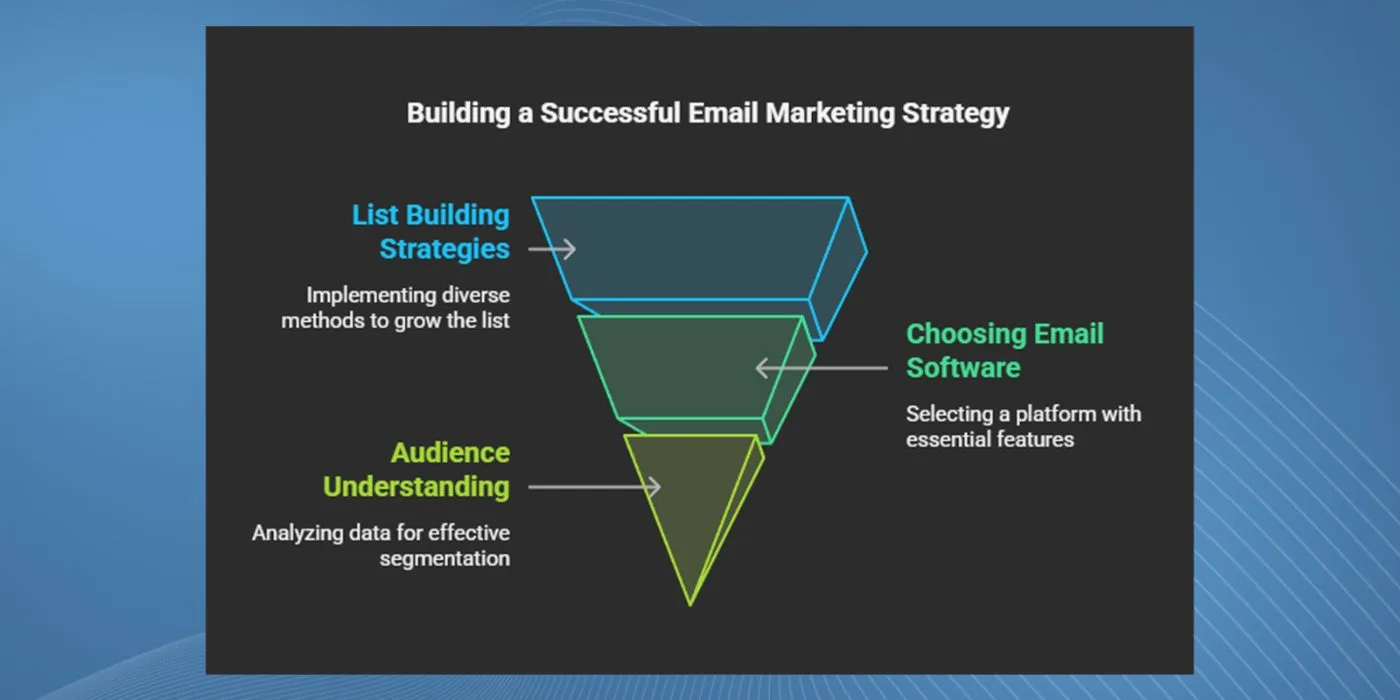
Before sending your first campaign, you need to establish a strong base for your email marketing efforts.
Creating Your Email List
Your email list is one of your most valuable marketing assets and unlike social media followers, your email list belongs to you and connects you directly with interested customers.
You can start building your list by adding signup forms to your website’s high-traffic pages and offering incentives like discount codes. Then, collect emails in-store through your POS system and add QR codes on displays to bridge physical and digital experiences. You can also run targeted social media campaigns for list building and include signup opportunities at events.
Remember that quality trumps quantity, a smaller, engaged list outperforms a larger, uninterested one. Regularly maintain your list by removing inactive subscribers to keep your engagement metrics healthy.
Choosing the Right Email Software
The right email platform is so important for furniture marketing. Look for one with strong visual capabilities and email automation features to nurture leads through longer sales cycles.
Choose a platform with user-friendly design tools, automation capabilities for customer journeys, and advanced segmentation options. Look for detailed analytics, A/B testing functionality, mobile optimization, integrations with your e-commerce platform, personalization options, and support for high-resolution images.
For furniture retailers, we recommend Klaviyo for its personalized automation flows based on customer behavior. Whatever platform you choose, ensure it can grow with your business and support sophisticated marketing strategies as your program matures.
Understanding Your Audience
Successful furniture email marketing means you need to understand your audience, and send the right message to the right person at the right time. Segment your audience based on purchase history, browse behavior, location, customer value, time since last purchase, furniture categories of interest, price sensitivity, home type, and design preferences.
This segmentation allows you to speak directly to different customer groups’ needs, a young couple furnishing their first apartment has different needs than a family updating their vacation home. Gather this information through sign-up forms, purchase history, website behavior, and surveys.
Modern email platforms allow you to combine these segments, creating highly targeted campaigns that relate to your recipients and drive action. For example, you might target first-time buyers interested in modern living room furniture who recently visited your site but didn’t purchase anything.
Essential Campaign Types for Furniture Stores
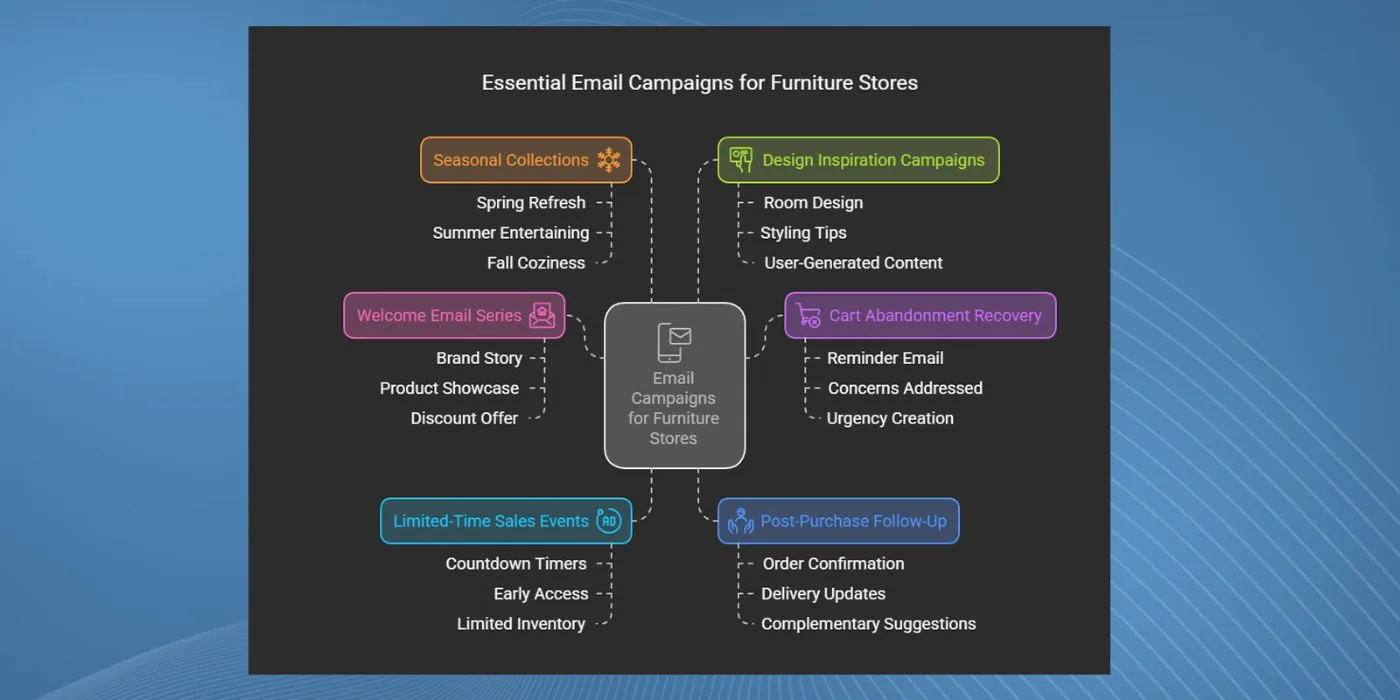
Certain email campaigns are effective for furniture retailers, so let’s talk about the must-have campaigns for your email marketing strategy.
Welcome Email Series
First impressions matter, and when someone subscribes to your email list, they’re showing interest in your brand. Your welcome series should introduce your brand story and values so new subscribers understand what you stand for.
Make sure to display your furniture collections to give a taste of your product range and highlight your unique selling points such as quality, sustainability, and design philosophy that differentiate you from competitors. Consider offering a limited-time discount to encourage that first purchase and convert subscribers to customers quickly.
Plan a series of 3-5 emails spread over 1-2 weeks rather than sending everything in one message. This approach maintains engagement without overwhelming new subscribers.
Cart Abandonment Recovery
The cart abandonment rate in the Home & Furniture category sits at nearly 80%, which is significantly higher than other retail sectors. That means 8 out of 10 shoppers who add items to their cart leave without completing their purchase.
This high abandonment rate makes sense given the considered nature of furniture purchases, but it also represents a significant opportunity for recovery. Why do furniture shoppers abandon their carts? Some common reasons include customers still comparing options across multiple retailers before committing to one.
Many want to think about the purchase overnight since furniture is a significant investment. Some need to confirm measurements or color schemes to ensure the piece perfectly fits their space. Others experience sticker shock at shipping costs for bulky furniture items.
Some are strategically waiting for a sale or discount before finalizing their purchase and many simply got distracted and forgot to complete the purchase amid other responsibilities. An effective cart abandonment series addresses these concerns and nudges customers back to complete their purchase.
Start with a reminder email sent 1-2 hours after abandonment, simply reminding them their selections are saved and waiting. Follow up with a second email addressing potential concerns 24 hours later, including reviews, financing options, or delivery details that might ease their hesitations.
Think about sending a final email offering a limited-time discount after 3 days to create urgency to complete the purchase. Include high-quality images of the abandoned items, customer reviews, and clear calls to action. Many furniture retailers see recovery rates of 10-15% with well-crafted abandonment emails, representing significant revenue that would otherwise be lost.
For high-value abandoned carts, you can consider adding a personalized touch. A brief, friendly email from a design consultant offering to answer questions about the product can be remarkably effective in closing sales for premium furniture items.
Limited-Time Sales Events
Everyone loves a good sale, and your email list should be the first to know about your promotions. You can create urgency by including countdown timers that show exactly how much time remains in the promotion and use limited inventory notifications to highlight when popular items are running low.
Offer early access for your subscribers as a special perk of being on your list. Always include clear deadline messaging so customers know exactly when the offer expires. Make sure your promotional emails include multiple calls to action and direct links to featured collections or products.
Post-Purchase Follow-Up
The customer journey doesn’t end at checkout, in fact, for furniture retailers, the post-purchase experience is often where customer relationships are truly cemented. A thoughtful post-purchase email series can convert a one-time buyer into a lifelong customer and brand advocate.
Your post-purchase series should include order confirmation with clear next steps so your customers know what to expect. Send delivery tracking and updates, which are especially important for furniture with longer lead times and include pre-delivery preparation emails with room measurements and clearance requirements to ensure smooth delivery.
Provide delivery day expectations and instructions so your customers can appropriately prepare. Share assembly tips or care instructions ideally specific to their purchase to enhance the product experience. You can also request product reviews timed after they’ve had a chance to use the furniture to gather authentic feedback.
Suggest complementary items that pair well with their purchase to encourage additional sales. Remind your customers about warranties or protection plans to add value to their purchase and include check-in emails at 30, 60, or 90 days to ensure satisfaction and demonstrate your commitment to customer service.
These emails serve multiple purposes, as they reduce customer service inquiries by proactively addressing common questions, they improve the unboxing and setup experience, they generate valuable reviews, and they open the door for additional sales.
The timing of these emails tremendously matters. You wouldn’t ask for a review before the product has even been delivered, and you wouldn’t suggest complementary items before the customer has received and is enjoying their initial purchase. Map out your post-purchase journey carefully, considering the typical delivery and setup timeline for your products.
Seasonal Collections
A lot of the time, furniture sales align with seasonal changes and holidays, creating natural opportunities for themed email campaigns that feel relevant to your customers.
You can create campaigns around a Spring refresh featuring outdoor furniture, lighter fabrics, and brighter colors to match the season’s energy. You can also create entertaining Summer campaigns with dining sets, patio furnishings, and poolside pieces perfect for hosting guests.
Support Back-to-school season with home office furniture, student desks, and organization systems as families prepare for a new academic year and create Fall coziness campaigns showcasing sofas, throws, lighting, and warmer textiles as temperatures drop.
For your customers who host holidays, highlight holiday hosting essentials like dining tables, guest room furnishings, and entertainment centers for family gatherings. You can also promote New Year home updates with storage solutions and furniture that supports resolutions for better organization and fresh starts.
Design Inspiration Campaigns
Your customers aren’t just buying furniture, they’re creating spaces where they’ll live, work, entertain, and make memories. Inspiration-focused emails tap into the emotional aspects of furniture shopping and position your brand as a trusted advisor in home design.
Inspiration campaigns can promote complete room designs featuring your products, giving your customers a vision of what’s possible. They offer styling tips from design experts or your in-house design team to help customers make the most of their purchases.
You can present color trends and palette ideas for upcoming seasons to keep your customers current on design movements. Feature customer spaces with your furniture as user-generated content that builds community and shows real-world applications.
Provide solutions for common design challenges like small spaces or awkward layouts that demonstrate your expertise. Demonstrate multiple ways to style the same piece to show versatility and value. Share behind-the-scenes insights into your design process to build brand connection.
Create themed collections around concepts like coastal living or urban industrial styles to appeal to specific aesthetic preferences. These content-rich emails build your credibility as an authority in home design while subtly showcasing your products in aspirational settings and they’re also highly shareable, extending your reach beyond your subscriber list.
Design inspiration emails typically have higher open rates than promotional emails because they provide genuine value. They nurture your relationship with customers who might not be ready to purchase immediately but will remember your brand when they are ready.
Consider partnering with interior designers or influencers for collaborative content that brings fresh perspectives to your inspiration emails. Their expertise and audience can amplify your message and introduce your furniture to new potential customers.
The Importance of Visuals in Furniture Store Email Marketing
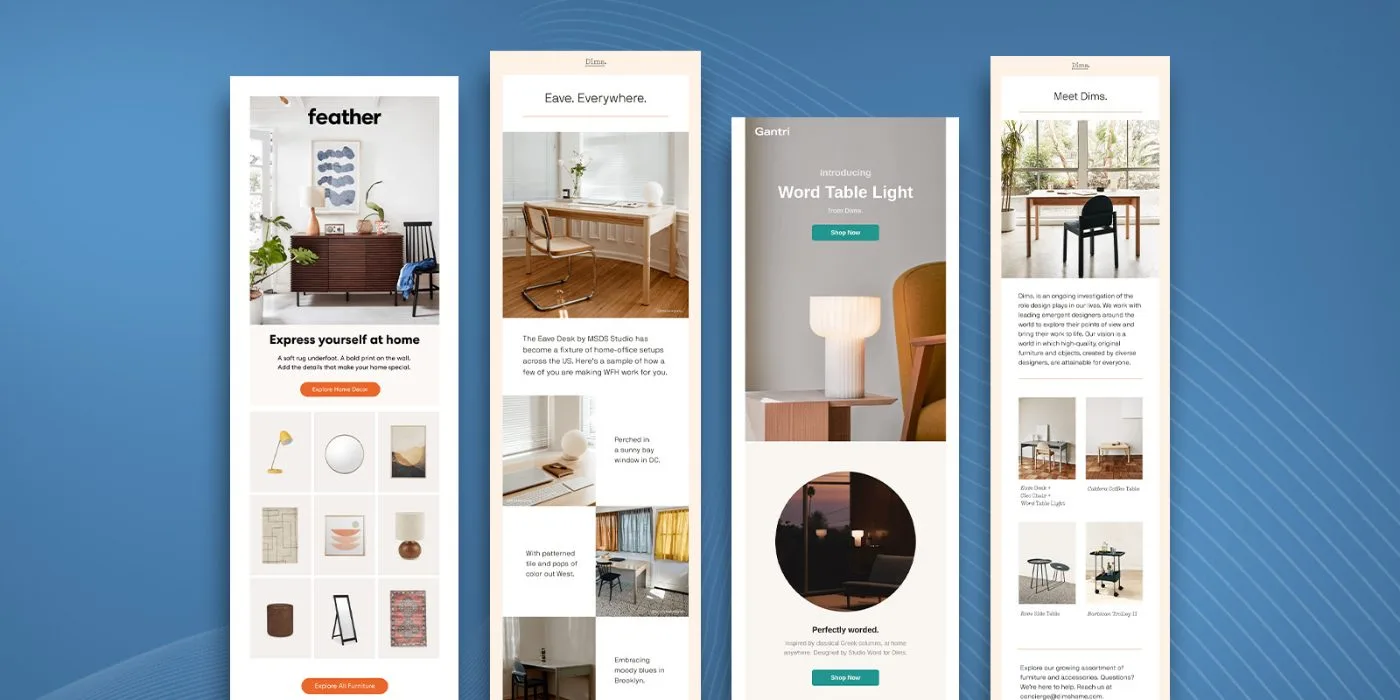
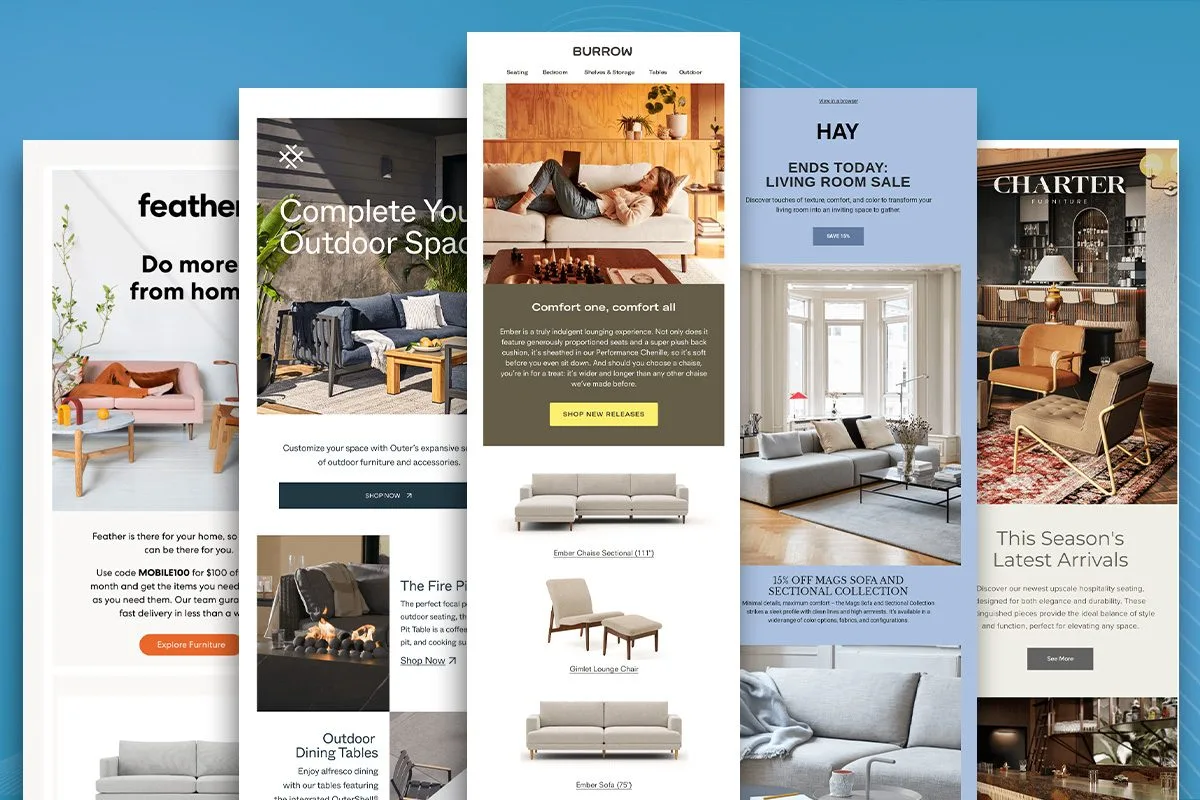
When it comes to furniture email marketing, visuals aren’t just important, they’re necessary. Your customers need to see your products from multiple angles and envision them in their spaces.
High-Quality Product Photography
Today’s furniture shoppers expect comprehensive product visuals. Provide multiple angles, detail shots of materials and craftsmanship, scale references for dimensions, and 360° views when possible. Remember that low-quality images suggest low-quality products, so invest in professional photography or advanced 3D visualization for your campaigns.
Lifestyle Shots
Complement product images with lifestyle photographs showing furniture in designed spaces. Include room settings matching your audience’s aesthetic, different styling options for versatile pieces, and scale context to help with spatial planning. These contextual images create emotional connections that drive purchase decisions.
Using GIFs and Interactive Elements
You can improve your emails with dynamic content that promotes functionality. You can use GIFs showing product transformations (like expandable tables), animated images highlighting customization options, interactive elements displaying color or fabric variations, and video content demonstrating features. These attention-grabbing visuals provide more information than static images alone.
Mobile-First Design
With over 60% of email opens happening on mobile devices, design for smartphones first. Use single-column layouts with large, tappable buttons, concise copy, readable font sizes (14px minimum), high contrast text, and properly-sized images.
Create mobile-friendly subject lines (30-40 characters) with complementary preview text, and ensure adequate spacing between clickable elements. Test every campaign across multiple devices before sending. A poor mobile experience can derail the customer journey, even if they ultimately purchase on larger screens or in-store.
Work With In-box
Your furniture store deserves an email marketing strategy that promotes your products beautifully and drives real results. At In-box, we understand the distinct challenges of email marketing for furniture retailers and bring years of industry experience to every campaign we create.
Are you ready to transform your furniture store email marketing? Contact us at In-box and book a free consultation call today.